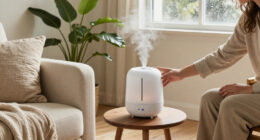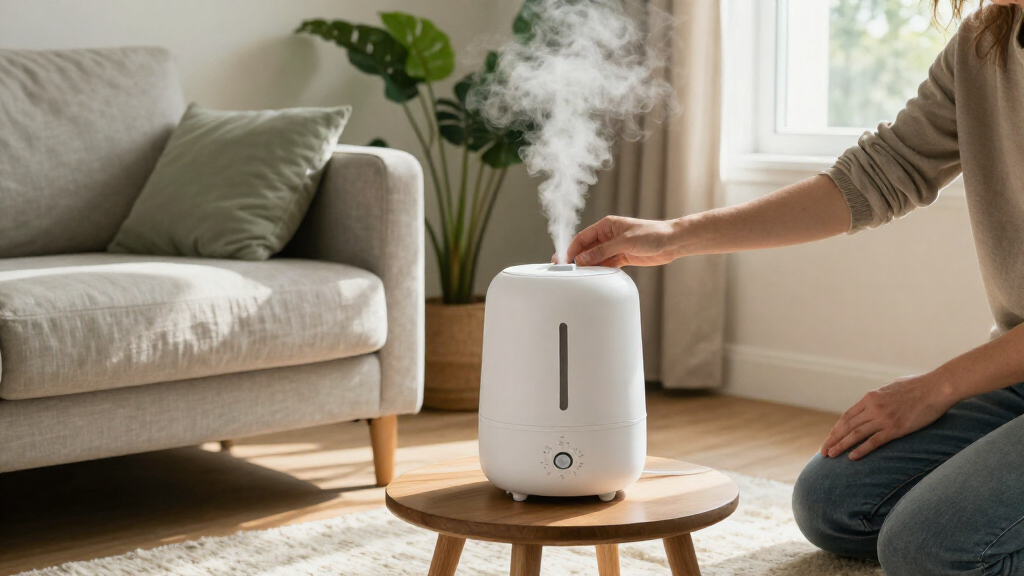
Set up a living room humidifier to raise dry indoor air to a comfortable level while limiting condensation, mineral dust, and microbial growth. This guide is for beginners choosing or using a portable humidifier in a typical home. Plan on 30-60 minutes to measure the room, select a unit, and set it up, followed by a few minutes of daily care.

Get furniture and decor delivered free with Prime
- Fast, free delivery on millions of items
- Prime Video, Amazon Music and more included
- Member-only deals all year

Lacidoll 8L Top-Fill Cool Mist Humidifier
- ✔ Capacity: 2.1 gallons
- ✔ Stated coverage: Up to 800 sq. ft.; another listing gives 500–800 sq. ft.
- ✔ Mist output: 300 mL/h

BREEZOME 6L Top-Fill Ultrasonic Cool Mist Humidifier with Humidistat and Essential Oil Tray
- ✔ Capacity: 6 liters (1.6 gallons)
- ✔ Coverage: Up to 500 sq. ft.
- ✔ Runtime: Up to 60 hours

Levoit Classic 160 Top-Fill Cool Mist Humidifier, 2.5 L
- ✔ Capacity: 2.5 liters
- ✔ Effective range: 219 sq. ft. / 20 m²
- ✔ Runtime: Up to 25 hours on low
Difficulty: Beginner | Time: 30-60 minutes to choose and set up, plus 5-15 minutes for daily checks
What You’ll Need
Tools & Materials:
- Hygrometer or indoor humidity monitor
- Tape measure
- Humidifier with a capacity suitable for the living room
- Clean water, as specified by the manufacturer
- Stable, water-resistant surface near a power outlet
Knowledge:
- Basic ability to measure a room and follow an appliance manual
- Awareness of nearby electrical outlets, furniture, and walking paths
Check the humidifier manual for room-size coverage, water requirements, cleaning instructions, and any limits on placement. If you have persistent dampness, visible mold, or water leaks, address those problems before adding moisture to the room.
Lacidoll 8L Top-Fill Cool Mist Humidifier
For a living room where a small bedroom humidifier may struggle to cover the space, the Lacidoll 8L has the strongest stated reach in this lineup: up to 800 square feet. Its large tank, top-fill design, and remote make it the most broadly equipped option here for a shared room where nobody wants to refill or adjust the unit constantly. Three mist levels and adjustable humidity from 45% to 95% also give households more ways to tailor operation than the Levoit Classic 160, whose simpler controls and stated 219-square-foot range favor a smaller area.Those advantages come with a notable information gap: the supplied details describe runtime as both up to 48 hours and 24 hours, and coverage as both 500–800 square feet and up to 800. We would avoid planning around the most generous figure without confirming it. At 27 inches tall, it also needs a deliberate spot in the room, while its plastic body and 35 dB listed noise level may be less discreet than the smaller, quieter Levoit. The filter-free design cuts one recurring replacement task, though regular cleaning is still part of ultrasonic humidifier care.This is our first choice when coverage and adjustable operation matter more than compact size, provided buyers are comfortable with the inconsistent published figures. Compared with the BREEZOME, it offers a remote and more mist levels, while BREEZOME supplies a clearer stated runtime and a humidistat-focused pitch.
Pros:
- Large 8-liter tank with convenient top filling
- Broad stated coverage and three mist levels
- Remote, timer, sleep mode, and adjustable humidity
- Filter-free design with low-water shutoff
Cons:
- Runtime is listed as both 24 and 48 hours
- Coverage figures vary, and the tall body needs floor or shelf space
- Listed noise level is higher than the other two models
Best for: Households seeking a large-capacity humidifier with remote controls for a spacious living room.
Not ideal for: Buyers who need dependable, clearly stated runtime figures or a compact unit for a small room.
Bottom line: Choose the Lacidoll for its combination of stated reach, capacity, and controls, while treating its runtime and coverage claims cautiously.
“Choose the Lacidoll for its combination of stated reach, capacity, and controls, while treating its runtime and coverage claims cautiously.”
BREEZOME 6L Top-Fill Ultrasonic Cool Mist Humidifier with Humidistat and Essential Oil Tray
The BREEZOME takes a middle path between the large Lacidoll and the compact Levoit: its 6-liter tank is substantial without the Lacidoll’s 8-liter capacity, and its stated coverage reaches 500 square feet. The advertised runtime of up to 60 hours is the longest in this comparison, though it is a maximum claim and will depend on settings and conditions. For a living room that needs regular operation between refills, that combination can be appealing.Its defining feature is the adjustable humidistat, which lets buyers set a target humidity instead of relying only on manual mist adjustments. That makes it more suitable than the Levoit for someone who wants the unit to regulate toward a chosen level. The BREEZOME also lists quiet 25 dB operation, sleep mode, top filling, and an essential oil tray. It is not as control-rich as the Lacidoll, which includes a remote and timer, and its listed range is lower than Lacidoll’s most generous coverage figure.The main tradeoff is maintenance: the BREEZOME uses a demineralization cartridge, while the Lacidoll is described as filter-free. Buyers should account for cartridge care and replacement, and should check that the required 120-volt power suits their setup. Its 13.4-inch height is less imposing than the Lacidoll, though its footprint is not as compact or light as the Levoit. This pick makes sense when automated humidity management and long stated runtime outweigh the desire for the simplest upkeep.
Pros:
- 6-liter tank with up to 60 hours of stated runtime
- Adjustable humidistat for setting a target humidity
- Quiet sleep mode and top-fill design
- Essential oil tray included
Cons:
- Requires a demineralization cartridge
- Stated coverage is lower than Lacidoll’s maximum claim
- Maximum runtime will vary with settings and conditions
Best for: Living room users who want a humidistat and a large tank with a long stated runtime.
Not ideal for: People seeking a cartridge-free design or the smallest, lightest humidifier in this comparison.
Bottom line: Pick the BREEZOME when humidistat control and a long stated interval between refills matter more than cartridge-free upkeep.
“Pick the BREEZOME when humidistat control and a long stated interval between refills matter more than cartridge-free upkeep.”
Levoit Classic 160 Top-Fill Cool Mist Humidifier, 2.5 L
Where the Lacidoll and BREEZOME are designed around larger tanks, the Levoit Classic 160 is the straightforward choice for a smaller living room. Its stated effective range is 219 square feet, so it is the clearest fit when the area is limited or when we want to humidify one defined part of an open-plan home. The 2.5-liter tank is much smaller than the other two, but the unit’s lighter 2.16-pound weight and roughly 10-inch height make placement easier.The Levoit’s strengths are practical: a 360-degree rotating nozzle helps direct mist, and the supplied information highlights a wide opening and simple base that make cleaning easier. Its 25–28 dB noise specification is quieter than the Lacidoll’s listed 35 dB and close to the BREEZOME’s 25 dB. It can run for up to 25 hours on its lowest setting, which is useful for overnight operation but falls short of the longer maximums claimed by the other models.Buyers should be ready for more frequent filling in a larger or drier room. The product information recommends purified or distilled water to reduce white dust, and says filter cotton may need replacement about monthly depending on water hardness. That is a different maintenance profile from the Lacidoll’s filter-free setup; the BREEZOME also requires a cartridge, but has a larger tank and humidistat. Choose the Levoit when small-room fit, quiet operation, and cleaning access take priority over broad coverage and fewer refills.
Pros:
- Compact, lightweight form that is easy to place
- Quiet listed operation and lights-off sleep use
- Rotating nozzle directs mist around the room
- Wide opening and simple base support easier cleaning
Cons:
- 219-square-foot stated range is the smallest in this lineup
- 2.5-liter tank means more frequent refills than the larger models
- Purified or distilled water is recommended, and filter cotton may need periodic replacement
Best for: People humidifying a smaller living room who value quiet operation, easy placement, and accessible cleaning.
Not ideal for: Households with a large open living area or anyone prioritizing the longest interval between refills.
Bottom line: Choose the Levoit for a smaller living room where compact size and simple cleaning matter more than tank capacity.
“Choose the Levoit for a smaller living room where compact size and simple cleaning matter more than tank capacity.”
As an Amazon Associate we earn from qualifying purchases.
Before You Start
Measure humidity before turning on the humidifier. Many homes feel comfortable around 30-50% relative humidity; keep the level below 60% to reduce the chance of dampness and mold. Cold weather can make window condensation appear at lower indoor humidity, so follow the appliance manual and lower the setting if moisture forms on windows or walls.
Use only the water and additives allowed by the manufacturer. Do not add essential oils, fragrances, or medication to the tank unless the unit is specifically designed for them. Unplug the appliance before filling, emptying, or cleaning it.
Step-by-Step Instructions
Step 1: Measure the living room
Measure the room’s length and width, then multiply them to estimate floor area. Put a hygrometer in the living room away from direct sun, vents, exterior doors, and the humidifier’s mist. Let it settle according to its instructions, then record the humidity reading. Check the reading at different times if heating or ventilation changes during the day.
Tip: If the living room opens into a hallway or another large space, the humidifier may need to serve more than the measured room. Use the manufacturer’s coverage guidance and expect humidity to rise more slowly.
Check: You have the room’s approximate floor area and a baseline humidity reading taken away from drafts and mist.
Step 2: Choose a suitable humidifier
Compare the manufacturer’s coverage area with your measured room size. Select a unit that can serve the space without requiring constant refills; check its tank capacity, runtime, noise information, controls, and cleaning requirements. Choose a humidistat or use your separate hygrometer to monitor the result. For ultrasonic models, check whether the manual recommends distilled or demineralized water to limit white mineral dust.
Tip: A larger tank can reduce refill frequency, but it does not remove the need to clean the appliance. Pick a design whose tank and parts you can reach and wash as directed.
Check: The model is rated for your room or connected space, and you know its water and cleaning requirements.
Step 3: Pick a safe location
Place the humidifier on a firm, level, water-resistant surface where it cannot be knocked over. Keep it away from televisions, speakers, books, curtains, wooden furniture, and other items that could be damaged by moisture. Leave the clearances specified in the manual, point mist into open space, and keep the cord out of walkways. Do not place the unit directly beside a wall or window unless the manual permits it.
Tip: Avoid putting the humidifier on carpet or an unstable stack of books. A tray can catch small spills, but it does not replace a stable surface or safe clearance.
Check: The unit sits level, has the manual’s required clearance, and its mist will not settle directly on people or belongings.
Step 4: Fill and start the unit
Turn the humidifier off and unplug it. Fill the tank with the permitted water, staying below the maximum line, then close it securely and fit it into the base as instructed. Dry spills before reconnecting power. Set the target humidity within the comfortable range, starting near 40%, or choose a low output if the unit has no humidistat.
Tip: Do not carry a filled tank over electronics or furniture. If the tank leaks or the base overflows, unplug the unit and check that the cap and tank are seated correctly before trying again.
Check: The appliance runs without leaking, the mist travels into open air, and the target or output setting is easy to adjust.
Step 5: Monitor the room and adjust output
Check the hygrometer after the unit has run for a while, following any settling guidance from the monitor or humidifier. Adjust the output gradually rather than running it at maximum by default. Check windows, nearby walls, and furniture for dampness or condensation. If moisture appears or the reading approaches 60%, lower the output or switch the unit off and ventilate the room.
Tip: The reading beside the humidifier may be higher than the rest of the room. Measure from the same location each time and keep the monitor out of the mist.
Check: Humidity stays in a comfortable range without visible condensation, damp surfaces, or a musty odor.
Step 6: Empty, clean, and refill regularly
Follow the manufacturer’s cleaning schedule and use its approved method; frequency may depend on the model and how often it runs. Unplug the unit, empty leftover water, and clean the tank and base as directed. Rinse away cleaning solution if instructed, let parts dry when required, then refill with fresh water. Do not leave standing water in an unused unit, and never mix cleaning chemicals.
Tip: Mineral deposits, slime, or an unpleasant smell mean the unit needs attention. Stop using it until it has been cleaned according to the manual.
Check: The tank and accessible water-contact parts look clean, smell neutral, and contain fresh water before operation.
Common Mistakes to Avoid
- Running the humidifier without checking room humidity. — Use a hygrometer or the unit’s humidistat, and lower or stop output if the room gets damp or approaches 60%.
- Placing mist close to furniture, electronics, or a wall. — Use a level, water-resistant surface and direct mist into open space, following the clearance in the manual.
- Refilling without emptying or cleaning old water. — Empty and clean the unit on the manufacturer’s schedule; refill with fresh water each time.
- Adding oils or disinfectants to a standard water tank. — Use only substances explicitly permitted by the manual; unapproved additives can damage the unit or enter the air.
Troubleshooting
Problem: The humidity reading barely changes.
Solution: Confirm the humidifier is rated for the room, the output is on, and the tank has water. Move the hygrometer away from vents and mist. If the room opens into a larger area, close doors where practical or use a unit rated for the full connected space.
Problem: White dust appears on furniture.
Solution: Turn off and clean the humidifier. Check the manual’s water guidance; an ultrasonic model may require distilled or demineralized water. Wipe dust from nearby surfaces and avoid aiming mist toward them.
Problem: Windows or nearby surfaces become wet.
Solution: Lower the output or switch off the humidifier, then dry the area. Check humidity and improve ventilation. Resume at a lower setting only after condensation stops; inspect for leaks or other moisture sources if dampness remains.
Problem: The unit smells or develops visible buildup.
Solution: Unplug it, empty the tank, and clean all parts according to the manual. Replace filters or cartridges when specified. If odor or growth remains after cleaning, stop using the unit and contact the manufacturer.
What Success Looks Like
The humidifier is stable, runs without leaking, and its mist does not wet nearby belongings. A hygrometer shows a comfortable indoor reading, generally around 30-50% and below 60%, with no persistent condensation or musty odor. You have a repeatable routine for emptying, cleaning, and refilling the unit according to its manual.
Next Steps
Check humidity and nearby windows daily while learning how your room responds, then adjust the setting as heating, weather, and ventilation change. Clean the unit on schedule and before storing it: empty it, clean and dry its parts as the manual directs, and store it in a dry place. If dampness persists after the humidifier is off, investigate leaks or ventilation problems instead of adding more moisture.
Frequently Asked Questions
What humidity should I aim for in a living room?
A common indoor comfort range is about 30-50% relative humidity. Keep levels below 60%, and use a lower setting if windows or walls show condensation.
Can I run a humidifier all night?
Follow the unit’s manual and monitor room humidity. Use a humidistat or a lower output setting, and stop or reduce operation if the room becomes damp or exceeds your target.
Should I use tap water or distilled water?
Use the water recommended by the manufacturer. Some ultrasonic models produce less mineral dust with distilled or demineralized water; other designs may permit tap water.
How often should I clean a living room humidifier?
Follow the model’s cleaning schedule and instructions. Empty standing water and clean the tank and base at the stated intervals; clean sooner if you notice odor or buildup.
Where should I place the hygrometer?
Place it in the living room away from the humidifier’s mist, heating vents, direct sunlight, and exterior doors. Use the same spot for repeat readings.