
TL;DR

Get furniture and decor delivered free with Prime
- Fast, free delivery on millions of items
- Prime Video, Amazon Music and more included
- Member-only deals all year
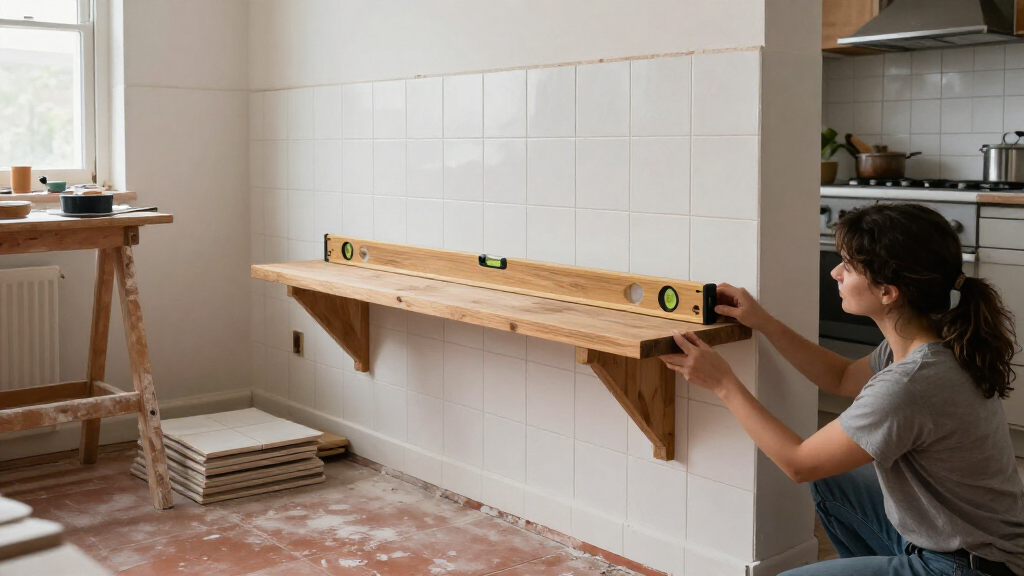
An Ideal Home writer says taking a gradual approach to renovating a 1700s house has helped the household make decisions based on how they use the home, reduce rushed purchases and protect time for life outside the project. The account is personal experience, not research establishing that slow renovation works better for every homeowner.
Ideal Home writer Amy Reeves says renovating her household’s 1700s house gradually has helped her and her partner balance work with everyday life, understand how they use the rooms and avoid some rushed design and purchasing decisions. Her first-person account describes a project that began after they moved in in February 2023 and remains unfinished.
Reeves describes slow renovating as an alternative to quick makeovers and tightly compressed projects: homeowners take time over decisions, resist unnecessary consumption and make changes as they learn what suits the property. She says the couple spent nine months living in the house before undertaking major changes, and that their eventual design differed substantially from her initial plans.
The timeline in the report includes early rewiring, replumbing and floor-plan changes across late 2023 and early 2024, followed by work including a roof, windows, flooring, a wildlife pond and a kitchen. The account says the project still had two bedrooms, a staircase, a living room and an en suite to complete. It also gives later milestones, including a bedroom completed in July 2026 and plastering upstairs starting in September 2026.
Among the six benefits Reeves identifies are a healthier renovation-life balance, better knowledge of the house, fewer costly mistakes, more deliberate spending, less waste and greater flexibility to adapt plans. These are the writer’s observations about her own project; the supplied report does not provide comparative data showing that a slower schedule produces these outcomes for all households.
How More Time Changed the Design
The account highlights a practical point for homeowners: design decisions made before living in a property may not reflect how its occupants actually move through it. Reeves says observing daily routes, evening habits and changing natural light helped the couple revise their plans. That kind of observation can influence choices with long-term effects, such as room layouts, storage and kitchen circulation.
A slower schedule can also change how renovation work fits around family life and finances. Reeves says the couple can postpone a task when they need to protect their wellbeing or relationships, rather than treating a deadline as fixed. Her example is not proof that delay saves money: a longer project can also mean living with unfinished rooms for longer, and the report gives no overall cost comparison. The account is useful as a personal perspective on trade-offs, not as a universal recommendation.
Products Worth Considering

eufy Security Video Doorbell E340 Kit with Chime, 2K Resolution and 8GB Local Storage

TCL T7 Series 85-Inch 4K 144Hz QLED Smart Google TV

Shark Rotator Lift-Away Upright Vacuum with HEPA Filter (NV501)
As an affiliate, we earn on qualifying purchases.
A Project Spanning Several Years
The report contrasts this renovation with Reeves’s previous project, which she says took about two years before a work relocation prompted a move. This time, she and her partner chose to take more time and live through the process. Reeves notes that their schedule has drawn questions from friends and family about how long the work will take and whether they will move before enjoying the finished home.
The renovation has proceeded in stages rather than as one complete remodel. After moving in during February 2023, the couple began larger changes later that year. The report lists the new kitchen in April 2025 and a bedroom conversion beginning in September 2025; it then records the bedroom’s completion in July 2026 and upstairs plastering beginning two months later. The sequence shows what the writer means by gradual work, while also making clear the home is still being renovated.
““I wanted to take my time and really learn to live in the process of it all.””
— Amy Reeves, Ideal Home writer
Costs and Completion Still Unknown
The report does not state the project’s total budget, compare its final cost with a faster renovation, or quantify how much money or material the couple saved. Reeves recounts specific purchasing mistakes, including buying too many socket and switch face plates and ordering the wrong bathroom tile, but does not give their combined financial impact.
The home was still incomplete in the account’s latest stated update: upstairs plastering began in September 2026, with several areas left to finish. A final completion date, remaining budget and details of the other benefits in measurable terms are not established in the supplied material. The claims about reduced waste and better decisions remain the writer’s assessment of her own experience.
Remaining Rooms and Finishing Work
According to Reeves’s timeline, the next stage after plastering upstairs is to complete the remaining rooms and features: two bedrooms, the staircase, a living room and an en suite. The report does not give dates for those jobs or a projected end date. Readers should treat the described schedule as the household’s account at the time of publication, not as a promise that the work will follow a fixed timetable.
Key Questions
What does slow renovating mean in this report?
Reeves uses the term for renovating gradually rather than rushing through a quick makeover. Her account emphasizes living in the house, making considered decisions and avoiding unnecessary purchases where possible.
When did the house renovation begin?
The couple moved into their 1700s house in February 2023. The report says major work followed after they had lived there for nine months.
What benefits does Reeves attribute to taking more time?
She cites a better balance between renovation and daily life, design choices informed by how the household uses the home, fewer rushed decisions, more deliberate spending, less waste and flexibility to change the schedule. These are personal observations, not independently verified results.
Is the renovation finished?
No. The report says upstairs plastering began in September 2026 and lists two bedrooms, a staircase, a living room and an en suite as remaining work. It does not give a completion date.
Source: idealhome.co.uk