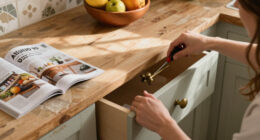
Discover easy zero-waste decorating hacks from circular design experts that turn everyday items into stylish decor. Use glass jars as chic vases or storage containers, transform old T-shirts into unique wall art, and repurpose used cans as planters or candle holders. Upcycle wooden pallets into rustic furniture, reimagine cracked ceramics as mosaic art, and craft decorations from discarded metal or paper waste. Keep exploring these creative ideas to fully embrace sustainable, personalized decor for your space.

Get furniture and decor delivered free — and shop member deals
- Fast, free delivery on millions of items
- Access to Prime Big Deal Days deals on October 6–7
- Prime Video, Amazon Music and more included
Key Takeaways
- Repurpose glass jars and bottles into decorative containers, planters, or lighting fixtures using cutting, etching, or painting techniques.
- Transform scrap textiles into unique wall art, pillows, or patchwork decor with eco-friendly dyeing and sewing.
- Create vibrant mosaics from broken ceramics and tiles, embracing imperfections to craft sustainable wall art or tabletops.
- Upcycle food packaging and paper waste into layered wall collages, sculptures, or framed art to reduce waste and add color.
- Reuse old furniture and metal items with fresh finishes or creative repairs to develop statement pieces that enhance zero-waste interiors.
Top picks for "zero waste decorat"
As an affiliate, we earn on qualifying purchases.
Repurposing Glass Jars Into Chic Vases and Storage Containers

Repurposing glass jars into chic vases and storage containers is an easy and eco-friendly way to reduce waste while adding style to your home. Start by removing any old labels, then give the jars a thorough clean. To add a vintage touch, apply vintage labels or create your own for a personalized look. Glass etching is another great technique to transform plain jars into elegant pieces—just use stencils and etching cream to add intricate designs or monograms. These methods elevate simple jars into decorative accents or functional storage, whether for flowers, spices, or small household items. Not only do you save money, but you also give new life to objects that would otherwise be discarded, aligning with zero-waste principles and enhancing your decor with sustainable flair.
Turning Old T-Shirts Into Unique Wall Art and Textiles

Transforming old T-shirts into wall art and textiles offers a creative way to repurpose clothing while adding personality to your space. You can showcase your favorite designs or colors by turning T-shirts into fabric wall hangings or framed art. To enhance the look sustainably, explore dyeing techniques like tie-dye or eco-friendly fabric dyes, which are part of sustainable dyeing practices. These textile dye techniques allow you to refresh faded shirts or create custom patterns without harmful chemicals. Cutting and sewing T-shirts into patchwork banners or textured textiles adds depth and visual interest. This approach not only reduces waste but also creates one-of-a-kind decor items that reflect your style. Incorporating organic dyeing methods can further ensure your project remains environmentally friendly. With a bit of creativity, your old T-shirts become meaningful, eco-conscious art pieces for your home.
Transforming Used Cans Into Stylish Planters and Candle Holders

Used cans can become striking planters and candle holders that add a rustic charm to your home or garden. To enhance their appeal, try ceramic painting for a glossy, artistic finish. You can also experiment with fabric dyeing to create colorful, textured surfaces. Transform cans into unique decor by adding patterns or designs that match your style. Incorporating vintage decor can further elevate the farmhouse aesthetic of your upcycled creations.
Upcycling Wooden Pallets Into Rustic Coffee Tables and Shelves

If you’re looking to add a rustic touch to your home, upcycling wooden pallets into coffee tables and shelves is an easy and cost-effective project. Wooden pallets are versatile, durable, and perfect for creating rustic furniture with minimal waste. Start by disassembling the pallet and sanding down rough edges. You can cut the wood to your desired size for a coffee table, adding casters for mobility or a glass top for a polished look. For shelves, stack and secure multiple pallet slats to form sturdy storage units. The natural wood grain and imperfections give each piece unique character, making your rustic furniture truly one-of-a-kind. Plus, repurposing pallets keeps waste out of landfills while adding a charming, handcrafted element to your space. Understanding market research can help you identify popular styles and designs that appeal to potential buyers or home decorators.
Reimagining Cracked Ceramics as Artistic Mosaic Decor

When you turn cracked ceramics into mosaic decor, you create stunning patterns that elevate your space. Repairing with style lets you embrace imperfections as unique design elements. This approach offers sustainable art solutions that reduce waste while showcasing your creativity. Incorporating color accuracy considerations can further enhance the visual appeal of your mosaic pieces.
Creative Mosaic Patterns
Cracked ceramics can become striking focal points when transformed into creative mosaic patterns. You can create vibrant, colorful tessellations that add energy and personality to any space. By arranging broken pieces into eye-catching geometric patterns, you turn flaws into beauty. Use contrasting colors and shapes to craft dynamic designs that reflect your style. These mosaics work well as wall art, tabletops, or decorative accents. The key is to embrace the imperfections and see potential in every shard. With a bit of adhesive and some grout, you’ll have an upcycled masterpiece that’s both sustainable and unique. This approach not only reduces waste but also showcases your creativity, transforming damaged ceramics into functional art that tells a story. Incorporating sustainable practices into your decorating helps support environmental health and promotes mindful consumption.
Repairing With Style
Transforming cracked ceramics into artistic mosaic decor allows you to repair and reimagine broken pieces as stunning focal points. Start by carefully cleaning and arranging the shattered fragments. You can incorporate paint techniques to highlight unique cracks or add color accents, giving each piece a personalized touch. Using textile printing methods, you might create patterns on adhesive backing or grout to add texture and visual interest. This approach lets you embed your creativity into the mosaic, turning imperfections into a statement. The key is to blend repair with artistic expression, making your mosaic both functional and visually mesmerizing. By applying these techniques, you not only extend the life of your ceramics but also craft a distinctive decor piece that reflects your style and commitment to zero waste. Additionally, embracing upcycling techniques can further enhance your project and promote sustainable practices in your decorating efforts.
Sustainable Art Solutions
Reimagining cracked ceramics as artistic mosaic decor offers a sustainable way to give damaged pieces new life. By transforming broken ceramics into vibrant mosaics, you embrace a zero-waste mindset that keeps materials in circulation. This approach aligns with the circular economy, reducing waste and minimizing environmental impact. Instead of discarding shattered dishes, you can repurpose fragments into stunning wall art, tabletops, or decorative accents. Using leftover or damaged ceramics in mosaic projects not only preserves resources but also adds unique character to your space. It’s a creative, eco-friendly solution that celebrates imperfections and promotes sustainability. With a little effort, you turn broken pieces into beautiful, functional art, demonstrating how circular-design principles can inspire innovative, zero-waste decorating solutions. Additionally, exploring Forsale 100 options can help you find affordable materials and tools for your upcycling projects.
Converting Wine Bottles Into Elegant Pendant Lighting

To turn wine bottles into stunning pendant lights, you first need to pick bottles that are sturdy and visually appealing. Next, carefully cut and shape the glass to create the perfect fixture, making sure to prioritize safety. Additionally, consider incorporating recycled materials into your design to enhance sustainability. Finally, install your lighting setup securely, ensuring everything is safe and functional.
Selecting Suitable Bottles
Choosing the right wine bottles is vital for creating elegant pendant lighting. Focus on bottle aesthetics—look for bottles with clean lines, minimal labels, and appealing shapes that enhance your design. Clear or lightly tinted glass works best, as it maximizes light diffusion and complements various decor styles. Material suitability is also essential; select bottles made from sturdy, high-quality glass to withstand handling and installation. Avoid bottles with cracks, chips, or uneven surfaces, which can compromise safety and appearance. Consider the overall style you want to achieve—classic, modern, or rustic—when choosing bottles. By carefully selecting bottles that align with your aesthetic goals and are suitable in material, you guarantee your pendant lighting will be both beautiful and durable. Additionally, understanding sound recording techniques can help you capture the best lighting effects if incorporating multimedia elements into your decor projects.
Cutting and Shaping Glass
Transforming wine bottles into elegant pendant lighting involves carefully cutting and shaping the glass to achieve your desired design. You’ll need to use a glass cutter or a hot wire tool to make precise cuts, ensuring smooth edges for safety and aesthetic appeal. Once cut, you can shape the glass further through sanding or glass etching, adding textured patterns or stained glass effects. For a polished look, consider creating intricate designs or frosted finishes that diffuse light beautifully. Remember, safety is key—wear gloves and protective eyewear. By mastering these techniques, you can turn discarded bottles into stunning, functional art pieces. Proper payment security measures should also be in place if you’re selling or sharing your creations online to protect your transactions and customer data.
Installing Lighting Safely
Ever wondered how to install your DIY wine bottle pendant lights safely? First, turn off the power at the circuit breaker before handling any electric wiring. Carefully plan your fixture placement, ensuring the bottles hang at a safe height and are evenly spaced. Use appropriate electrical connectors and secure the wiring inside a ceiling canopy or junction box. When installing, keep the wiring neat and avoid pinching or damaging it. Make sure the fixture is firmly mounted to support the weight of the bottles. Double-check that all connections are tight and insulated to prevent shorts. Test the light before finalizing the setup, and always follow local electrical codes. Proper installation guarantees both safety and a stunning, eco-friendly lighting feature.
Using Scrap Fabric to Create Custom Throw Pillows and Wall Hangings

Scrap fabric offers a versatile and eco-friendly way to craft personalized home decor. You can transform leftover textiles into unique throw pillows and wall hangings that showcase your style. Use your fabric dyeing skills to add vibrant colors or patterns, turning scraps into eye-catching textile art. These projects allow you to upcycle materials while expressing creativity.
Consider these ideas:
- Combine different textures and patterns for a boho look
- Use fabric dyeing techniques to create custom colors
- Add embellishments like embroidery or appliqué
- Mix and match scraps for a patchwork effect
Repurposing Broken or Old Furniture Into Statement Pieces

When furniture becomes broken or outdated, you have a perfect opportunity to turn it into a striking statement piece rather than discarding it. Old antique furniture, with its unique character and history, can be transformed into eye-catching focal points. Start by evaluating its structure and deciding whether repairs are feasible or if a bold upcycle is better. Embrace vintage finishes to preserve its charm or give it a modern twist with fresh paint and new hardware. Sanding down worn surfaces reveals beautiful wood grains that add warmth and texture. You can also combine multiple pieces, creating a custom console or seating area. By repurposing old furniture, you not only reduce waste but also craft one-of-a-kind decor that tells a story.
Crafting Jewelry and Decorative Items From Discarded Metal Pieces

Old furniture and metal items often end up in the trash, but they hold untapped potential for creating unique jewelry and decorative pieces. You can transform scrap metal into stunning metal sculpture or jewelry design by carefully cutting, shaping, and polishing the pieces. Discarded metal parts like nuts, bolts, and sheet metal make excellent materials for crafting one-of-a-kind accessories and ornaments. This approach not only reduces waste but also adds a personal touch to your decor. With basic tools, you can experiment with textures and forms to create eye-catching pieces that reflect your style. Upcycling metal encourages creativity and sustainability, turning what’s discarded into something beautiful and functional.
Transform scrap metal into unique jewelry and decor—craft, shape, and polish for sustainable, personalized designs.
- Use old jewelry components for new designs
- Incorporate rusted metal for an industrial look
- Combine different metal types for contrast
- Add beads or stones for extra flair
Turning Leftover Food Packaging Into Artistic Wall Collages

You can transform leftover food packaging into striking wall collages by experimenting with creative arrangement techniques that highlight their shapes and colors. Choose vibrant, varied materials to add visual interest and make your artwork pop. To finish, consider secure attachment methods and framing options that guarantee your collage stays intact and looks polished.
Creative Arrangement Techniques
Transforming leftover food packaging into artistic wall collages offers a creative way to reduce waste and personalize your space. You can craft stunning displays by arranging packaging in visually appealing patterns, mimicking flower arrangements or centerpiece designs. Use different shapes and sizes to add depth and interest, and consider layering for a textured effect. Incorporate various materials like aluminum foil, plastic containers, and paper wrappers for a dynamic look. Play with symmetry or asymmetry to suit your style. This technique not only recycles waste but also transforms it into a conversation piece. To enhance your arrangement, add small decorative elements or lighting. With a little creativity, your leftover packaging becomes a vibrant, eco-friendly art installation that reflects your personality.
- Experiment with shapes and sizes for visual interest
- Use layering to add depth and texture
- Incorporate lighting to highlight details
- Mix materials for a dynamic, eclectic look
Choosing Colorful Packaging Materials
Choosing colorful packaging materials can instantly brighten your wall collages and make them more eye-catching. Look for vibrant food wrappers, snack bags, and beverage cartons that showcase bold patterns and hues. To enhance their visual appeal, consider using eco friendly dyes to accentuate or recolor certain sections, ensuring your art remains sustainable. Brightly colored packaging adds variety and depth without needing extra paint or supplies. When selecting materials, prioritize those with interesting textures or unique prints, turning everyday leftovers into artistic focal points. Mixing different colors and patterns creates a lively, dynamic display that celebrates zero-waste principles. By thoughtfully choosing and repurposing colorful packaging, you turn discarded food containers into lively, sustainable wall art that’s both eco-friendly and visually compelling.
Securing and Framing Ideas
Once you’ve collected vibrant packaging materials for your wall collages, the next step is to guarantee and display them effectively. Using creative securing and framing ideas ensures your artwork stays intact and looks polished. Consider using washi tape or double-sided adhesive strips for an easy, damage-free hold. To enhance your display, explore innovative display methods like shadow boxes or repurposed frames that complement your upcycled materials. You can also layer different textures or cutouts for added depth. Keep in mind that proper framing not only protects your collage but also elevates its visual appeal. This approach allows your colorful packaging to shine as a true statement piece. Experiment with different securing and framing ideas to find what best showcases your eco-friendly masterpiece.
Creating Eco-Friendly Planters From Recycled Plastic Containers

Creating eco-friendly planters from recycled plastic containers is an easy and sustainable way to decorate your space. Start by choosing containers that can be repurposed, like yogurt tubs or plastic bottles. Before planting, consider composting kitchen scraps to enrich your soil naturally. When selecting eco-friendly planting soil, opt for organic, biodegradable options that promote healthy plant growth without harmful chemicals. Drill small drainage holes in the base of your containers to prevent waterlogging. These upcycled planters not only reduce waste but add a creative touch to your home or garden. You can even personalize them with paint or decorations for a unique look. This simple hack transforms plastic waste into beautiful, functional decor while supporting a zero-waste lifestyle.
Making Decorative Items From Old Books and Paper Waste

Upcycled books and paper waste can become stunning decorative items that add character and sustainability to your space. You can transform old books into mesmerizing book art pieces or create intricate paper crafts that showcase your creativity. For example, fold pages into delicate sculptures or cut patterns to make wall hangings. Using book covers and pages, you can craft unique bookmarks or decorate picture frames. You might also make paper flowers or origami shapes to brighten up any room. These projects not only reduce waste but also turn everyday materials into eye-catching decor. Embrace your inner artist and experiment with different techniques to bring new life to discarded books and paper waste, making your space both beautiful and eco-friendly.
Transform discarded books and paper waste into beautiful, eco-friendly home decor with creative folding, cutting, and crafting techniques.
- Folded book sculptures and paper flowers
- Decorative bookmarks from pages and covers
- Wall art using cut and layered paper
- Origami shapes to embellish shelves
Frequently Asked Questions
How Can I Ensure My Upcycled Decor Is Safe and Durable?
To guarantee your upcycled decor is safe and durable, start by checking safety certifications for the materials you use. Conduct durability testing by applying the decor in real-life conditions, observing how it holds up over time. Use non-toxic paints and finishes, and avoid fragile or weak materials. Regularly inspect your creations for wear and tear, making repairs as needed. This approach helps keep your upcycled decor both safe and long-lasting.
What Tools and Materials Are Essential for Beginner Upcyclers?
Imagine your workspace as a treasure chest waiting to be opened. For beginner upcyclers, essential tools like scissors, glue guns, and sandpaper are your keys, helping you transform found objects into art. Recycling basics guide your choices, ensuring safe, sustainable projects. Start with simple upcycling tools like paintbrushes, pliers, and brushes—these will be your trusty companions in turning everyday items into beautiful, eco-friendly decor.
How Do I Choose the Best Upcycling Projects for My Space?
When choosing the best upcycling projects for your space, consider your style and needs. Look for opportunities in recycling art and creative repurposing that match your decor and existing items. Start with simple projects, like turning jars into planters or old furniture into statement pieces. Focus on projects that inspire you and add value to your space, making upcycling both fun and functional.
Are There Eco-Friendly Finishes or Paints Suitable for Upcycled Items?
You’ll find eco-friendly paints and natural finishes perfect for upcycled items, helping you decorate sustainably. Look for options labeled as low-VOC or zero-VOC, which reduce harmful emissions. Natural finishes like beeswax, plant-based oils, or water-based paints offer non-toxic, eco-conscious choices that enhance your projects. These finishes protect your upcycled pieces while supporting your goal of creating an environmentally friendly space.
How Can I Incorporate Upcycled Decor Into a Cohesive Interior Design?
Imagine your space as a storybook, each upcycled piece a chapter. To create a cohesive interior, focus on color coordination and style consistency, blending different upcycled items seamlessly. Choose a unifying color palette or theme, and match textures and finishes for harmony. Let each piece reflect your personality, transforming your home into a narrative of sustainability and style, where every element contributes to a beautifully balanced, intentional design.
Conclusion
By upcycling everyday items, you not only reduce waste but also open endless creative possibilities. Some say that repurposing is just a trend, but evidence shows it can considerably cut your environmental footprint and inspire your unique style. When you embrace circular design, you’re part of a movement that’s proven to foster sustainability and innovation. So go ahead—transform what others toss aside into stunning, eco-friendly decor that truly makes a difference.
Halloween Picks
halloween
As an affiliate, we earn on qualifying purchases.