
To instantly pull a room together, start by anchoring your biggest furniture on the rug for grounding. Make certain of proper sizing so the rug complements your space without overwhelming or disconnecting furniture. Center the rug for symmetry, and use geometric ratios like the rule of thirds for balanced placement. Position focal points on or around the rug, align it with architectural features, and maintain consistent spacing for cohesion. If you want to reveal more design secrets, keep exploring these key principles.
Key Takeaways
- Anchor the largest furniture pieces on the rug with at least their front legs to create visual cohesion and balance.
- Center the rug beneath focal points, such as a coffee table or seating area, for symmetry and emphasis.
- Use geometric ratios like the rule of thirds or golden ratio to determine optimal rug placement in open spaces.
- Maintain consistent spacing between the rug edges and surrounding furniture for a unified, harmonious look.
- Align the rug with architectural elements or room lines to enhance structural flow and visual harmony.
Anchor the Largest Furniture Pieces on the Rug

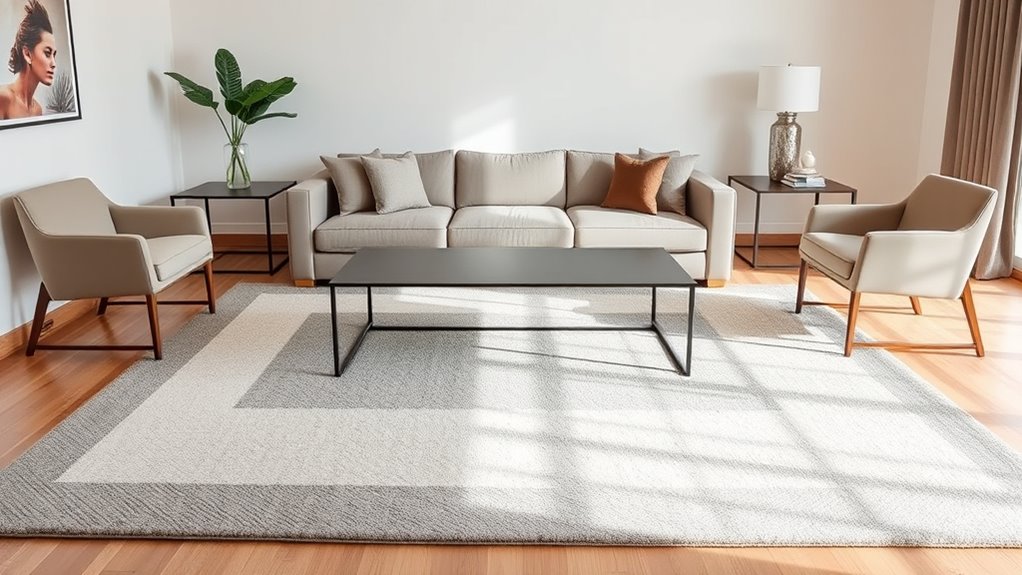
To create a balanced and cohesive look in your space, it’s important to anchor the largest furniture pieces on the rug. This furniture anchoring technique grounds your arrangement and prevents the room from feeling disjointed. Position your sofa or main seating so that at least the front legs rest on the rug, establishing a clear connection between the furniture and the rug. Doing this enhances the focal point of the room, drawing attention to the main seating area. Ensuring the largest pieces are properly anchored also creates visual harmony and guides the eye naturally around the space. Remember, a well-anchored furniture setup is the foundation for a polished, inviting room. It’s all about making your space feel intentional and well-balanced. Properly furnishing your space can significantly elevate the overall aesthetic and comfort.
Ensure Proper Rug Size in Relation to the Space

Start by measuring your space to determine the right rug size for the room. Think about how your furniture will sit on or around the rug to make certain everything fits well. Proper sizing creates a balanced look that enhances your overall decor. Additionally, consider rug placement rules that can instantly pull a room together and emphasize the importance of proportion for a cohesive design.
Measure Available Space
Measuring your available space is essential to choosing the right rug size. Start with an accurate area measurement to determine how much space you have for the rug. This helps you allocate space effectively, ensuring the rug fits comfortably within the room’s dimensions. Take measurements of the length and width of the area where you plan to place the rug, noting any furniture or architectural features. Proper space allocation means avoiding a rug that’s too small, which can make the room look disconnected, or too large, which can overwhelm the space. Keep in mind the overall room size and traffic flow when measuring. Accurate measurements guarantee you select a rug size that enhances your room’s proportions and style. Incorporating balanced proportions based on your measurements ensures a cohesive and inviting farmhouse bedroom ambiance.
Consider Furniture Placement
When placing your rug, it’s important to think about how your furniture will interact with it. Ensure the rug size complements your furniture layout, so it doesn’t look lost or overwhelming. Consider color coordination by choosing a rug that either complements or contrasts with your furniture to create visual harmony or interest. Texture contrast also plays a key role; pairing a plush rug with sleek furniture adds depth, while a flat weave with textured upholstery creates balance. Keep in mind that in a well-designed room, furniture should sit comfortably on the rug, with enough exposed space to define the area. Properly considering furniture placement helps your rug enhance the room’s overall aesthetic and feel more cohesive. Additionally, understanding spatial relationships can help you arrange your furniture and rug to achieve a balanced and inviting space.
Center the Rug for Symmetry and Balance

To create a balanced look, make sure your rug has an equal overhang on all sides. Align the rug with your furniture to enhance symmetry and visual appeal. Centering the rug carefully helps anchor the space and makes everything feel more harmonious. Additionally, paying attention to visual balance can further improve the room’s overall aesthetic.
Equal Rug Overhang
Centering your rug with equal overhang on all sides creates a sense of symmetry and visual balance in your space. To achieve this, focus on maintaining equal proportions of rug overhang, which enhances harmony. Here are key points to consider:
- Measure your room’s dimensions to determine the ideal rug size.
- Ensure the same amount of rug overhang extends beyond furniture or walls on each side.
- Use tape or chalk to mark the rug’s placement for precision.
- Adjust the rug until it looks balanced, with equal overhang creating a pleasing symmetry.
- Checking the rug’s placement periodically helps maintain the desired balance over time.
Align With Furniture
Aligning your rug with your furniture creates a cohesive look that enhances the room’s symmetry and balance. Centering the rug under key furniture pieces, like a sofa or table, sets a visual anchor that unifies the space. Pay attention to color coordination by choosing a rug that complements your furniture’s hues, creating harmony. Additionally, consider texture contrast; a plush rug paired with sleek furniture adds depth and interest. When the rug aligns with your furniture’s edges or legs, it emphasizes the room’s geometry, making the space feel intentional and well-designed. Incorporating elements of energetic alignment can further optimize the flow and harmony of the space, creating a more inviting environment. This approach helps establish a balanced foundation, guiding the eye smoothly across the room and making the overall aesthetic feel polished and inviting.
Center Rug Visually
Placing your rug so that it is visually centered in the room creates immediate symmetry and balance. This technique enhances your decor style and guarantees a cohesive look. To achieve this, consider these steps:
- Measure the room’s midpoint and align the rug’s center with it.
- Ensure equal distance from the rug’s edges to the walls on all sides for a balanced appearance.
- Match the rug’s color and pattern to your furniture and accessories for seamless color coordination.
- Use geometric principles to position the rug so that it complements the room’s layout and creates visual harmony.
- Incorporate spatial awareness to better understand how the rug interacts with other elements in the space and to optimize overall balance.
Centering your rug visually anchors the space, making it feel more organized and intentional. It’s a simple step with a powerful impact on your room’s overall aesthetic.
Use Geometric Ratios to Determine Rug Placement in Open Areas

When determining the ideal rug placement in open areas, applying geometric ratios can create a balanced and visually appealing layout. Use ratios like the rule of thirds or the golden ratio to guide where you position your area rugs. For example, divide the space into sections based on these ratios, ensuring the rug complements the room’s proportions. This approach helps establish harmony between the rug and surrounding furniture. Larger area rugs should extend beyond furniture edges, following these geometric principles to create cohesion. By applying geometric ratios, you avoid awkward gaps or overcrowded zones, making the room feel more thoughtfully designed. Additionally, understanding the importance of contrast ratio can help in selecting rugs with appropriate patterns and shading to enhance visual interest. Ultimately, these ratios serve as a simple yet powerful tool to enhance the room’s visual flow and balance through strategic rug placement.
Position Rugs to Highlight Focal Points

To effectively highlight a focal point in your room, position the rug so it draws attention to that feature, whether it’s a fireplace, artwork, or statement furniture. Aim to anchor the room’s key feature by: 1. Placing the front legs of furniture on the rug, framing the focal point. 2. Ensuring the rug extends beyond the focal point for balance. 3. Centering the rug directly beneath the feature to create focus. 4. Using contrasting colors or patterns to make the focal point stand out. Incorporating visual hierarchy principles can further enhance the impact of your rug placement. This approach emphasizes your room’s features, guiding the eye naturally toward the main attraction. Proper rug placement enhances the room’s visual hierarchy, making your focal point the star of the space.
Align Rugs With Architectural Lines and Room Geometry

Aligning your rug with the architectural lines and overall geometry of your room creates a cohesive and harmonious look. When the rug’s edges mirror the room’s structural elements, like walls, doorways, or built-in features, it enhances pattern coordination and emphasizes the room’s natural flow. Consider the room’s shape—rectangular, square, or irregular—and position the rug to complement these lines. This alignment also boosts color harmony, as the rug’s hues will naturally tie into the surrounding architecture. For example, a rug that aligns with a room’s grid-like windows or molding creates visual balance. By paying attention to geometry, your rug becomes an integral part of the space, reinforcing unity and elevating the overall design.
Create Visual Cohesion With Consistent Spacing

Creating visual cohesion with consistent spacing guarantees your rug feels intentional and balanced within the room. To achieve this, focus on these key points:
- Maintain equal gaps between the rug’s edges and surrounding furniture, ensuring even spacing on all sides.
- Use pattern contrast wisely; avoid overly busy patterns that clash or disrupt harmony.
- Coordinate colors by selecting rugs that complement or match nearby furnishings, enhancing overall color coordination.
- Keep consistent spacing between multiple rugs if layering or grouping, reinforcing a unified look.
These steps help your rug serve as a visual anchor, pulling the room together. Consistent spacing emphasizes pattern contrast subtly and creates a seamless flow, making your space feel cohesive and thoughtfully designed.
Balance Rug Placement With Room Proportions

Balancing rug placement with room proportions guarantees your space feels harmonious and inviting. To achieve this, consider your decor style—whether modern, traditional, or eclectic—and select a rug size that complements it. A rug that’s too small can make a room feel disjointed, while one that’s too large may overwhelm the space. Align the rug’s dimensions with the room’s proportions, ensuring it anchors furniture without overpowering it. Pay attention to color harmony as well; choosing a rug that echoes the room’s color palette creates visual cohesion. Properly proportioned rug placement enhances the flow, making the space feel balanced and thoughtfully curated. This harmony between rug size, room layout, and decor style elevates your overall aesthetic effortlessly.
Frequently Asked Questions
How Do I Choose a Rug Shape That Complements My Room Layout?
When choosing a rug shape that complements your room layout, focus on creating rug shape harmony and enhancing visual flow. If your space is rectangular, go for a rectangular rug to emphasize length. Round rugs work well with square or angular rooms, softening sharp edges. For open-concept spaces, mixing shapes adds interest. Always consider how the rug’s shape interacts with your furniture and room proportions to achieve a balanced, cohesive look.
Can Rug Placement Influence the Perceived Size of a Room?
Rug placement can totally transform your room’s visual perception, creating a stunning spatial illusion. By positioning a rug correctly—like anchoring furniture on it—you make the space feel larger or cozier. For example, a well-placed rug can make a small room seem as expansive as a ballroom. It’s amazing how strategic placement influences how big or intimate your room feels, giving you control over its perceived size with just a simple rug.
What Are Common Mistakes to Avoid When Aligning Rugs With Room Architecture?
When aligning rugs with your room’s architecture, avoid common mistakes like misaligned edges that disrupt symmetry. Make sure the rug’s pattern is consistent with nearby furniture and architectural features to create harmony. Don’t ignore the importance of proper size—an oversized or undersized rug can throw off the balance. Pay attention to placement, ensuring the rug complements the room’s layout instead of clashing with it.
How Do I Adapt Rug Placement for Irregularly Shaped Rooms?
Think on your feet when adapting rug placement for irregularly shaped rooms; it’s not a one-size-fits-all situation. Focus on area segmentation to define different zones and create a sense of order. Use your rug to guide the visual flow, anchoring furniture and highlighting key spaces. By tailoring placement to the unique contours, you’ll make the room feel cohesive and inviting, even with unconventional shapes.
Are There Specific Geometric Principles for Layering Multiple Rugs?
When layering multiple rugs, focus on geometric layering to create visual harmony. You should vary shapes, sizes, and patterns while keeping some alignment to unify the space. For instance, layer rectangular and circular rugs with complementary colors, ensuring the edges slightly overlap or sit within each other. This technique emphasizes balance, making your room feel cohesive and thoughtfully designed. Play with symmetry and asymmetry to enhance the overall aesthetic.
Conclusion
Mastering these rug placement rules transforms your space instantly, but the real magic lies in how you apply them. Will you choose to highlight your room’s focal point or create perfect symmetry? The possibilities are endless, and each decision shapes your room’s vibe. So, are you ready to experiment with these geometric principles and uncover a stunning, cohesive look? The perfect room awaits—are you prepared to make it happen?