Over the past 700 years, interior design has shifted from the luxurious tapestries and frescoes of medieval palaces to the ornate details of Baroque and Rococo, then to the simple elegance of Neoclassical styles. Victorian excess gave way to Arts & Crafts, leading to modern minimalism and sleek mid-century designs. Today, sustainability and technology influence interiors, blending tradition with innovation. Keep exploring to see how every era’s style shapes today’s living spaces.
Key Takeaways
- Interior design evolved from opulent medieval and Renaissance palaces showcasing tapestries and frescoes to minimalist modern spaces.
- Baroque, Rococo, Victorian styles emphasized luxury textiles and elaborate ornamentation, contrasting with Arts & Crafts’ focus on craftsmanship and simplicity.
- Neoclassical revival introduced classical motifs and symmetry, shifting toward functional, clean-lined interiors aligned with modern sensibilities.
- Post-war innovation brought new materials and minimalism, emphasizing sleek designs, sustainability, and technology integration.
- Future trends blend tradition with technology, emphasizing cultural symbolism, flexible modularity, and eco-conscious, smart interior environments.
The Opulence of Medieval and Renaissance Interiors

During the Medieval and Renaissance periods, interior design reached new heights of opulence, reflecting the wealth and status of its inhabitants. You would notice medieval tapestries adorning walls, not just for decoration but also for insulation and status symbols. These intricate textiles often depicted historical or biblical scenes, showcasing craftsmanship and wealth. Renaissance frescoes transformed ceilings and walls into vibrant storytelling canvases, displaying artistic mastery and cultural prestige. Wealthy patrons commissioned these elaborate works to demonstrate their power and sophistication. The interiors of castles and palaces became immersive displays of luxury, combining functional elements with artistic grandeur. This era’s emphasis on detailed tapestries and frescoes set a foundation for future decorative styles, emphasizing wealth, culture, and artistic expression.
Baroque and Rococo: The Age of Ornate Elegance

As the Renaissance gave way to the Baroque and Rococo periods, interior design shifted towards even more elaborate displays of wealth and artistic flair. You’ll notice an abundance of luxury textiles, such as silk and velvet, used to upholster furniture and drape windows, creating a sense of richness. Decorative motifs become more intricate, featuring gilded carvings, scrolls, and floral patterns that celebrate ornamental detail. Walls are adorned with elaborate stuccoes and frescoes, emphasizing grandeur. Rococo’s playful asymmetry contrasts with Baroque’s dramatic flair, yet both styles share a love for ornate embellishments. You’d feel immersed in an environment where every element exudes elegance, showcasing craftsmanship and the owner’s affluence through sumptuous textiles and elaborate decorative motifs.
The Neoclassical Revival and the Birth of Modernity
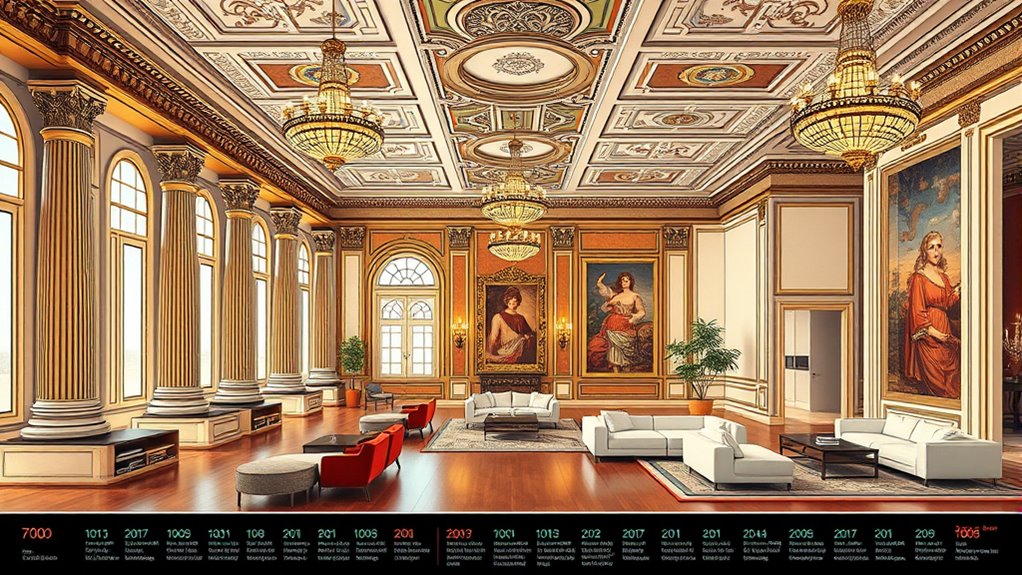
You’ll notice how the Neoclassical Revival brings back classical elements with a fresh, modern twist. Inspired by Enlightenment ideas, it emphasizes reason and simplicity over ornate decoration. This shift marks the beginning of a new era where clean lines and functional design take center stage.
Revival of Classical Elements
The Revival of Classical Elements marked a significant shift in interior design, blending historical elegance with modern sensibilities. During the classical revival, designers reintroduced decorative motifs like columns, friezes, and intricate moldings, emphasizing symmetry and proportion. This movement aimed to evoke the grandeur of ancient Greece and Rome while adapting to contemporary tastes. You’ll notice a renewed appreciation for ornamentation, yet with a streamlined, less ornate approach compared to earlier periods. The classical revival’s focus on clean lines and balanced compositions helped bridge traditional elegance with emerging modern ideas. As a result, interiors gained a timeless quality, combining the decorative motifs of the past with a fresh, modern perspective that still influences design today. Incorporating elements like proportional design, which emphasizes harmony and balance, further enhanced this stylistic evolution.
Influence of Enlightenment Ideas
The Enlightenment ideas of reason, individualism, and scientific progress sparked a profound shift in interior design during the Neoclassical Revival. Enlightenment rationalism emphasized clarity, order, and symmetry, guiding designers to favor balanced proportions and restrained ornamentation. This approach aligned with aesthetic philosophy that prioritized reason and harmony over excess, inspiring a return to classical ideals rooted in ancient Greece and Rome. As a result, interiors became more focused on simplicity, rationality, and universal appeal, reflecting the era’s intellectual pursuit of knowledge and progress. You’d see this influence in clean lines, geometric forms, and an emphasis on functionality—core principles shaping the birth of modern interior design, moving away from the ornate Baroque and Rococo styles that preceded it.
Shift Toward Simplicity
As the Neoclassical Revival gained momentum, interior design shifted decisively toward simplicity and functionality. You notice cleaner lines, restrained ornamentation, and a focus on proportion and balance. This style emphasizes timeless elegance over elaborate details, making spaces feel open and uncluttered. The influence extends to urban outdoor areas, where minimalist furniture and natural materials create a seamless indoor-outdoor flow. Meanwhile, eclectic fusion becomes more refined, blending historic elements with modern sensibilities without overwhelming the space. This movement reflects a desire for practical, versatile environments that prioritize comfort and clarity. You’re encouraged to embrace straightforward designs that celebrate form and function, setting the stage for the modern interior design revolution. Simplicity becomes a symbol of progress and modernity.
Victorian Excess and the Arts and Crafts Movement

Have you ever noticed how Victorian interior design can feel overwhelming with its ornate details and luxurious embellishments? This style, known for Victorian excess, emphasizes intricate patterns, heavy draperies, and elaborate furniture. It reflects wealth and opulence but can seem cluttered. In response, the Arts and Crafts movement emerged as a reaction to this excess, favoring simplicity, craftsmanship, and natural materials. It promotes honest, functional designs that reject excessive ornamentation. While Victorian interiors indulge in richness and decoration, Arts and Crafts emphasize authenticity and practicality. Both styles mark a significant shift in interior design ideals, balancing aesthetic beauty with social values. Understanding this contrast helps you appreciate how design evolves from ornate grandeur to handcrafted simplicity, especially in diverse designs that enhance interior aesthetics.
The Rise of Modernism and Minimalist Designs

Modernism and minimalist design emerged in the early 20th century as a response to ornate and decorative styles. You’ll notice this shift emphasizes clean lines, functional spaces, and a focus on simplicity. Industrial chic became popular, showcasing raw materials like metal and exposed brick, creating a utilitarian yet stylish look. Meanwhile, bohemian flair brought a relaxed, eclectic vibe, blending textures, colors, and patterns to reflect personal expression. These styles reject excess decoration, favoring open layouts and sleek furniture. You might incorporate minimalist aesthetics with touches of industrial chic for a modern, urban feel, or add bohemian elements for warmth and personality. The adoption of Preppy Dog Names in interior decor reflects a trend toward sophisticated and trendy aesthetics that appeal to contemporary tastes. This movement redefined interiors by prioritizing form and function, shaping contemporary spaces that balance practicality with individual style.
Post-War Innovation and the Mid-Century Modern Style

After World War II, new materials and manufacturing techniques transformed interior design, making innovative furniture and finishes more accessible. You’ll notice how minimalism gained popularity, emphasizing clean lines and functional spaces. This era marked a shift toward simplicity that still influences modern interiors today, with sound design techniques increasingly integrated into multimedia presentations to enhance visual storytelling.
Post-War Material Innovation
Following World War II, designers embraced new materials that revolutionized interior spaces, making mid-century modern style possible. They experimented with eco-friendly materials like molded plywood, fiberglass, and plastics, which allowed for sleek, innovative furniture designs. These materials enabled lighter, more functional pieces that fit the era’s emphasis on simplicity and efficiency. Additionally, advancements in smart home technology began influencing interior choices, integrating automation and control systems into everyday spaces. The focus shifted toward materials that supported these innovations, emphasizing sustainability and technological integration. This period marked a significant departure from traditional materials, embracing the future with a blend of eco-consciousness and technological progress, laying the foundation for the modern, functional aesthetic that defines mid-century modern interiors today.
Rise of Minimalist Aesthetics
The innovative materials introduced during the post-war period not only transformed furniture design but also set the stage for a broader shift toward minimalism. You’ll notice this in Scandinavian minimalism, which emphasizes clean lines, functionality, and simplicity, reflecting a desire to strip design down to essentials. Simultaneously, Japanese wabi sabi influences promoted embracing imperfection and natural materials, fostering a sense of calm and authenticity. These movements moved away from ornate details, prioritizing form and material honesty. The mid-century modern style emerged from this mindset, blending these minimalist principles with innovative materials like molded plywood and plastics. As a result, interior spaces became more streamlined, functional, and tranquil, reflecting a post-war desire for practicality and beauty through simplicity. Additionally, AI-powered trend analysis has played a role in identifying emerging aesthetic preferences, further shaping minimalist design movements today.
Contemporary Trends: Sustainability and Technological Integration
Contemporary interior design increasingly emphasizes sustainability and technological integration to create innovative, eco-friendly spaces. You’ll find designers prioritizing sustainable materials like reclaimed wood, recycled metal, and low-VOC paints to reduce environmental impact. Smart home integration plays a significant role, enabling seamless control of lighting, climate, and security systems through apps or voice commands. These advancements not only enhance convenience but also promote energy efficiency. You can expect to see furniture crafted from eco-conscious sources combined with tech-enabled features that adapt to your lifestyle. This approach encourages mindful consumption and promotes greener living while maintaining a sleek, modern aesthetic. By blending sustainability with cutting-edge technology, today’s interior design aims to make spaces more functional, responsible, and future-ready. Additionally, incorporating vertical storage solutions helps maximize space and supports sustainable organization practices.
The Future of Interior Design: Blending Tradition and Innovation

As interior design evolves, the future will see a seamless blend of traditional craftsmanship and innovative technology, creating spaces that honor history while embracing progress. You’ll notice cultural symbolism woven into modern designs, connecting past and present. Smart technology will optimize space utilization, making rooms more functional without sacrificing aesthetics. Imagine:
| Traditional Elements | Modern Innovations |
|---|---|
| Hand-carved woodwork | Interactive digital murals |
| Tapestry with cultural motifs | Modular furniture for flexible space |
| Antique artifacts | Automated climate control |
This fusion allows you to create environments rich in history yet adaptable for future needs. By blending tradition and innovation, your spaces will reflect cultural identity while leveraging cutting-edge solutions for efficient living. Incorporating rustic decor and natural materials will further enhance the authentic farmhouse feel in modern settings.
Frequently Asked Questions
How Did Social Hierarchies Influence Interior Design Choices Throughout History?
Social stratification shapes your interior design choices by emphasizing decorative symbolism that reflects your status. Wealthier classes display opulent furnishings and intricate details, showcasing their power and influence. Meanwhile, lower social tiers opt for simpler, functional spaces. You notice how social hierarchies influence every aspect, from materials to ornamentation, reinforcing divisions and status. This layering of design signals your position, making interiors a visual language of social stratification.
What Role Did Global Trade Play in Shaping Interior Styles?
You see, global trade played a huge role in shaping interior styles by connecting diverse cultures through trade routes. As goods and ideas traveled, cultural diffusion introduced new materials, patterns, and techniques into local design practices. This exchange enriched interiors, blending influences from distant regions and creating more eclectic, globally inspired spaces. Trade made it possible for interior design to evolve beyond local traditions, fostering innovation and cross-cultural appreciation.
How Did Technological Advancements Impact Interior Materials and Techniques?
You’re curious how technological advancements influenced interior materials and techniques. Innovations like new, innovative materials, including plastics and composites, expanded design possibilities. Digital fabrication tools, such as 3D printing and CNC machining, allow you to create intricate, custom pieces more efficiently. These advancements enable you to experiment with textures, forms, and finishes, transforming interior spaces faster and more creatively than ever before, pushing the boundaries of traditional design methods.
In What Ways Did Cultural Exchanges Affect Design Aesthetics?
You see, cultural exchanges foster cultural fusion, blending diverse traditions into unique design aesthetics. Artistic collaboration across regions introduces new motifs, materials, and techniques, enriching interior styles. By embracing these influences, you create spaces that reflect a global dialogue, breaking down cultural barriers. This blending results in innovative, eclectic interiors that celebrate diversity, making your environment more vibrant, dynamic, and reflective of interconnected artistic expressions.
How Have Interior Design Values Shifted Regarding Comfort Versus Display?
You might think it’s a balancing act, but interior design has shifted from valuing display to prioritizing comfort. Today’s spaces lean toward luxury versus simplicity, emphasizing function over form. You’re encouraged to focus on cozy, practical environments where comfort takes center stage, rather than just showcasing status. This evolution reflects a move away from ostentation, embracing spaces that serve your needs and well-being above all.
Conclusion
As you trace this 700-year journey, you’ll see interior design is a river constantly flowing, shaped by history’s storms and calm. From regal palaces to sleek pods, each style adds a brushstroke to your understanding of beauty and innovation. Embrace the dance of tradition and modernity, knowing your space is part of a timeless mosaic. The future awaits, ready to weave new patterns into this ever-evolving tapestry.