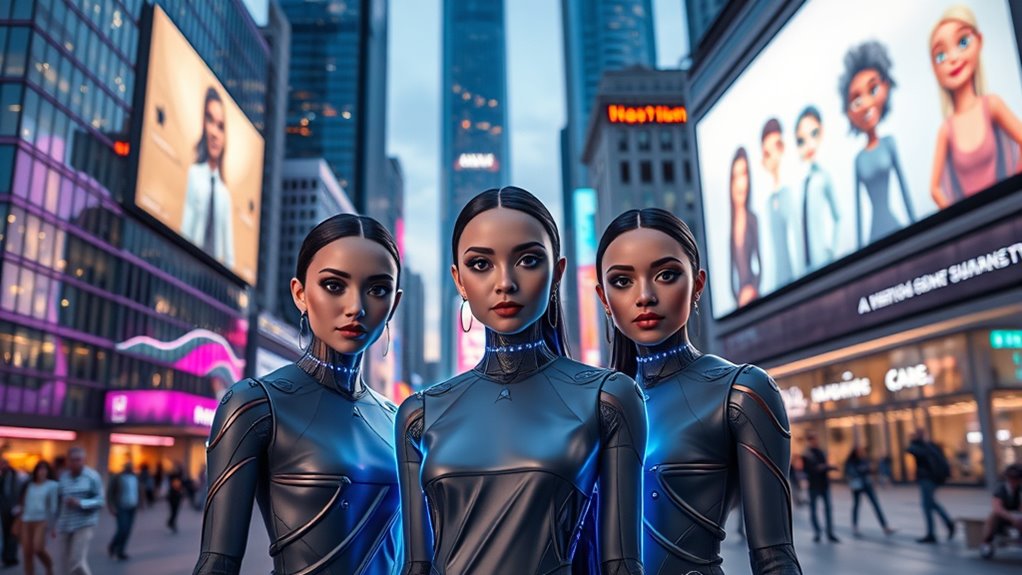

In 2025, AI influencers have changed digital marketing by evolving from simple chatbots to highly sophisticated, customizable virtual personas that interact with followers and shape brand stories across social media. They offer consistent content, rapid production, and targeted messaging, giving brands new ways to connect. However, this rise also raises ethical issues about transparency, authenticity, and potential manipulation. Continuing to explore this topic will reveal how these developments impact both marketers and consumers alike.

Get furniture and decor delivered free with Prime
- Fast, free delivery on millions of items
- Prime Video, Amazon Music and more included
- Member-only deals all year
Key Takeaways
- AI influencers have evolved into highly customizable digital entities that produce content, engage followers, and shape brand narratives across social media.
- They offer advantages like consistent content delivery, rapid scalability, precise niche targeting, and enhanced authenticity through technological improvements.
- Ethical challenges include transparency, potential manipulation, and accountability issues related to AI-generated influence and misinformation.
- Their rise impacts human influencers by increasing competition, raising job displacement concerns, and highlighting differences in emotional authenticity.
- The growth of AI influencers signifies a major shift in digital marketing, prompting regulatory considerations and redefining influence dynamics.

Have AI influencers truly transformed the digital landscape by 2025? It’s a question many are asking as virtual personas become more sophisticated and prevalent across social media platforms. These AI-driven entities aren’t just simple chatbots anymore; they embody virtual personas that can produce content, engage with followers, and even shape brand narratives. You might find yourself scrolling through feeds where the influencers you follow aren’t human at all but constructed digital personalities designed to resonate with specific audiences. They’re highly customizable, allowing brands and creators to craft personas that align perfectly with their marketing goals. This shift offers advantages like relentless consistency, rapid content generation, and the ability to target niche markets with precision. Additionally, advancements in quality assessment enable these AI influencers to appear more authentic and engaging than ever before. However, it also raises pressing ethical dilemmas that can’t be ignored.
One of the biggest issues revolves around authenticity. When you interact with a virtual persona, it’s often unclear whether you’re engaging with a human or an AI. This blurring of lines challenges your trust and raises questions about transparency. Should influencers disclose that they’re AI-created? And what happens when these virtual personalities start to influence your opinions or purchasing decisions without clear disclosure? These are the ethical dilemmas that regulators, creators, and audiences are grappling with. As AI influencers become more convincing, the risk of manipulation increases, and questions about accountability become more urgent. For instance, if a virtual influencer spreads misinformation or promotes harmful products, who’s responsible? The creator, the platform, or the AI itself? These complexities demand careful consideration as the digital landscape evolves.
You might also worry about the implications for real human influencers and creators. With virtual personas able to generate endless content without fatigue, the competition becomes fierce. This could lead to decreased opportunities for genuine human talent, raising concerns about job displacement and the value of authentic human connection. While virtual personas can be programmed to evoke emotional responses, they lack genuine empathy, which remains a cornerstone of meaningful influence. The ethical dilemma here lies in balancing innovation with respect for human authenticity and ensuring that AI doesn’t erode the genuine personal touch that makes influence meaningful.
Frequently Asked Questions
How Do AI Influencers Influence Human Consumer Behavior?
AI influencers shape your consumer behavior by creating virtual authenticity that feels real and relatable. They build trust through consistent, engaging content that mimics human interaction. As a result, you’re more likely to follow their recommendations and make purchases, often unaware that you’re engaging with a digital persona. This seamless blend of authenticity and trust influences your decisions, making AI influencers powerful tools in modern marketing.
What Ethical Concerns Surround AI Influencers’ Authenticity?
Imagine discovering your favorite AI influencer is actually a deepfake; you’d question their authenticity. Ethical concerns arise around deepfake ethics and transparency challenges, making it hard to trust whether these influencers genuinely share your values. As an audience, you might feel deceived if creators don’t disclose AI use. Maintaining honesty and transparency is essential to prevent manipulation and preserve trust in digital relationships with AI influencers.
Will AI Influencers Replace Human Celebrities Entirely?
AI influencers won’t entirely replace human celebrities, but they’ll substantially impact virtual personalities and brand engagement. You’ll notice AI-driven characters becoming more prevalent in marketing and entertainment, offering consistent, customizable interactions. While they excel at engaging audiences virtually, human celebrities bring authenticity and emotional depth that AI can’t fully replicate. So, expect a blend of both, complementing each other to enhance your overall experience and brand connection.
How Are AI Influencers Regulated Across Different Countries?
You should know that AI influencers are regulated through a mix of cross border regulations and legal challenges across different countries. Governments are establishing rules to guarantee transparency, ethics, and fair use. You might face legal hurdles if AI influencers violate advertising standards or privacy laws. While regulations vary globally, staying informed about local laws helps you navigate these challenges and avoid potential penalties.
Can AI Influencers Develop Genuine Emotional Connections?
Ever wonder if AI influencers can develop genuine emotional connections? While they can simulate emotional authenticity and foster relationship building, their connections lack true human feeling. You might feel a bond, but it’s ultimately programmed responses rather than real emotion. AI can imitate empathy convincingly, but genuine emotional depth remains beyond its reach. So, while AI can engage you meaningfully, authentic emotional connections still depend on human experiences and feelings.
Conclusion
As you see AI influencers rise in 2025, it feels almost like a coincidence that they’re shaping your social feeds just when technology seems to mirror human creativity more than ever. You might wonder if they’re just tools or the new faces of influence. Either way, their emergence feels perfectly timed with your digital world’s constant evolution, leaving you to wonder—are you truly in control, or just following a cleverly programmed trend?
Fall Picks
fall essentials
As an affiliate, we earn on qualifying purchases.