
Many cities, especially in California, are starting to ban or restrict gas stoves due to health and environmental concerns, mainly focusing on promoting electric alternatives and improving air quality. New policies often target new buildings and appliances, with some areas offering incentives for switching to electric options. If you want to discover if your city plans to follow suit and how these changes could affect you, there’s more to explore below.
Key Takeaways
- Many cities, especially in California, are implementing bans or restrictions on gas stoves in new buildings to reduce emissions.
- Local ordinances vary, with some cities mandating electric appliances and updating building codes to limit gas connections.
- Community engagement and public input influence whether your city adopts or resists gas stove bans.
- Alternatives like induction cooktops and electric ranges are promoted as sustainable options in areas with restrictions.
- Staying informed through local government updates and social media helps residents track potential future bans.
Cities Leading the Charge Against Gas Stoves

Several cities are taking bold steps to phase out gas stoves, citing health and environmental concerns. Indoor pollution from gas appliances releases pollutants like nitrogen dioxide and carbon monoxide, which can harm your health, especially in poorly ventilated spaces. Cities recognize that electric stoves produce less indoor pollution, creating healthier homes. Additionally, electric options tend to be more energy-efficient, reducing your household’s energy consumption and carbon footprint. By moving away from gas stoves, these cities aim to improve air quality indoors and promote sustainable energy use. You’ll find that banning or restricting gas stoves aligns with broader efforts to lower emissions and protect public health. The movement reflects a growing awareness of how kitchen appliances impact both personal well-being and the environment. Understanding the health impacts of indoor pollution is key to supporting these initiatives.
Key Reasons Behind the Bans and Restrictions

Many local ordinances are enacted for clear reasons, like addressing health and safety risks or reducing environmental harm. You’ll notice that building codes and appliance standards also play a significant role in shaping these restrictions. Understanding these key drivers helps you see why certain bans and regulations are put in place. For example, ventilation requirements are often updated to improve indoor air quality when restricting gas appliances.
Health and Safety Concerns
Health and safety concerns often drive local bans and restrictions, as communities aim to protect residents from potential hazards. Gas stoves can release indoor air pollutants, including nitrogen dioxide and particulate matter, affecting your health. Combustion risks also pose fire hazards, especially in small or poorly ventilated spaces. Here are key concerns prompting restrictions:
- Elevated indoor air pollution levels
- Increased respiratory issues
- Fire and explosion risks
- Exposure to harmful chemicals
- Long-term health impacts
To create a safer environment, many cities are considering indoor air quality regulations to limit or ban gas stove use.
Environmental Impact Goals
Environmental impact goals are a primary reason behind the recent bans and restrictions on gas stoves, as communities seek to reduce their carbon footprint and promote sustainability. Many cities aim to improve energy efficiency in homes, lowering overall energy consumption and emissions. By shifting away from fossil fuels, they encourage the adoption of cleaner, more efficient alternatives. Technological innovation plays a key role here, as new electric appliances become more affordable and effective. These efforts align with broader climate goals, helping cities meet greenhouse gas reduction targets. You might notice that local ordinances target the environmental footprint of your kitchen, emphasizing the importance of sustainable energy use. Overall, these policies reflect a commitment to a greener future through smarter, more efficient solutions. solar panels and energy storage can further support these sustainability initiatives by providing renewable electricity for homes.
Building and Appliance Codes
What role do building and appliance codes play in the recent bans and restrictions on gas stoves? These codes set standards that prioritize energy efficiency and safety, often encouraging or mandating the shift to electric appliances. By updating regulations, local governments aim to reduce emissions and improve indoor air quality. Incorporating energy-efficient designs into building codes helps promote sustainable living and incentivizes residents to adopt electric stoves. Some key points include:
- Promoting energy-efficient designs and appliances
- Limiting gas connections in new buildings
- Offering incentives for electric stove adoption
- Restricting the sale of new gas appliances
- Enhancing consumer choice through clearer standards
Building and appliance codes shape the landscape, making it easier for communities to enforce bans. They reflect a move toward sustainable living and ensure that residents have safer, more energy-efficient options. Ultimately, these codes influence both policy direction and consumer behavior.
Notable Local Ordinances in California and Beyond

You’ll see that California has enacted some of the strictest local bans, shaping policies across the state. Meanwhile, New York’s regulations set important precedents with their innovative approaches. Other states are also introducing initiatives that highlight the evolving landscape of local ordinances nationwide.
California’s Local Bans
California has become a leader in implementing local bans aimed at protecting public health and the environment. Many cities are adopting ordinances that restrict gas stoves in new buildings, emphasizing energy efficiency and reducing emissions. These policies aim to:
- Promote cleaner, electric alternatives
- Reduce indoor air pollution
- Encourage sustainable building practices
- Improve overall energy efficiency
- Respect consumer choice with healthier options
Implementing these measures also involves considering the technologies that influence the effectiveness and appeal of electric appliances.
New York Regulations
Have recent local ordinances in New York signaled a shift toward stricter environmental standards? Yes. The city’s regulations focus on improving energy efficiency and enforcing appliance standards to reduce emissions. New York’s policies aim to phase out outdated appliances and promote greener alternatives, encouraging residents and businesses to adopt energy-efficient solutions. These regulations reflect a broader effort to meet climate goals and enhance public health. Additionally, the ordinances emphasize the importance of vegetable juices and other sustainable practices to promote healthier lifestyles and reduce environmental impacts.
Other State Initiatives
Across the country, local governments are adopting innovative ordinances that build on New York’s push for greener policies. These efforts extend beyond banning gas stoves, influencing urban planning and renewable energy initiatives. For example, California cities are implementing strict building codes favoring electric and solar energy systems. Some states are incentivizing renewable energy adoption through tax credits and grants. Others are integrating sustainability into urban planning by requiring green spaces and energy-efficient designs. Notable initiatives include:
- Mandating solar panels on new commercial buildings
- Offering rebates for electric appliances
- Requiring renewable energy sources in public projects
- Promoting green infrastructure in urban development
- Streamlining permits for renewable energy installations
These initiatives aim to reshape cities into sustainable, energy-efficient spaces, reducing reliance on fossil fuels and improving environmental health. Incorporating sustainable building practices can further enhance these efforts by encouraging energy-efficient construction and renovation.
How These Policies Could Impact Homeowners and Renters

As new local ordinances take effect, homeowners and renters may notice significant changes in their daily lives and financial stability. These policies could lead to improved energy savings by encouraging the use of more efficient appliances that meet stricter standards. If your city restricts gas stoves, you might need to switch to electric options, which could reduce your utility bills over time. However, upfront costs for new appliances or upgrades might increase your expenses initially. For renters, landlords could pass some costs onto tenants or make changes that alter how you cook and live. Overall, these policies aim to promote sustainability and reduce emissions, but they also require you to adapt to possible changes in appliance choices and household energy use. As the Best Vacuums for Dust Removal in 2024 highlight the importance of efficient appliances, upgrading your household devices can contribute to better indoor air quality and energy efficiency.
The Debate: Advocates’ Perspectives Versus Opponents’ Concerns
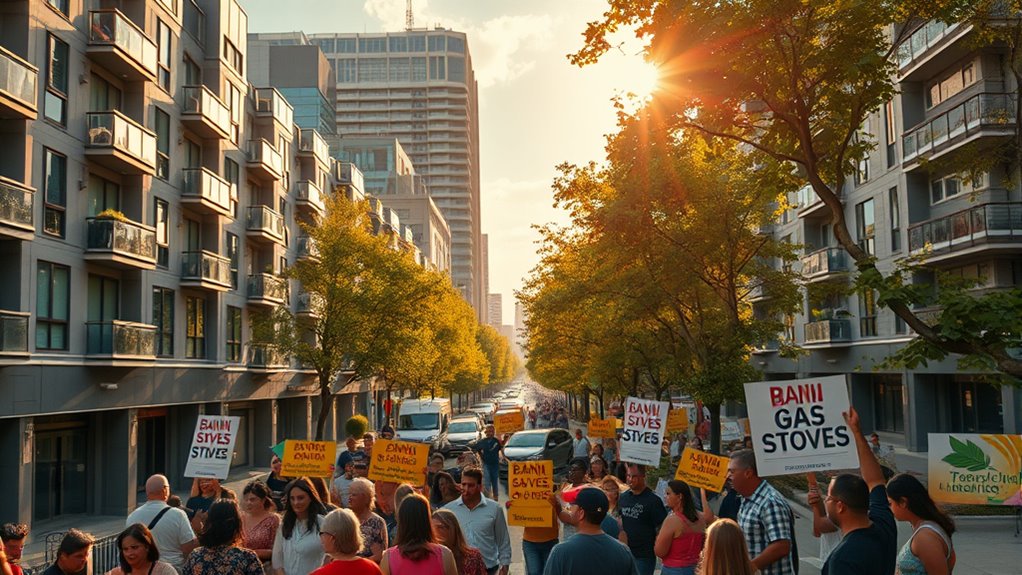
Proponents of new local ordinances argue that these policies are essential for creating a more sustainable future by reducing emissions and encouraging energy efficiency. They believe banning gas stoves can considerably cut carbon footprints and promote cleaner cooking options. However, opponents raise concerns about cultural acceptance and practicality, fearing these bans may face resistance from communities valuing traditional cooking methods. They also worry about potential costs and the impact on local businesses. Critics argue that:
- Energy efficiency gains may be overstated
- Cultural acceptance varies across regions
- Bans could disproportionately affect low-income households
- Implementation challenges might hinder effectiveness
- Consumer choice could be unnecessarily limited
Additionally, some experts emphasize that creativity can be cultivated in various ways, including through policy innovations that foster community engagement and adaptability, which are crucial for successful implementation of new regulations. This debate highlights the tension between environmental goals and respecting local customs and needs.
What to Expect as More Cities Consider Similar Measures

With more cities considering similar measures, you can expect a mix of both progress and pushback. As policies emphasize energy efficiency, many local governments aim to reduce emissions and improve sustainability. However, cultural acceptance varies, and some residents may resist changes that challenge traditional cooking practices. You might see initial resistance from communities valuing gas stoves for their convenience and familiarity. Over time, increased awareness of environmental benefits could shift opinions, especially if alternatives become more accessible and affordable. Local officials will need to balance environmental goals with community concerns. Expect ongoing debates around how best to implement these measures, ensuring they promote energy efficiency without alienating residents who see gas stoves as part of their cultural identity.
Alternatives to Gas Stoves in Residential Spaces

Many residents seeking alternatives to gas stoves are turning to electric options, which are becoming more efficient and accessible. Modern electric appliances offer improved energy efficiency and a variety of features that make cooking easier and safer. You can choose from several appliance alternatives to fit your needs. Consider:
Many residents are switching to efficient, safe electric appliances like induction cooktops and smart stoves.
- Induction cooktops that heat quickly and conserve energy
- Electric ranges with precise temperature controls
- Wall-mounted electric ovens for space-saving solutions
- Portable electric hot plates for flexibility
- Smart electric stoves with programmable settings
These options not only reduce reliance on gas but also help improve energy efficiency in your home. Upgrading to these appliance alternatives can align your cooking habits with emerging regulations and sustainability goals, making your kitchen safer and more efficient.
How Residents Can Stay Informed and Engage in Local Policy Discussions

Staying informed and actively participating in local policy discussions empowers residents to shape the regulations that affect their communities. To do this, engage in community outreach efforts like attending town halls, joining neighborhood associations, or following local government social media accounts. These channels provide timely updates on proposed ordinances, including gas stove bans. Additionally, participate in policy advocacy by submitting comments, volunteering for campaigns, or collaborating with advocacy groups. Building relationships with local officials ensures your voice is heard and your concerns are considered. Staying aware helps you understand the implications of new policies and empowers you to take effective action. Being proactive in these efforts ensures your community’s interests are represented and that policy decisions align with residents’ needs.
Frequently Asked Questions
How Do Gas Stove Bans Vary Between Different Cities?
You’ll notice that gas stove bans differ across cities, as each local government sets its own energy policies and enforcement strategies. Some cities implement outright bans, while others focus on phased restrictions or incentives for electric appliances. Enforcement challenges also shape these laws, with varying levels of compliance and monitoring. Your city’s approach depends on its priorities, infrastructure, and community input, making each region’s regulations uniquely tailored.
Are There Exemptions for Certain Types of Buildings or Businesses?
Many local ordinances include building exemptions and business exceptions, allowing certain types of buildings or businesses to keep gas stoves. You might find that historic sites, some commercial kitchens, or specific residential buildings qualify for exemptions. These rules vary widely depending on your city’s regulations. If you own or operate a business or live in a special building, it’s essential to check your local laws to understand any exemptions that could apply to you.
What Are the Safety Implications of Banning Gas Stoves?
Banning gas stoves raises important safety questions, especially regarding health risks and indoor air quality. You might worry about potential increases in respiratory issues or exposure to harmful pollutants if gas stoves are removed. However, switching to electric appliances can improve indoor air quality and reduce health risks associated with combustion byproducts. Overall, banning gas stoves could enhance safety by minimizing indoor pollutants, but proper ventilation and alternative solutions are essential.
How Will These Bans Affect Local Utility and Appliance Industries?
These bans will reshape your local utility impact and appliance manufacturing sectors. Utility companies may see reduced demand for gas, prompting shifts toward renewable energy sources. Appliance manufacturing will pivot, focusing on electric alternatives and innovative designs. You’ll notice changes in job opportunities, supply chains, and market dynamics, as both industries adapt to new regulations. This transformation aims to promote cleaner energy, but it also challenges local economies to evolve with the evolving landscape.
Can Homeowners Retrofit Existing Gas Stoves to Meet New Regulations?
You can often retrofit your existing gas stove to improve indoor air quality and meet new regulations. Retrofit options include installing advanced venting systems or switching to electric appliances, reducing emissions and hazards. While some upgrades are straightforward, others might require professional assistance. Check local rules to make certain of compliance, and consider these options to maintain functionality, safety, and indoor air quality without replacing your entire stove.
Conclusion
As your city considers new policies, staying informed helps you navigate these changes smoothly. Embrace the evolving landscape by exploring alternatives and voicing your thoughts. While these shifts may feel like gentle ripples in your daily routine, they aim to create a more sustainable and healthier community. By engaging early, you can help shape a future that balances innovation with comfort—ensuring your home remains a welcoming space amid the gentle tides of progress.