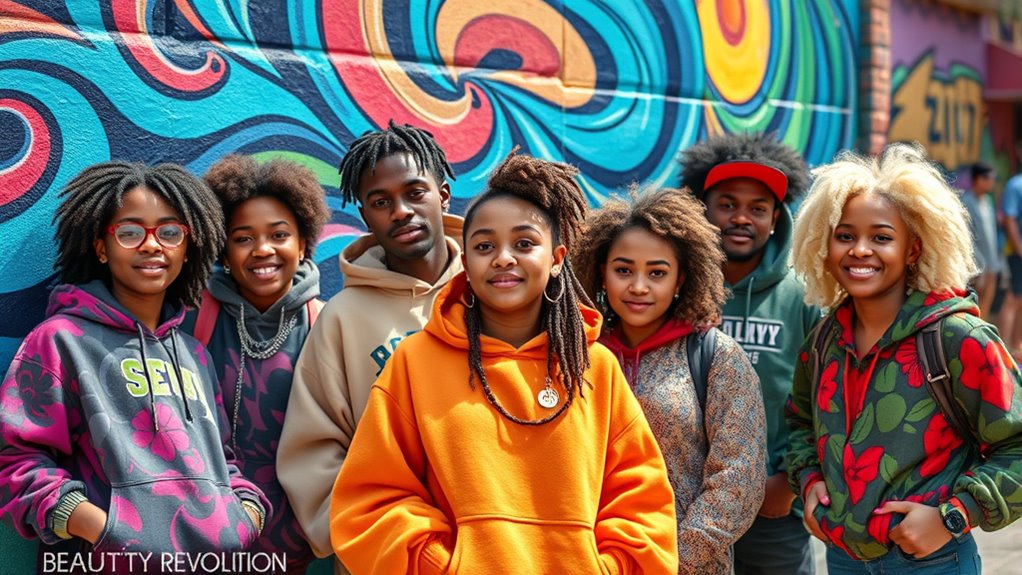
Gen Z is transforming fashion and media by demanding authentic diversity and challenging outdated beauty standards. They push brands to embrace inclusivity by showcasing real stories, diverse backgrounds, sizes, genders, and abilities. This movement encourages you to see beauty as individual and genuine, shaping a cultural shift toward acceptance. As you explore further, you’ll discover how their influence is redefining the industry and creating a more inclusive, representative future.
Key Takeaways
- Gen Z champions authenticity and diversity, challenging traditional beauty standards in fashion and media.
- They demand inclusive advertising that features diverse races, genders, sizes, and abilities.
- Brands are rethinking strategies to reflect real-world diversity, promoting genuine representation.
- Young people redefine beauty personally, advocating for honest portrayals and individual expression.
- Media content, including anime and films, increasingly incorporate inclusive narratives shaped by Gen Z influence.

As Gen Z increasingly influences the cultural landscape, they’re challenging traditional standards of beauty in fashion and media. You’re part of a generation that values authenticity and diversity, and this shift is reshaping how beauty is defined and celebrated. One of the biggest ways you’re making an impact is through demands for better cultural representation. No longer do you accept narrow ideals that favor a single skin tone, body type, or style. Instead, you’re pushing brands and media outlets to showcase a broader spectrum of identities, backgrounds, and expressions. This push isn’t just about seeing more diverse faces; it’s about creating a genuine reflection of the world you live in. When companies embrace this, they often do so through inclusive advertising—campaigns that intentionally feature people of different races, sizes, genders, and abilities. Your voice is telling brands that if they want to connect with your generation, they need to be authentic and inclusive. Inclusive advertising isn’t just a trend; it’s a necessity for brands that want to stay relevant. You notice when ads are tokenistic or stereotypical, and you’re quick to call out inauthentic portrayals. Instead, you champion campaigns that highlight real stories and diverse experiences. This approach not only broadens beauty standards but also fosters a sense of belonging for people who previously felt marginalized. Your generation’s influence has led many brands to rethink their marketing strategies, realizing that embracing diversity isn’t just morally right—it’s good business. When you see more diverse models in magazines, on billboards, and in social media ads, you recognize that this is your world being authentically represented. It’s about breaking down stereotypes and opening up space for everyone to feel seen and valued. This cultural shift is also empowering you to redefine beauty for yourself, choosing styles and expressions that resonate with your identity rather than conforming to outdated ideals. Your demand for inclusive representation pushes the industry toward more honest and varied portrayals, which ultimately benefits everyone. Additionally, the rise of diverse anime movies and animated films that touch hearts highlights how storytelling is evolving to embrace more inclusive narratives. As you continue to advocate for diversity and authenticity, you’re helping to shape a future where beauty is no longer confined to a narrow standard but is instead a celebration of all identities. This ongoing revolution in fashion and media is a testament to your influence and the power of your voice in creating a more inclusive and representative cultural landscape.
Frequently Asked Questions
How Has Social Media Influenced Gen Z’s Diversity Movement?
Social media has fueled your diversity movement through viral trends and influencer impact. You see more authentic representation as influencers showcase diverse beauty standards, breaking traditional norms. Viral challenges and hashtags spread awareness quickly, empowering you and others to embrace individuality. This active online engagement encourages brands to prioritize inclusivity, making diversity a central part of fashion and media, and inspiring you to celebrate your unique identity confidently.
Are Brands Genuinely Committed to Diversity or Just Performative?
You might wonder if brands are truly committed to diversity or just engaging in tokenism. Many often perform for show, but some genuinely embrace authenticity by featuring diverse voices and stories. To tell if a brand’s commitment is real, look for consistent representation, inclusive campaigns, and transparent conversations about diversity. Genuine efforts go beyond surface-level gestures, reflecting true respect and understanding for different backgrounds.
How Do Older Generations View Gen Z’s Diversity Efforts?
You might notice older generations often view Gen Z’s diversity efforts through skepticism, questioning if it’s genuine or just trendy. Intergenerational perceptions clash as cultural values differ, sparking debates about authenticity. While some see it as progress, others worry it’s superficial. This tension creates a fascinating dynamic—are these efforts truly leading change or just a passing fad? The answer depends on how each side chooses to engage and evolve.
What Challenges Does Gen Z Face in Promoting Diversity?
You face challenges like generational bias, which can make others dismiss your efforts for diversity, and cultural barriers that restrict open conversations about race, gender, and identity. These obstacles may cause resistance within older generations or different communities, making it harder for your voice to be heard. Despite this, your persistence helps break down stereotypes and push for a more inclusive, representative future in fashion and media.
Will This Diversity Push Lead to Long-Term Industry Change?
Yes, your diversity drive can substantially steer the industry’s impact, shaping lasting change. As you champion inclusive representation, consumer behavior shifts toward valuing authenticity and variety. This persistent push promotes progress, prompting brands to adapt and innovate. Your active advocacy fuels a future where diversity isn’t just a trend but a transformative force, ensuring the industry evolves with your values and voices at its core.
Conclusion
As you see, Gen Z’s push for diversity is truly transforming fashion and media. Nearly 70% of Gen Z consumers say they prefer brands that celebrate inclusivity, showing how much their voices matter. By demanding more representation, you’re shaping a future where everyone feels seen and valued. Keep supporting this movement—your choices help break down stereotypes and create a more authentic, inclusive industry for all.