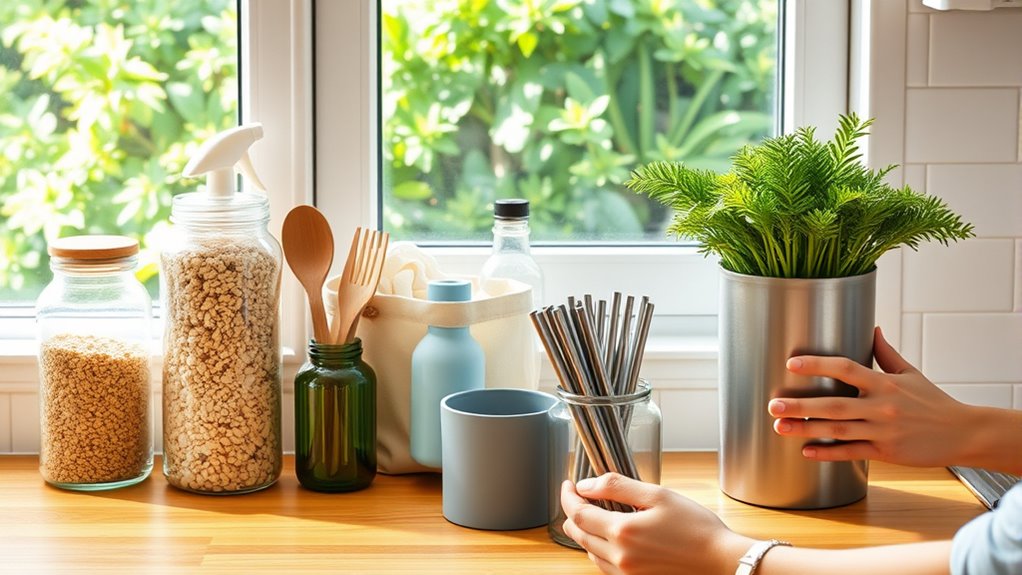

To embrace zero-waste living daily, start by using reusable bags, containers, and utensils to cut down on plastics. Shop at local markets or bulk stores to minimize packaging, and choose products with eco-friendly packaging. Turn off lights and unplug devices when not in use to save energy, and practice mindful decluttering to prevent unnecessary purchases. These habits make a big difference, and you’ll discover more simple tips as you continue your journey toward sustainability.
Key Takeaways
- Use reusable bags, containers, and utensils to eliminate single-use plastics and reduce packaging waste.
- Shop at local markets or bulk stores to minimize packaging and support eco-friendly practices.
- Choose products with biodegradable, minimal, or recyclable packaging to lower environmental impact.
- Turn off lights and unplug devices when not in use to conserve energy and reduce your carbon footprint.
- Practice mindful decluttering to decrease unnecessary purchases and promote sustainable consumption habits.

Have you ever wondered how small changes in your daily routine can make a big difference for the planet? One simple way is to pay attention to the packaging of the products you buy. Opting for eco friendly packaging reduces waste and lessens the demand for plastics that take hundreds of years to decompose. Look for products packaged in biodegradable materials or those that use minimal, recyclable packaging. When you choose packaging made from renewable resources, you support a more sustainable supply chain that has a lower environmental impact. This small switch can considerably cut down on landfill waste and prevent harmful chemicals from leaching into ecosystems. Regularly assessing your belongings and making mindful choices can help maintain a clutter-free, sustainable lifestyle.
Switching to renewable energy sources is another powerful step. If your home allows, install solar panels or consider subscribing to green energy programs offered by your utility provider. Using renewable energy reduces reliance on fossil fuels, which are major contributors to climate change. Even if you can’t switch your entire home to renewables, you can still make small adjustments—like using energy-efficient appliances, switching to LED bulbs, or unplugging devices when not in use. These practices not only lower your carbon footprint but also save you money over time.
Adopting zero-waste habits is easier when you start with mindful shopping. Bring reusable bags, containers, and utensils whenever you go out. Avoid single-use plastics, which often come with excessive, non-biodegradable packaging. Instead, shop at local markets or bulk stores to reduce packaging waste and to support sustainable local economies. When possible, choose products with minimal packaging, and always opt for items that are refillable or reusable. This approach encourages manufacturers to rethink their packaging strategies, often leading to more eco friendly packaging options.
Another tip is to be conscious of your energy use. Simple actions like turning off lights when you leave a room or setting your thermostat a few degrees lower in winter and higher in summer can make a difference. These small adjustments help conserve energy, especially when combined with renewable energy sources. Incorporating energy-saving habits into your routine not only benefits the environment but also helps you reduce your utility bills. Additionally, practicing mindful decluttering can help you live more sustainably by reducing excess consumption and waste.
Frequently Asked Questions
How Can I Start Reducing Plastic Use Immediately?
Start reducing plastic use right now by switching to reusable containers for your food and drinks. When you go shopping, choose bulk options to avoid single-use packaging. Bring your own bags, bottles, and containers wherever you go. These small changes make a big difference, helping you cut down on plastic waste daily. You’ll feel good knowing you’re making more sustainable choices and protecting the environment.
Are Zero-Waste Products More Cost-Effective Long-Term?
You’ll find zero-waste products often cost less over time because of their durability and reusable nature. Studies show that switching to these items can save you up to 30% annually on disposable goods. By investing in durable, high-quality zero-waste products, you reduce ongoing expenses and waste. This leads to significant cost savings, making them more budget-friendly in the long run while helping you live more sustainably.
How Do I Handle Waste in Communal Living Spaces?
In communal living spaces, you handle waste by actively sorting it into appropriate categories, like recyclables, compostables, and trash. Encourage everyone to participate in waste sorting to reduce contamination. Initiate or join communal composting efforts for organic waste, which minimizes landfill contributions and benefits shared green spaces. Clear communication and consistent routines make waste management easier, fostering a sustainable environment and promoting collective responsibility among all residents.
What Are Eco-Friendly Alternatives to Everyday Cleaning Products?
Think of your cleaning routine as a garden in full bloom. Switch to natural cleaning agents like vinegar, baking soda, and lemon juice—they’re powerful and eco-friendly. Opt for biodegradable packaging for your cleaning supplies to reduce waste. These alternatives are gentle on the planet and effective at keeping your space spotless. By making these simple swaps, you help protect the environment while maintaining a fresh, healthy home.
How Can I Encourage Others to Adopt Zero-Waste Habits?
You can encourage others to adopt zero-waste habits through community engagement and social influence. Lead by example, sharing your successes and challenges openly. Organize local workshops or swap events to foster collective learning. Use social media to highlight easy tips and inspire action. When you demonstrate commitment, others are more likely to follow, creating a ripple effect that promotes sustainable living in your community.
Conclusion
Switching to a zero-waste lifestyle is like tending a garden—you start small, but with care, your efforts blossom. Remember, even tiny changes, like bringing your own bag or skipping disposables, add up over time. Studies show that individual actions can reduce household waste by up to 30%. So, embrace these tips, stay consistent, and watch your habits grow into a sustainable future. Every step you take plants seeds for a healthier planet.