To embrace a plant-powered lifestyle, start by swapping red meats for plant-based proteins like beans or tofu, and include more seasonal produce for freshness and flavor. Explore meat alternatives to enjoy familiar textures without animal products, making meals more sustainable and varied. Supporting local foods reduces your carbon footprint and connects you with natural food cycles. Keep exploring simple, eco-friendly steps to make your diet healthier and kinder to the planet.
Key Takeaways
- Incorporate plant-based meat alternatives like burgers and crumbles to reduce animal product consumption.
- Choose seasonal produce for fresher, more flavorful, and environmentally friendly meals.
- Swap processed snacks for whole, seasonal fruits and vegetables to support a healthier diet.
- Support local farmers by shopping for seasonal, locally sourced foods to reduce environmental impact.
- Plan meals around plant-based proteins and seasonal ingredients to make sustainable, quick, and enjoyable choices.
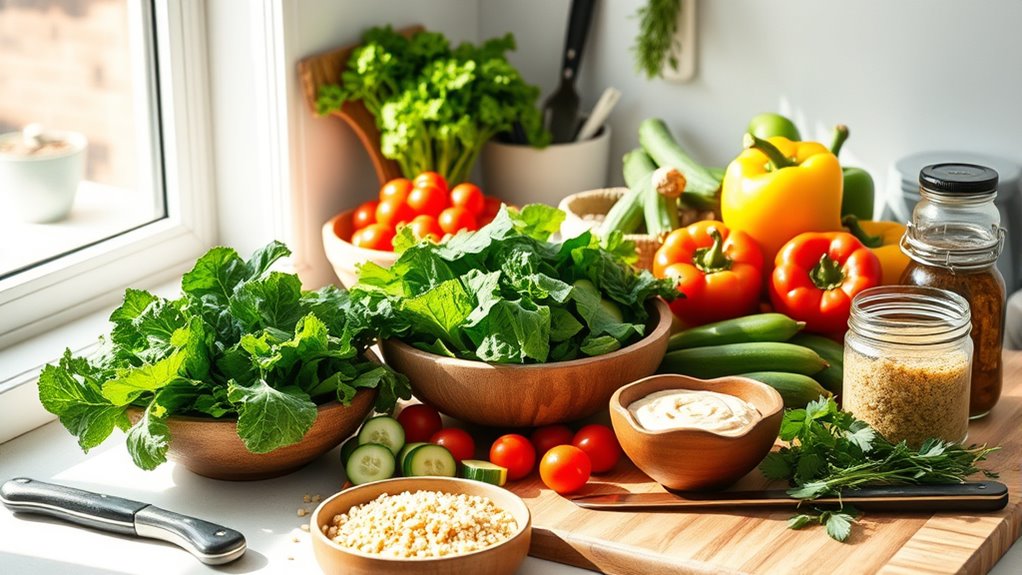
Switching to a plant-powered lifestyle can transform your health and well-being in ways you might not expect. One of the easiest ways to start is by exploring meat alternatives. These products have come a long way, offering textures and flavors that mimic traditional meat while being made from plant-based ingredients. They can help you reduce your intake of animal products without feeling like you’re missing out. Whether it’s plant-based burgers, sausages, or crumbles, incorporating meat alternatives into your meals makes the transition smoother. They’re versatile, quick to prepare, and often packed with protein, so you don’t have to compromise on nutrition. As you experiment, you’ll discover that these options can be just as satisfying as their meat counterparts, making plant-powered living more accessible and enjoyable.
Another simple step is prioritizing seasonal produce. Eating foods that are in season not only makes your diet more sustainable but also ensures you’re getting the freshest, most flavorful ingredients. Seasonal produce tends to be more affordable and environmentally friendly, since it doesn’t require extensive transportation or artificial growing conditions. When you shop locally or visit farmers’ markets, you gain access to a vibrant variety of fruits and vegetables that are at their peak. Incorporate these ingredients into your meals to add variety and maximize nutritional value. For example, in summer, enjoy fresh tomatoes, berries, and zucchinis, while in fall, opt for squash, apples, and leafy greens. This approach helps you connect with the natural cycles of food and encourages you to cook seasonally, reducing your carbon footprint and supporting local farmers. Emphasizing local and seasonal foods can also help you make informed, eco-friendly choices that benefit both your health and the planet.
You can also make small, sustainable swaps in your shopping routine. Instead of relying on processed snacks, choose whole, seasonal produce. Swap out red meats for plant-based proteins like beans, lentils, or tofu, which are not only nutritious but also eco-friendly. Planning your meals around seasonal ingredients helps you stay motivated and inspired in the kitchen. Plus, it encourages a diverse diet that benefits your health and the planet. Over time, these habits become second nature, making your transition to a plant-powered lifestyle effortless and sustainable.

Gardein Plant-Based Ground Be'f, Vegan, Frozen Meat Alternative, 13.7 oz.
Contains one 13.7-ounce bag of Gardein Vegan Plant-Based Gluten Free Ground Be'f
As an affiliate, we earn on qualifying purchases.
As an affiliate, we earn on qualifying purchases.
Frequently Asked Questions
How Can I Get Enough Protein on a Plant-Based Diet?
You can get enough protein on a plant-based diet by incorporating a variety of protein sources like beans, lentils, tofu, tempeh, nuts, and seeds. Meal planning helps you balance these foods throughout the day, ensuring you meet your protein needs. Focus on combining different sources and including them in every meal, making it easier to stay energized and maintain a healthy, sustainable diet.
Are Plant-Based Diets Suitable for Children and Pregnant Women?
Imagine a sturdy tree supporting new growth—that’s how plant-based diets can support children and pregnant women when carefully planned. They’re generally suitable if you meet their nutritional requirements and consider safety considerations like adequate protein, iron, and B12. You should consult healthcare professionals or dietitians to ensure their needs are met, making sure their health remains strong and vibrant, just like that resilient, thriving tree.
What Are the Environmental Benefits of Switching to Plants?
Switching to plants considerably reduces your carbon footprint because plant-based foods generally require less energy and resources than animal products. You also help preserve biodiversity by supporting sustainable farming practices that protect ecosystems. When you choose more plant foods, you’re actively lowering greenhouse gas emissions and encouraging biodiversity preservation, making a positive environmental impact. Every small change in your diet contributes to a healthier planet for future generations.
How Do I Handle Dining Out or Social Events?
Guiding social meals is easier than you think. When dining out, practice restaurant etiquette by checking menus ahead for plant-based options or calling ahead to inquire. During social events, suggest a plant-friendly potluck or share your dietary preferences to inspire others. Being open and considerate encourages positive conversations and makes everyone feel comfortable. With some simple social meal planning, you can enjoy outings while staying true to your plant-powered lifestyle.
Can a Plant-Based Diet Help Manage Chronic Health Conditions?
A plant-based diet can help manage chronic health conditions by improving nutrient absorption and reducing inflammation. You should focus on meal planning to include a variety of nutrient-rich foods like leafy greens, beans, and whole grains. This approach helps guarantee you get essential vitamins and minerals, supporting better health. Consistently choosing plant-based options can lead to long-term benefits for managing conditions like diabetes, heart disease, and inflammation.

5 PCS Large Fruit Containers for Fridge – Leakproof Food Storage Containers with Removable Colander – Dishwasher & microwave safe Produce Containers Keep Fruits, Vegetables, Berry, Meat Fresh longer
5 packs : You will get 5 fridge storage containers with colander size from 300 ml to 4200…
As an affiliate, we earn on qualifying purchases.
As an affiliate, we earn on qualifying purchases.
Conclusion
Switching to a plant-powered diet not only benefits your health but also helps protect the planet. Did you know that adopting plant-based eating habits can reduce your carbon footprint by up to 50%? Every small step counts, so start today—your choices matter. Embrace this sustainable lifestyle and feel good knowing you’re making a positive impact on the environment for future generations. Together, we can create a healthier, greener world.

FreshJax Tofu Scramble Spice Mix – 3.6 oz Vegan Plant-Based Egg Seasoning for Tofus, Veggie Scrambles, Breakfast Bowls, Stir-Fries, Brunch, Meal Prep, Healthy Cooking | Made in USA
TOFU SCRAMBLE SPICE MIX: Perfect for creating vegan 'egg' dishes, burritos, scrambles, and more; enhances the flavor of…
As an affiliate, we earn on qualifying purchases.
As an affiliate, we earn on qualifying purchases.

GXVUIS Support Your Local Farmers Market Canvas Tote Bag for Women Aesthetic Reusable Grocery Shoulder Shopping Bags Black
Reusable durable canvas tote shopping bag is made of 100% cotton,Lightweight but heavy-duty canvas shoulder bags with haddles
As an affiliate, we earn on qualifying purchases.
As an affiliate, we earn on qualifying purchases.