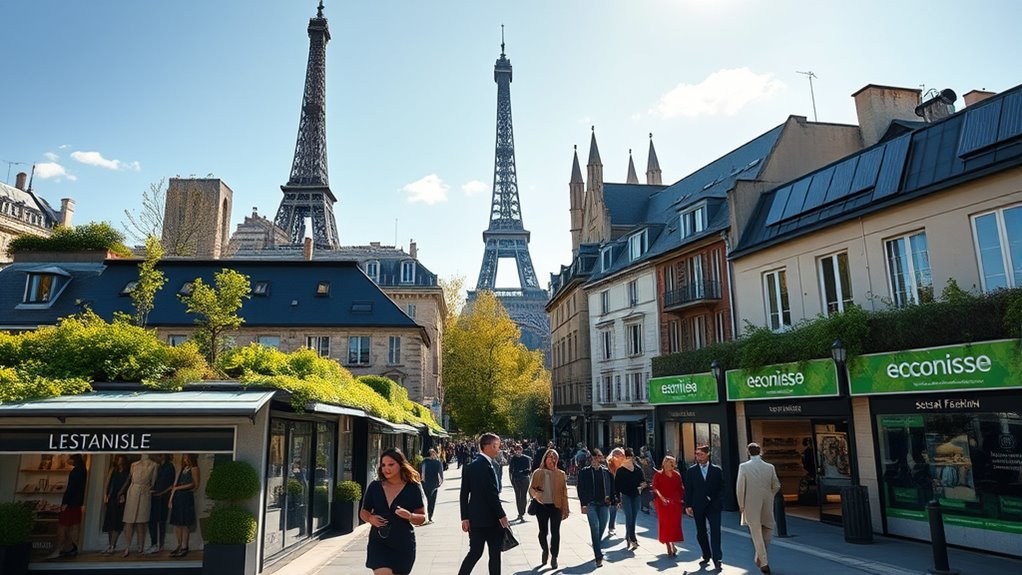

Paris’s luxury fashion scene is booming, with growth fueled by new sustainable fashion regulations. These rules push brands to adopt eco-friendly practices, boosting their appeal among environmentally conscious consumers. The city’s reputation for craftsmanship and exclusivity strengthens as fashion houses prioritize sustainability. This shift not only enhances Paris’s global status but also creates new opportunities for growth. If you continue exploring, you’ll discover how sustainability is shaping the future of Paris’s vibrant fashion industry.
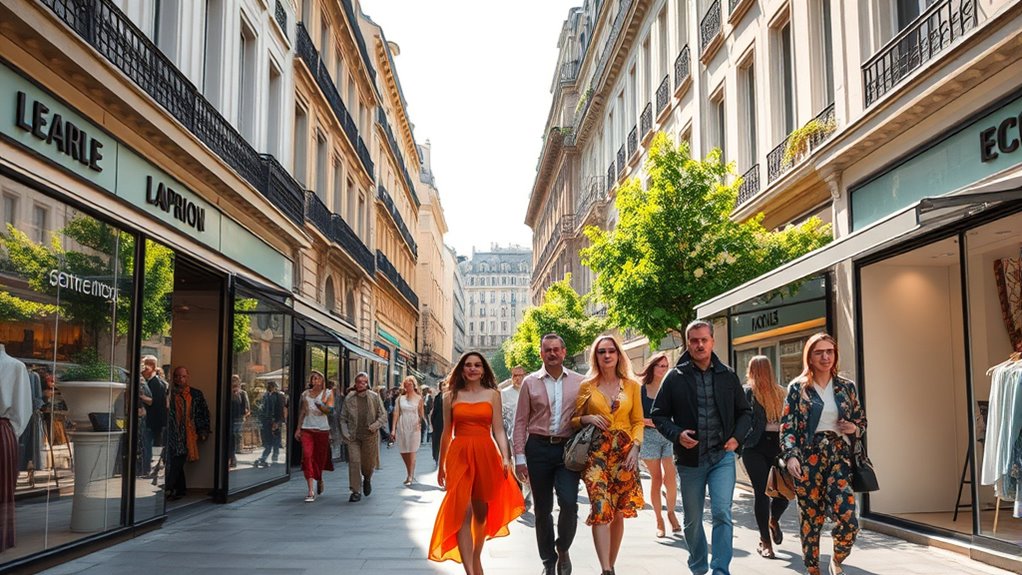
Have you ever wondered how Paris maintains its status as a global fashion hub? It’s not just about legendary runway shows or historic haute couture houses. The city’s fashion scene is driven by a thriving luxury market, which is expected to grow from USD 8.10 billion in 2024 to an estimated USD 11.27 billion by 2033, with a steady compound annual growth rate of 3.35%. This growth reflects an expanding demand for high-end apparel, leather goods, and accessories. Meanwhile, the fashion e-commerce sector is booming, projected to hit USD 23.66 billion in 2025 and grow at a remarkable CAGR of 13.2%, reaching USD 56.36 billion by 2032. This digital shift is transforming how consumers shop, making luxury fashion more accessible and competitive within France and globally.
Your disposable income in France has been rising steadily—up 3.4% annually from 2014 to 2024, and jumping to 4.8% in 2024 alone. This increase fuels a greater appetite for premium and exclusive fashion products, especially among urban households with high income levels. These consumers prioritize quality, social status, and unique experiences, leading to higher spending in luxury goods such as designer apparel, leather accessories, and jewelry. As their purchasing power grows, so does the demand for brands that emphasize craftsmanship, heritage, and exclusivity.
Rising disposable income in France boosts demand for luxury fashion, emphasizing quality, heritage, and exclusivity among high-income urban consumers.
Tourism plays a crucial role in Paris’s fashion ecosystem. In 2024, over 100 million international visitors flocked to France, most of whom spend heavily on luxury fashion. Tourists from Asia, the Middle East, and North America see shopping in Paris as a cultural statement—an act of prestige and status. The post-pandemic rebound in tourism has further fueled luxury retail sales, reinforcing Paris’s reputation as a premier destination for high-end shopping. These visitors not only contribute to sales but also elevate Paris’s global standing as a city where fashion and culture intersect perfectly. Tourism continues to be a significant driver, with luxury retail locations often located near major attractions, enhancing the overall shopping experience.
E-commerce’s rapid growth is reshaping the industry. By 2025, online sales in France are expected to surpass USD 18 billion, covering apparel, footwear, and accessories. Competition has intensified with newcomers like Shein and Temu disrupting the space, pushing brands to innovate and adopt more sophisticated digital strategies. By 2028, online fashion sales could exceed USD 20 billion, reflecting consumers’ increasing comfort with digital shopping. However, this rapid growth comes with intensified regulatory oversight, pushing brands to prioritize transparency and ethical practices.
Sustainability is now a core driver of growth in Paris’s luxury fashion scene. New regulations favor eco-friendly production methods, prompting brands to adopt greener practices. Consumers are increasingly demanding ethically sourced, sustainable fashion, and regulatory incentives are encouraging brands to innovate in this space. As a result, the industry is shifting toward greener models, aligning economic growth with environmental responsibility. This evolving landscape ensures that Paris remains a global leader in fashion, where sustainability and style go hand in hand.
Frequently Asked Questions
How Does Sustainable Fashion Regulation Impact Small Local Designers?
Sustainable fashion regulation challenges you to meet strict eco-labeling, transparency, and repairability standards, which can strain your resources but also boost your credibility. You may face higher costs, yet benefit from eco-taxes supporting local designers. These rules can limit fast fashion marketing, leveling the playing field. By emphasizing sustainability, you can build consumer trust, differentiate your brand, and capitalize on growing demand for durable, eco-friendly products.
What Specific Policies Are Driving Sojo’s Growth in Paris?
Policies propel Sojo’s Parisian progress by punishing waste and promoting repairability. France’s mandatory repairability indexes inform consumers and incentivize repairs, while the Loi AGEC enforces sustainable standards for textile producers. These policies create a welcoming, well-regulated environment for repair services, encouraging consumers to choose fixing over discarding. By aligning with these policies, Sojo accelerates its expansion, amplifies its impact, and advances the circular fashion cycle in Paris’s fashion-forward, eco-conscious market.
Are Consumers Aware of the Sustainability Efforts Behind Sojo’s Products?
You’re increasingly aware of Sojo’s sustainability efforts, especially as they highlight transparent practices and ongoing challenges. Their focus on repair, longevity, and reducing waste resonates with your values. Accessible services via digital platforms and physical hubs make it easier for you to participate in sustainable fashion. Legislation in places like France also boosts your awareness, encouraging you to support brands like Sojo that align with eco-conscious and circular fashion goals.
How Does Paris’s Growth Compare to Other European Fashion Capitals?
You’ll notice that Paris’s luxury fashion market is growing faster than Milan and London, thanks to its strong tourism, rising disposable incomes, and focus on digital innovation. While Berlin’s growth is slightly higher, Paris’s market benefits from its global reputation and robust online retail ecosystem. Its emphasis on sustainability, combined with international appeal, gives it a competitive edge, making it a key player in European fashion growth.
What Challenges Does Sojo Face in Maintaining Sustainable Practices?
You face several challenges in maintaining sustainable practices. Strict regulations require you to guarantee products are repairable, which can be complex and costly. You need transparent reporting and responsible sourcing to meet high consumer expectations. Balancing environmental impact with efficient logistics, like eco-friendly delivery, also demands continuous innovation. Additionally, educating customers to value repairs over replacements is an ongoing effort, essential for aligning your practices with your sustainability goals.

Small Tote Bag for Women Vegan Leather Hobo Bag Small City Tote Trendy Luxury Work Handbag College Shoulder Purse
VEGAN LEATHER TOTE: The small city tote bag is made of vegan leather, features with leather lining, soft…
As an affiliate, we earn on qualifying purchases.
As an affiliate, we earn on qualifying purchases.
Conclusion
As you walk through Paris’s vibrant streets, you can feel the momentum of sustainable fashion fueling its growth. Just like a well-tended garden blossoming under careful regulation, Sojo’s rise shows how conscious policies nurture innovation. Imagine a small seed turning into a towering tree—Paris’s commitment to eco-friendly fashion is transforming the industry from the ground up. Stay tuned, because this city’s stylish evolution is just beginning to bloom.

shinelab Gold Plated Chunky Gold Earrings for WomenKnot Link Circle Statement Drop Dangle Earrings Studs Trendy Jewelry
High-quality Material: The twisted knot link earrings for women. These materials are nickel-free, hypoallergenic and resistant to oxidation….
As an affiliate, we earn on qualifying purchases.
As an affiliate, we earn on qualifying purchases.

Lord of Battles 2pcs Skirt Hikes – Handmade 100% Full Grain Leather Waist Skirt Hoops Accessory for Renaissance, Cosplay (Brown)
Set of two handcrafted leather skirt hiking hoops designed for adjusting skirt length easily.
As an affiliate, we earn on qualifying purchases.
As an affiliate, we earn on qualifying purchases.

Luxury Fashion Brand Management (Mastering Fashion Management)
As an affiliate, we earn on qualifying purchases.
As an affiliate, we earn on qualifying purchases.