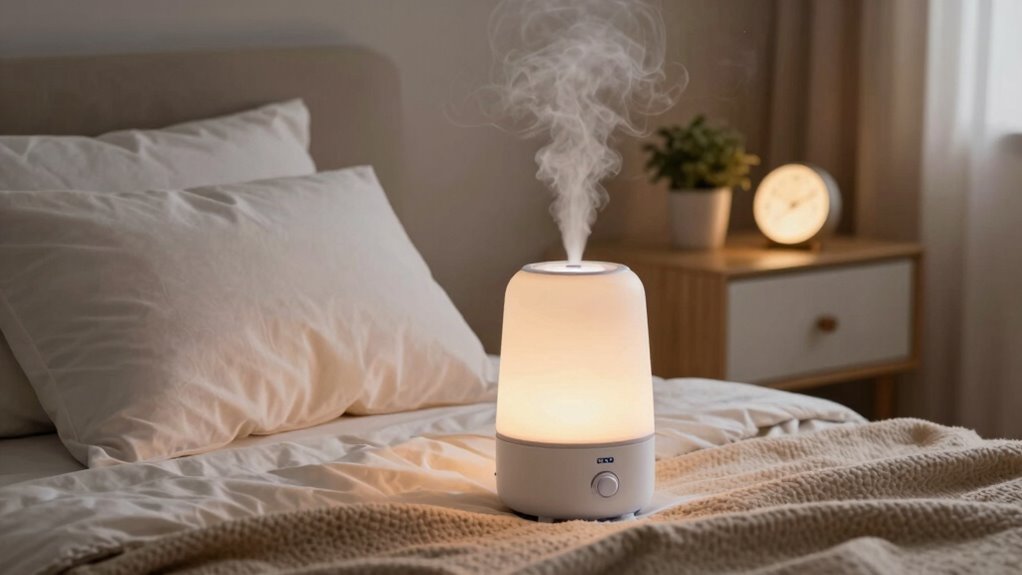

To use a humidifier for better sleep, place it near your bed or in the room’s center to distribute moisture evenly, but avoid placing it too close to your head. Keep it elevated on a stable surface and run it consistently, especially in colder months. Use a hygrometer to monitor humidity levels between 40-60%, and clean the device regularly with distilled water. Following these steps can transform your sleep environment—discover more tips to optimize your comfort.

Get furniture and decor delivered free — and shop member deals
- Fast, free delivery on millions of items
- Access to Prime Big Deal Days deals on October 6–7
- Prime Video, Amazon Music and more included
Key Takeaways
- Place the humidifier centrally or near the bed, elevated on a stable surface for even humidity distribution.
- Keep humidity levels between 40% and 60% using a hygrometer to prevent over- or under-humidification.
- Use distilled or purified water to reduce mineral deposits and airborne particles.
- Regularly clean and disinfect the device to prevent mold, bacteria, and mineral buildup.
- Monitor for signs of excess moisture, such as condensation or musty odors, and adjust settings accordingly.
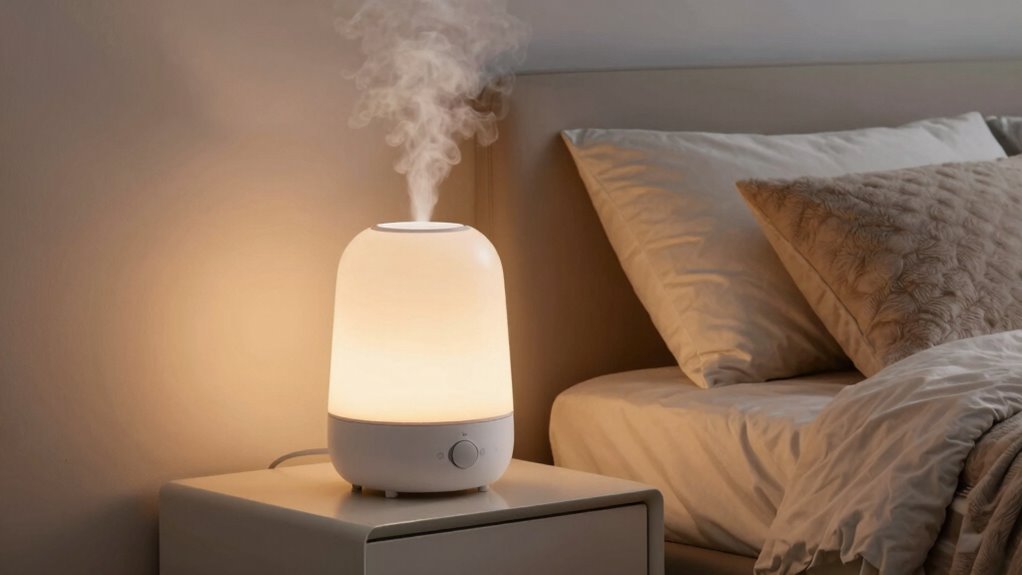
If you often wake up feeling dry or congested, a humidifier can make a vital difference in your sleep quality. Dry air can irritate your respiratory passages, leading to nasal congestion and discomfort that disrupts your rest. By adding moisture to the air, you improve your overall air quality, which helps keep your nasal passages clear and reduces congestion. This creates a more comfortable environment, allowing you to breathe easier throughout the night and wake up feeling revitalized.
A humidifier improves sleep by reducing nasal congestion and creating a more comfortable, revitalizing environment.
To get the most benefit from your humidifier, place it in a strategic spot—preferably in the center of the room or near your bed. Avoid placing it too close to your head or on surfaces that may be sensitive to moisture. Keep the device elevated on a stable surface, as this promotes even distribution of humidity. Make sure to run the humidifier at a consistent level, especially if you’re using it during the colder months when indoor air tends to be drier. Maintaining a humidity level between 40% and 60% is ideal for comfort and health, as it prevents the air from becoming too moist, which can foster mold growth or dust mites.
Regular cleaning is essential to prevent mold, bacteria, and mineral buildup inside the humidifier. Follow the manufacturer’s instructions for cleaning and disinfecting, typically involving daily rinsing and thorough weekly maintenance. Using distilled or purified water instead of tap water can reduce mineral deposits and airborne particles that might worsen air quality or irritate your respiratory system. Keeping the device clean ensures that the moisture it emits remains pure, helping you avoid potential health issues like allergies or respiratory infections. Additionally, understanding humidifier maintenance can extend the lifespan of your device and improve its performance.
Adjusting the humidity level is straightforward with a hygrometer—an affordable device that measures moisture in the air. Monitor it regularly to avoid over-humidifying your space, which can lead to dampness and mold. If you notice condensation on windows or a musty smell, you’re probably using too much humidity. Conversely, if you wake up with a dry throat or dry nasal passages, turn the humidifier up slightly. Using a humidifier consistently can greatly improve your sleep quality by maintaining ideal air quality and reducing nasal congestion. It’s a simple addition to your sleep environment that can make nights more restful and mornings more revitalized.
As an affiliate, we earn on qualifying purchases.
Frequently Asked Questions
Can a Humidifier Help With Allergies or Asthma?
Yes, a humidifier can help with allergies or asthma by improving air quality and providing respiratory relief. It adds moisture to dry air, easing congestion and irritation in your airways. Keep your humidifier clean to prevent mold and bacteria buildup, which could worsen symptoms. Using it correctly helps maintain ideal humidity levels, making breathing easier and creating a more comfortable environment for your allergies or asthma.
How Often Should I Clean My Humidifier?
Think of your humidifier as a garden needing regular care. You should clean the water reservoir at least once a week to prevent mold and bacteria. Follow a consistent cleaning schedule, especially if you notice mineral build-up or reduced mist output. Proper cleaning keeps the air fresh and safe, ensuring your sleep environment remains healthy and inviting. Don’t forget, a well-maintained humidifier is your secret to cozy, clean nights.
Is Distilled Water Necessary for My Humidifier?
Using distilled water in your humidifier isn’t strictly necessary, but it’s highly recommended. Water quality impacts mineral buildup, which can clog your device and reduce efficiency. Distilled water contains fewer minerals, preventing deposits and ensuring cleaner mist. If you notice mineral buildup or want to extend your humidifier’s lifespan, switch to distilled water. Otherwise, filtered or tap water can work, but be prepared for more frequent cleaning to avoid buildup.
What’s the Ideal Humidity Level for Sleep?
You should aim for a ideal humidity level of around 40-60% for comfortable sleep. Maintaining this humidity balance helps prevent issues like dry skin, congestion, and irritated eyes. Use a hygrometer to monitor the levels and adjust your humidifier accordingly. Keeping the environment within this range promotes better rest, reduces respiratory discomfort, and creates a more soothing sleep atmosphere.
Can a Humidifier Cause Mold or Bacteria Growth?
A humidifier can be a breeding ground for mold or bacteria if you neglect proper maintenance. Without regular cleaning, mold prevention becomes impossible, and bacterial growth can multiply faster than you’d believe. To avoid this, clean your humidifier thoroughly and frequently, use distilled water, and keep humidity levels in check. This way, you enjoy all the benefits of a cozy, moist environment without risking harmful mold or bacteria growth.
digital hygrometer for humidity monitoring
As an affiliate, we earn on qualifying purchases.
As an affiliate, we earn on qualifying purchases.
Conclusion
Using a humidifier is like tending to a gentle garden of comfort in your bedroom. When you keep the air moist and balanced, you’re nurturing your sleep environment, allowing your body to breathe easier and relax deeply. With each breath, you’re planting seeds of restful nights and waking refreshed. So, embrace this simple tool, and watch your nights bloom into a sanctuary where peaceful dreams grow tall and strong, guiding you into morning’s warm embrace.
As an affiliate, we earn on qualifying purchases.
As an affiliate, we earn on qualifying purchases.
Halloween Picks
halloween
As an affiliate, we earn on qualifying purchases.