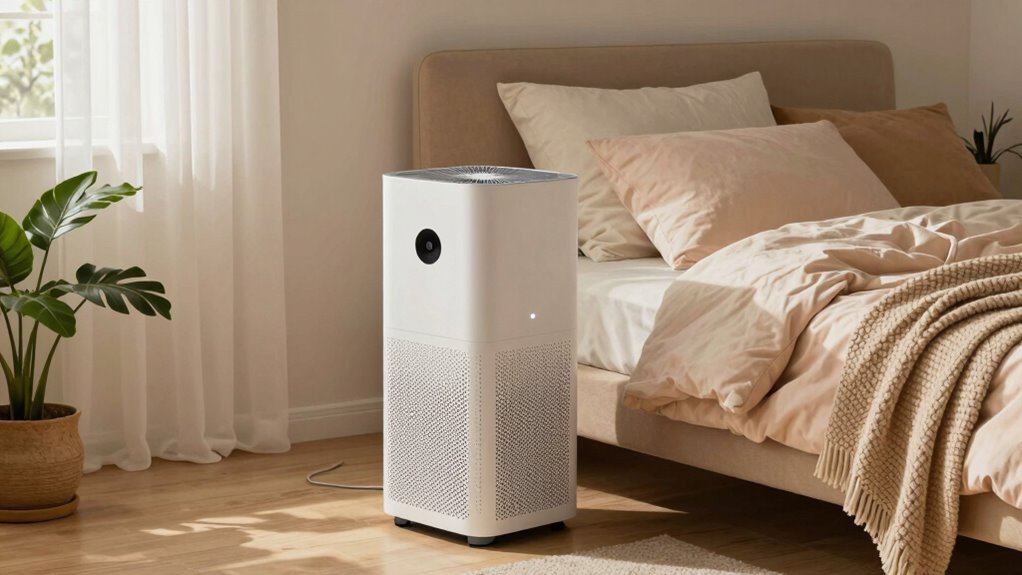

Air purifiers have become a bedroom essential because they help create a healthier sleep environment by removing airborne allergens, pollutants, and irritants like dust mites, pet dander, mold spores, and VOCs. They guarantee easier breathing and reduce allergy symptoms, helping you fall asleep faster and enjoy deeper, more restorative sleep. Plus, quieter operation prevents disruptions. Keep in mind, understanding the latest technology and maintenance tips can further improve your sleep quality—there’s more to discover to optimize your space.
Key Takeaways
- They significantly improve sleep quality by reducing airborne irritants and allergens.
- Air purifiers create a healthier, allergen-free environment for restful sleep.
- They help remove indoor pollutants like smoke, pet odors, and VOCs, enhancing breathing comfort.
- Modern technology ensures effective removal of microplastics and other microscopic pollutants.
- Using air purifiers supports overall health and promotes deeper, more restorative sleep cycles.

In today’s environment, air purifiers have become an essential addition to your bedroom, especially as air quality concerns continue to rise. You spend a significant portion of your life sleeping, so naturally, creating a healthy and comfortable environment for rest is a top priority. An air purifier helps you do just that by improving the air you breathe each night. When the air quality is better, you’ll notice a marked improvement in your sleep quality. Cleaner air means fewer irritants that can disturb your rest, such as airborne pollutants or allergens. With an air purifier working quietly in the background, you’re more likely to fall asleep faster and enjoy deeper, more restorative sleep. This can lead to increased energy levels and better overall health in the long run.
Air purifiers improve sleep quality by reducing airborne irritants and creating a healthier, more restful environment.
Allergens are a common culprit behind restless nights and allergy symptoms, especially if you’re sensitive or allergic to dust mites, pollen, pet dander, or mold spores. An air purifier actively reduces these allergens, capturing tiny particles that often trigger allergic reactions. When allergens are minimized, you wake up feeling less congested, itchy, or irritated. This can make a significant difference if allergies disrupt your sleep regularly. The cleaner air creates a more stable breathing environment, helping you breathe easier throughout the night. Over time, consistent allergen reduction through an air purifier can lessen allergy symptoms, leading to more consistent, quality sleep. You’ll likely experience fewer nights of waking up with nasal congestion or coughing, which are common indicators that airborne irritants are impacting your rest.
Beyond just filtering allergens, air purifiers also remove smoke, pet odors, and volatile organic compounds (VOCs), all of which can compromise your sleep quality. When these pollutants are present, they can cause discomfort, headaches, or breathing issues that prevent you from getting restful sleep. Using an air purifier guarantees that these irritants are kept at bay, creating a more serene and healthful environment. Plus, many modern units operate quietly, so they don’t interfere with your sleep cycle. This means you benefit from a cleaner, fresher atmosphere without any disruptive noise. Additionally, understanding the role of indoor air quality and humidity control can help you optimize your environment further for restful sleep. Proper humidity levels can also influence microplastics in dust, which are increasingly recognized as indoor pollutants impacting health. Recognizing the impact of air purification technology can help you choose the best device for your needs. Furthermore, advancements in filter technologies ensure that air purifiers are more effective at capturing a wider range of pollutants, enhancing their ability to improve sleep quality.
Maintaining good ventilation and regularly replacing filters are also vital steps to ensure your air purifier continues to operate at peak efficiency. In essence, an air purifier isn’t just a luxury—it’s a practical tool for enhancing your sleep quality and reducing allergens in your bedroom. As air quality becomes an increasing concern, integrating one into your nightly routine can make a noticeable difference in how well you rest and how healthy you feel during the day. It’s about creating a safe, allergen-free space where your body can recover and rejuvenate fully each night.
air purifier for bedroom allergy relief
As an affiliate, we earn on qualifying purchases.
As an affiliate, we earn on qualifying purchases.
Frequently Asked Questions
Do Air Purifiers Eliminate All Types of Indoor Allergens?
Air purifiers with HEPA filters can substantially reduce most indoor allergens like dust, pollen, and pet dander, but they don’t eliminate all types. VOC removal is also essential, as some airborne chemicals and odors aren’t captured by HEPA filters. While they improve air quality, no purifier can remove every allergen or chemical completely. Using a combination of air purification, regular cleaning, and good ventilation offers the best protection.
How Often Should I Replace the Filter in My Bedroom Air Purifier?
In the age of steam and innovation, filter maintenance is key to keeping your air purifier effective. You should replace the filter every 6 to 12 months, depending on usage and air quality. Regular replacement guarantees peak performance and allergen removal. Check your manufacturer’s guidelines for specific replacement frequency, and consider more frequent changes if you notice a decline in air quality or airflow, ensuring your bedroom stays fresh and clean.
Are There Specific Air Purifiers Better for Asthma Sufferers?
Yes, some air purifiers are better for asthma sufferers. Look for models with HEPA filters, as they efficiently trap airborne allergens and irritants. Additionally, units with ionization technology can help reduce airborne particles further, but make certain they don’t produce ozone, which can worsen asthma symptoms. Choose a purifier that combines HEPA filtration with safe ionization features for the best relief and cleaner air in your bedroom.
Can Air Purifiers Help Reduce Airborne Viruses in the Bedroom?
Think of your bedroom as a peaceful garden, where air purifiers act as gentle guardians. They can help reduce airborne pathogens, making it harder for viruses to travel and settle. While they don’t eliminate all risks, air purifiers with HEPA filters trap many virus particles, slowing virus transmission. Using one consistently creates a cleaner environment, giving you peace of mind and a healthier space for restful nights.
Do Air Purifiers Produce Noise That Could Disturb Sleep?
Air purifiers can produce some noise, but many models generate white noise that actually helps mask other sounds, promoting better sleep. You might notice a gentle hum, but it’s unlikely to cause sleep disruption if you choose a quieter unit or use sleep mode. In fact, the consistent white noise can create a calming environment, making it easier for you to fall asleep and stay asleep throughout the night.
As an affiliate, we earn on qualifying purchases.
Conclusion
With air purifiers now a bedroom essential, you’re breathing cleaner, healthier air every night. Imagine waking up refreshed, knowing your air is 99.97% free of dust and allergens—that’s the power of a good purifier. Studies show indoor air can be up to five times more polluted than outdoor air, so taking control is vital. Investing in an air purifier isn’t just a trend; it’s your first step toward better sleep and overall well-being.
HEPA air purifier for pet dander
As an affiliate, we earn on qualifying purchases.
As an affiliate, we earn on qualifying purchases.
As an affiliate, we earn on qualifying purchases.