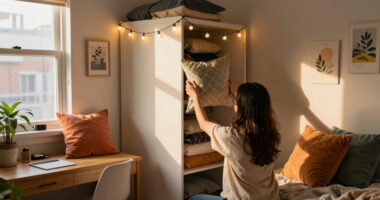
Warm minimalism is replacing cold minimalism because people crave spaces that feel more emotionally connected and comforting. You want environments that support relaxation, well-being, and authenticity, rather than cold, impersonal designs. This shift emphasizes natural materials, tactile textures, and cozy hues that foster a sense of stability and warmth. By embracing imperfection and organic shapes, spaces become sanctuaries for mindfulness and self-care. If you’re curious about how this trend transforms spaces, there’s more to discover ahead.

Get furniture and decor delivered free with Prime
- Fast, free delivery on millions of items
- Prime Video, Amazon Music and more included
- Member-only deals all year
Key Takeaways
- People seek emotional warmth and authenticity, moving away from the impersonal feel of cold minimalism.
- Warm minimalism incorporates tactile textures and natural materials, enhancing comfort and personal connection.
- The trend aligns with broader cultural shifts toward mindfulness, self-care, and creating calming, refuge-like spaces.
- Warm hues and organic shapes foster a sense of stability and coziness, making environments more inviting.
- Sustainable, imperfect design elements reflect a desire for genuine, meaningful aesthetics over sterile minimalism.

In recent years, the stark, sterile aesthetic of cold minimalism has begun to give way to a warmer, more inviting approach. You might notice this shift in how spaces are designed, with a focus on cozy aesthetics that foster a sense of emotional warmth. Cold minimalism, characterized by monochrome palettes and sleek, geometric forms, often feels impersonal and detached. While it emphasizes simplicity and functionality, it can also create a sense of emotional distance, leaving you craving a space that feels more alive and comforting. This evolution reflects a broader appreciation for emotional warmth and the importance of connecting with our surroundings on a more personal level.
Cold minimalism’s sleek emptiness is evolving into warm, inviting spaces that nurture comfort and emotional connection.
Warm minimalism responds to this need by blending clean lines with textured, inviting elements. You’re encouraged to incorporate natural materials like wood, woven fabrics, and soft textiles that add tactile comfort. These touches make a space feel less clinical and more human-centered. The goal isn’t just to declutter but to craft an environment that nurtures your well-being, where each element contributes to a sense of emotional warmth. It’s about creating a sanctuary that balances simplicity with intimacy, making every corner feel like a gentle hug rather than an antiseptic showcase. Additionally, integrating natural materials aligns with the trend toward authenticity and sustainability, which are highly valued in contemporary design. Recognizing the importance of sustainable choices helps create a home that not only feels warm but also aligns with eco-conscious values.
This shift is also driven by a desire for more authentic living. You’re no longer satisfied with environments that feel cold or overly curated. Instead, you seek spaces that resonate emotionally, where cozy aesthetics come naturally. Incorporating warm hues—think earthy browns, muted terracottas, and soft beiges—helps foster a welcoming atmosphere. These colors evoke feelings of comfort and stability, making your home feel like a refuge from the chaos outside. Warm minimalism embraces imperfection, allowing personal touches and organic shapes to shine through, which enhances emotional connection to your surroundings. Moreover, understanding the balance between aesthetics and function can help you craft a space that is both beautiful and practical, supporting your everyday needs.
Furthermore, this trend aligns with a broader cultural shift toward mindfulness and self-care. You want your space to support relaxation and mental clarity, not just visual appeal. By prioritizing emotional warmth, you create a setting that encourages slow living, reflection, and genuine comfort. The emphasis on cozy aesthetics means your home isn’t just visually pleasing but emotionally nurturing as well. It’s about making your environment work for you—inviting you to unwind, recharge, and feel truly at ease. Ultimately, warm minimalism offers a balanced approach that combines the best of simplicity and coziness, making it a natural evolution from its colder predecessor.
Products Worth Considering

Coway Airmega 250 Air Purifier for Large Rooms

Levoit Core 400S-P Smart Air Purifier for Large Rooms

Philips Hue Large Smart Light Tube, Black – White and Color Ambiance LED Color-Changing Light – 1 Pack
As an affiliate, we earn on qualifying purchases.
Frequently Asked Questions
How Does Warm Minimalism Influence Emotional Well-Being?
Warm minimalism positively influences your emotional well-being by creating spaces that feel inviting and comforting. The cozy tones and softer textures promote emotional comfort, helping you relax and de-stress. This approach also enhances your mood, making daily environments more uplifting. As a result, you feel more at ease and balanced, which supports overall mental health. Embracing warm minimalism fosters a peaceful atmosphere that nurtures your emotional resilience.
Are There Specific Cultures Embracing Warm Minimalism More Than Others?
You’ll find that certain cultures embrace warm minimalism more than others, often influenced by their cultural aesthetics and regional preferences. For example, Scandinavian countries favor cold minimalism with sleek, crisp lines, while Japan and Mediterranean regions prefer warmer tones and inviting textures. These regional preferences shape how people incorporate warmth into minimalistic spaces, reflecting their cultural values and creating environments that feel both simple and emotionally comforting.
What Materials Are Commonly Used in Warm Minimalism Decor?
Imagine wrapping yourself in a cozy blanket—that’s the feel of warm minimalism decor. You’ll often see natural materials like wood, cork, and rattan, paired with textile textures like linen and wool. Color palettes feature earthy tones—warm beiges, soft browns, and muted terracottas—that invite comfort. These materials and colors create inviting spaces that balance simplicity with warmth, making your home feel like a welcoming retreat.
Can Warm Minimalism Be Easily Adapted to Small Spaces?
Yes, warm minimalism adapts well to small spaces. You can choose color palettes with soft, warm tones to make the area feel cozy and inviting. Opt for furniture choices that are sleek yet comfortable, like multi-functional pieces that maximize space without cluttering. Keep the layout simple to enhance openness. Incorporating warm textures and minimal decor will create a balanced, welcoming environment that feels spacious yet intimate.
How Does Lighting Differ Between Warm and Cold Minimalism?
Lighting in warm minimalism embraces an ambient glow, with softer, warmer color temperatures that evoke comfort, like a gentle hug. Cold minimalism, on the other hand, features cooler, bluish tones that feel crisp and clinical. You’ll notice warm tones create a cozy atmosphere, while cold tones promote clarity. By choosing the right color temperature, you set a mood that either invites relaxation or sharp focus, shaping your space’s overall feel.
Conclusion
As you embrace warm minimalism, it’s like turning up the cozy glow on a winter’s night—suddenly, everything feels more inviting. Cold minimalism might have been crisp and clean, but warm minimalism wraps your space in a gentle hug, making it easier to breathe and relax. So, let your home evolve like a sunrise—gradually and beautifully—filling your life with comfort and warmth that’s impossible to ignore. After all, isn’t a little warmth what truly makes a space feel like home?