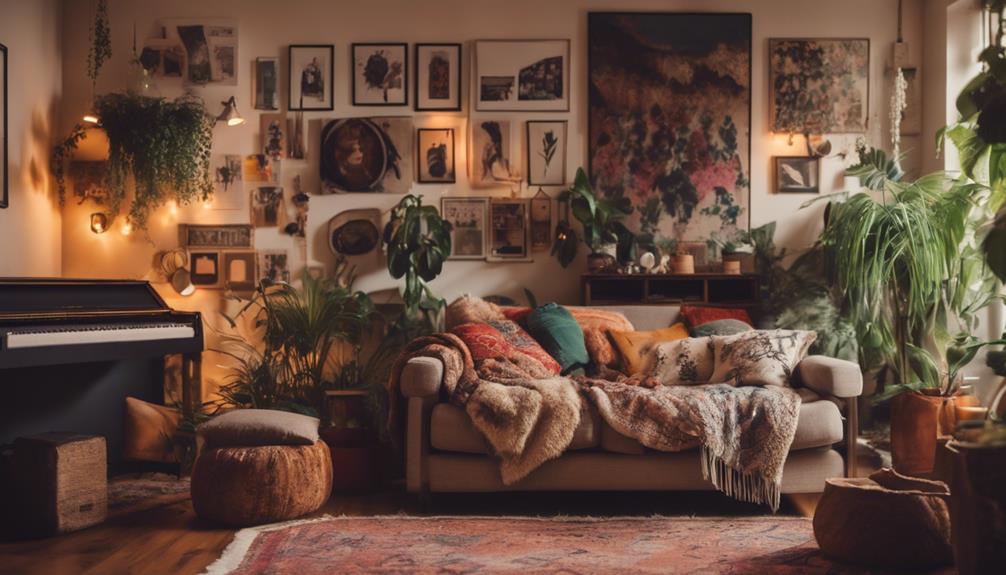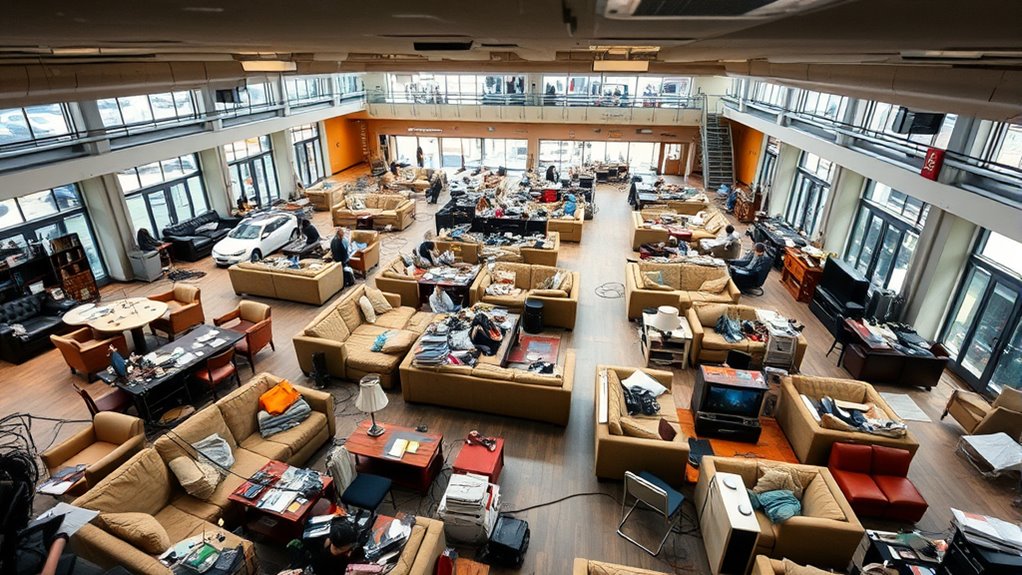

If your open-plan living room feels chaotic like a bus station, you’re likely making some layout mistakes. You may not be defining zones for seating, work, and dining, which causes clutter and confusion. Poor furniture choices or arrangement can cut off pathways and make spaces cramped. Overcrowding with too much furniture or cluttered pathways worsens the mess. Also, lacking visual boundaries and good lighting makes the space feel exposed and uninviting. Keep these points in mind to transform your room into a calm, functional haven.
Key Takeaways
- Failing to establish designated zones causes clutter and confusion, making the space feel chaotic.
- Overcrowded furniture arrangements block pathways and create congestion, resembling a busy station.
- Using oversized or mismatched furniture disrupts scale and hampers smooth flow.
- Lack of visual privacy and boundaries results in an exposed, disorganized environment.
- Poor lighting and absence of focal points leave the room looking flat and uninviting.
Ignoring Zones and Functional Areas
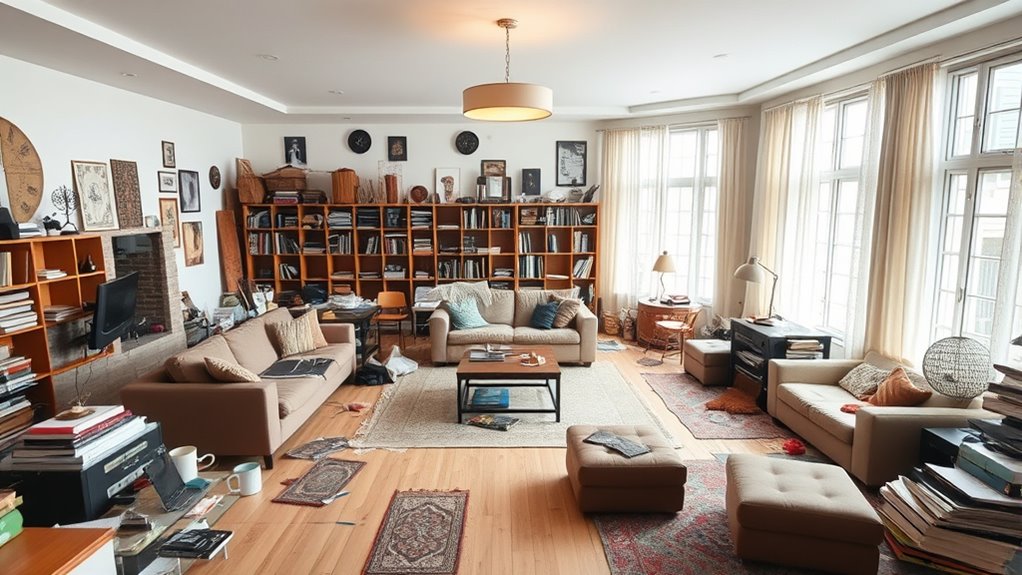
Have you ever noticed how cluttered or chaotic an open-plan living room feels when you haven’t clearly defined zones? Without effective zoning strategies, your space can quickly become a jumble of furniture and activity, making it hard to relax or focus. To prevent this, establish functional zones that serve specific purposes—like a cozy seating area, a workspace, or a dining section. Use rugs, furniture placement, or even lighting to visually separate these zones. This not only creates a sense of order but also helps you and your guests navigate the space effortlessly. Recognizing and designating each zone guarantees your open-plan living room feels organized, inviting, and functional, rather than a confusing, bus station-like chaos. Incorporating proper layout techniques can further enhance space utilization and flow.
Poor Furniture Arrangement and Scale
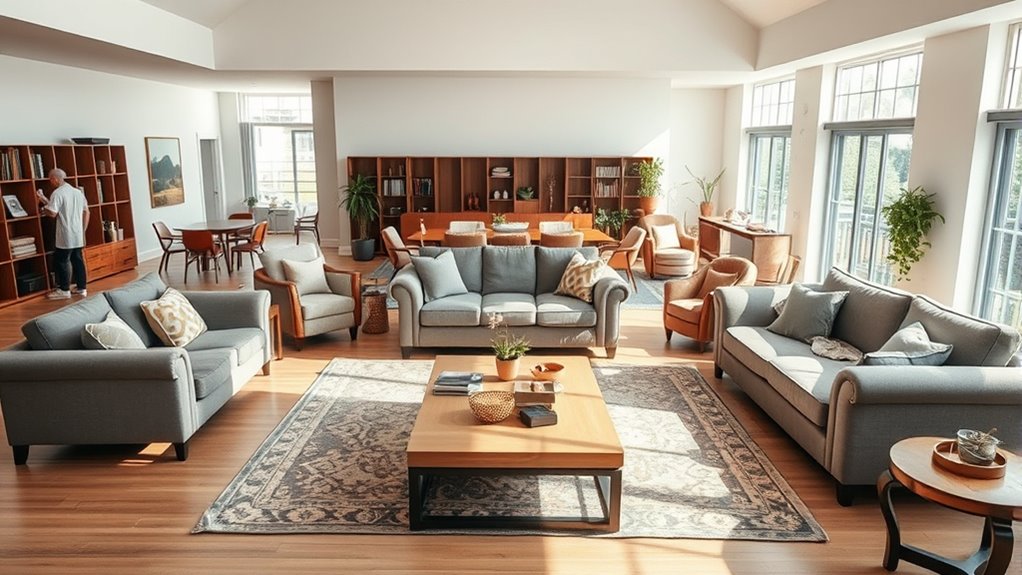
Is your furniture arrangement making your open-plan living room feel cramped or awkward? Poor furniture proportions and lack of scale balancing can disrupt the flow and make spaces feel cluttered. To avoid this, focus on choosing furniture that fits the room size and maintains visual harmony. Here are four tips:
Optimize your open-plan living by choosing appropriately scaled furniture for a balanced, spacious feel.
- Use proportionate furniture—avoid oversized pieces in small areas.
- Balance tall and low pieces to create a cohesive look.
- Leave enough space between furniture for easy movement.
- Arrange furniture to define zones without blocking pathways.
- Incorporate self-watering plant pots to add green elements that complement the space without overwhelming it.
Overcrowding and Cluttered Pathways

While choosing appropriately scaled furniture helps create a balanced space, overcrowding can still undermine that harmony. Too many pieces or poorly planned pathways make your living room feel chaotic and cramped. To prevent this, incorporate smart storage solutions that hide clutter and free up space. Use decorative partitions to define zones without blocking flow, maintaining openness while adding visual interest. Ensure pathways are wide enough for easy movement—ideally, at least 36 inches. Keep furniture away from doorways and main walkways to avoid bottlenecks. Organize items in multifunctional furniture or discreet storage units. Remember, a clutter-free environment promotes calm and functionality, making your open-plan living room feel inviting rather than overwhelming. Additionally, understanding space planning principles can help optimize your layout for both comfort and style.
Lack of Visual Privacy and Boundaries
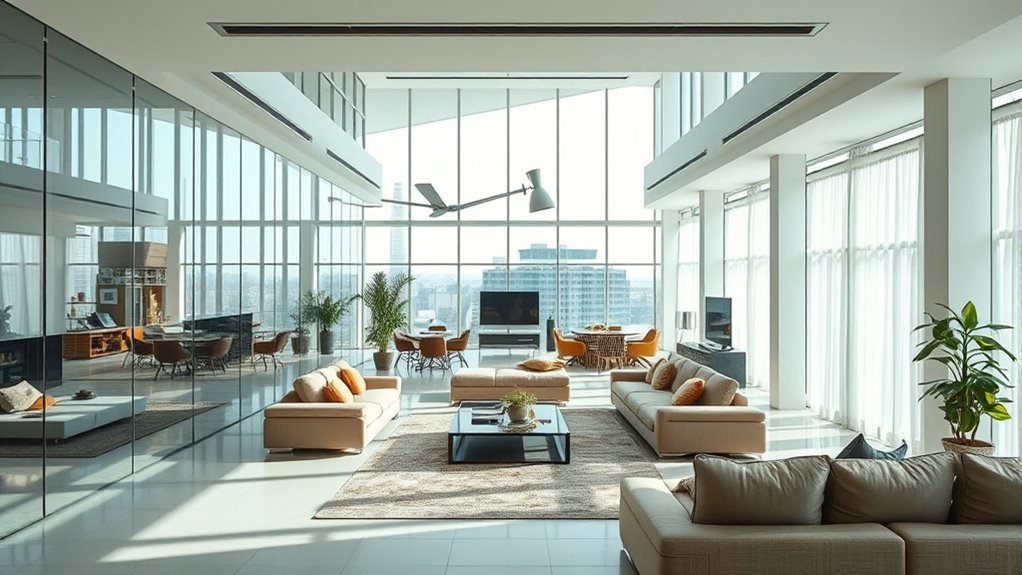
Ever notice how open-plan living rooms can sometimes feel exposed or chaotic? Without clear boundaries, your space lacks visual privacy, making it hard to relax or find personal space. To improve boundary definition, consider these ideas:
- Use furniture arrangements to create distinct zones.
- Incorporate screens or curtains for temporary visual privacy.
- Add rugs or different flooring to define separate areas.
- Use shelving or plants as natural dividers.
These strategies help break up the space visually, giving each area its own identity. By establishing clear boundaries, you reduce the feeling of chaos and enhance privacy. This not only makes your living room more functional but also more inviting and comfortable for everyone. Proper boundary definition transforms an open plan into a cozy, organized environment.
Neglecting Lighting and Focal Points
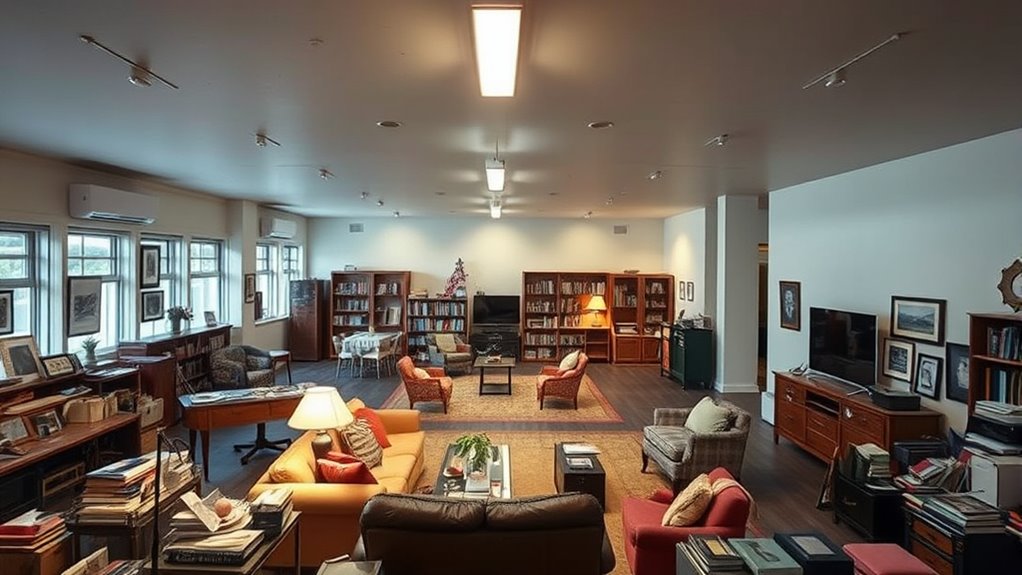
Neglecting proper lighting and focal points can make an open-plan living room feel flat and uninspiring. Without ambient lighting, the space lacks warmth and depth, making it seem dull and uninviting. You should layer different light sources to create a balanced, welcoming atmosphere. Additionally, failing to include statement focal points leaves your room feeling cluttered and chaotic, rather than intentional and stylish. Incorporate eye-catching features like artwork, a fireplace, or bold furniture pieces to draw attention and anchor the space. Proper lighting highlights these focal points and guides the eye naturally around the room. Incorporating visual interest such as textured fabrics or decorative accessories can also enhance the room’s appeal. When you combine ambient lighting with well-chosen focal points, your open-plan living room transforms into a cohesive, inviting environment rather than a confusing bus station.
Frequently Asked Questions
How Can I Define Distinct Zones in an Open-Plan Space?
To define distinct zones in your open-plan space, start by using area rugs to visually separate areas like the lounge and dining. Incorporate color zones by choosing different wall or furniture colors for each section, creating clear boundaries. You can also add furniture placement or lighting to highlight each zone. These techniques help create a cohesive yet functional layout, making your open space feel organized and inviting rather than chaotic.
What Are the Best Ways to Incorporate Privacy Without Walls?
Privacy presents a poignant problem in open-plan spaces. To effectively create personal pockets, you can cleverly incorporate dividing screens or curtain panels. These versatile, visual barriers allow you to define distinct zones while maintaining an open vibe. By choosing lightweight, stylish options, you preserve privacy without sacrificing space or style. Ultimately, these solutions provide a seamless, sophisticated solution to create cozy corners amid an expansive living area.
How Do I Select Furniture That Scales Well for the Room?
When selecting furniture, focus on proportion guidelines and furniture scaling to guarantee your space feels balanced. Measure your room carefully and choose pieces that fit comfortably without overwhelming the area. Opt for appropriately sized sofas, chairs, and tables that complement the room’s dimensions. By paying attention to scale, you create a harmonious environment where each piece enhances your open-plan living room instead of cluttering or shrinking it.
What Are Simple Solutions to Reduce Visual Clutter?
To reduce visual clutter, start by incorporating decorative storage solutions like stylish baskets or cabinets to hide everyday items. Use visual symmetry by arranging furniture and decor evenly, creating a balanced look that feels calm and organized. Keep surfaces clear and limit accessories to a few meaningful pieces. This approach makes your space feel open and inviting, transforming chaos into a cohesive, relaxing environment.
How Can Lighting Improve the Room’s Overall Flow and Ambiance?
Lighting sets the mood, guides movement, and highlights your space’s best features. You can improve your room’s flow and ambiance with layered illumination—combining ambient lighting to create warmth, task lighting for functionality, and accent lighting to add visual interest. Use dimmers for flexibility and guarantee your lighting zones are well-balanced. This approach helps your open-plan living room feel inviting, cohesive, and effortlessly stylish.
Conclusion
By fixing these layout mistakes, your open-plan living room transforms from a chaotic bus station into a welcoming oasis. Imagine the difference when zones are defined and pathways clear—suddenly, it’s a space you want to relax in, not dodge through. Clutter and poor lighting vanish, revealing a room that feels inviting and functional. Don’t let your open-plan space feel like a busy terminal—create a sanctuary that truly welcomes you home.