
TL;DR
A Hunker home-improvement report describes using a razor scraper to remove paint from French-door glass after painting, instead of masking every pane with painter’s tape. It advises scraping while the paint is dry but generally no more than 24 hours old, using a sharp blade held at a shallow angle, and taking care not to scratch or crack the glass.
A Hunker home-improvement report recommends using a razor scraper to clear paint from French-door glass after painting, rather than spending time taping around each pane. The method may simplify painting the doors’ narrow muntins, but it calls for careful blade handling and removing the paint before it has dried for too long.

Get furniture and decor delivered free with Prime
- Fast, free delivery on millions of items
- Prime Video, Amazon Music and more included
- Member-only deals all year
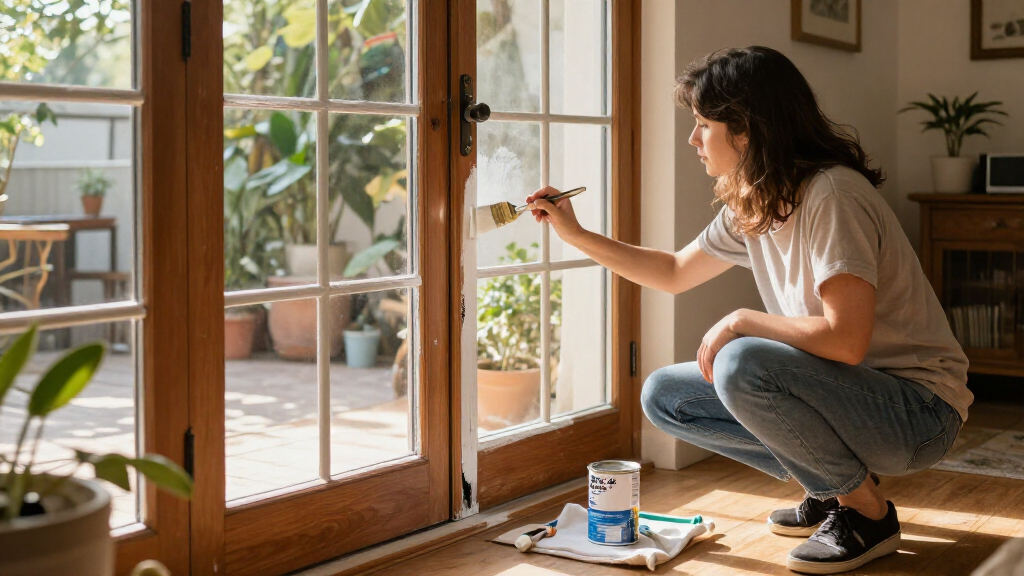
French doors are divided into glass panes by narrow bars, often called muntins. Painting those bars without marking the glass can be difficult: careful brushwork may still leave smears, while applying painter’s tape along every pane takes time and may not prevent paint from seeping underneath, according to Hunker.
The report’s alternative is to paint the door and then scrape unwanted paint off the glass once it has dried. Hunker says many house paints and primers do not adhere strongly to smooth glass, making them easier to lift with a blade. It recommends doing this while the paint is dry but generally within 24 hours; older, harder paint may take more effort to remove.
For the cleanup, Hunker advises using a sharp razor scraper held at a 45-degree angle or shallower. The blade should be pushed gently across the paint, not pressed down into the glass. Once an edge lifts, the paint can be pulled away by hand or scraped toward the point where the glass meets the frame. The report says to clean the glass afterward to remove any remaining haze.
A Different Way to Mask Door Panes
The tip offers homeowners a way to avoid masking each pane before painting, a task that can be especially slow on doors with many small windows. Instead, the work shifts to post-paint cleanup: the paint must be scraped off carefully, and the timing and condition of the blade matter.
That trade-off is useful to understand before choosing a method. Scraping may save time compared with applying tape, but it is not risk-free. Hunker warns that a dull blade makes removal harder and can raise the risk of injury or glass damage. The report also describes the method as potentially cheaper than some masking options; it does not provide a cost comparison or test results establishing that it will be faster for every door or paint type.
Products Worth Considering

Bose QuietComfort Ultra 2nd Generation Over-Ear Wireless Headphones with Spatial Audio, Noise Cancelling, Mic – Driftwood Sand (Limited Edit

Dyson V12 Detect Slim Absolute Cordless Stick Vacuum

Philips Hue Bridge Pro Smart Lighting Hub, 1-Pack
As an affiliate, we earn on qualifying purchases.
Why Tape Can Fall Short
Painter’s tape is a familiar way to protect glass while painting the surrounding wood, but French doors may have many narrow edges to mask. Hunker notes that tape application takes time and that paint can still get beneath it. The article also mentions liquid masking products, which may require a blade for removal and, according to the report, could damage a wooden frame.
The scraping approach relies on paint lifting from glass rather than on a barrier preventing contact. Hunker identifies a two-piece Titan razor scraper set as one example of a suitable tool and mentions an extra-long-blade scraper for larger panes. These are product examples in the report, not independent endorsements or evidence that one scraper is necessary for every job.
““you’ll want to let the paint dry, but not too long — usually no more than 24 hours.””
— Hunker report
What the Tip Does Not Establish
The report does not specify which paint formulations, glass coatings, or door finishes were tested, and it offers no measured comparison of time, cost, or damage rates between scraping and taping. Its guidance is presented as a practical home-improvement tip, not as a controlled product test. Results may vary with the paint, how much reaches the glass, and how long it has dried.
Hunker also does not set out precautions for every kind of glass or explain how to handle paint that has cured beyond the suggested window. Readers should avoid forcing a blade if paint does not lift easily; the article’s stated warnings are that a dull blade can make the job harder and that pressing into the glass can scratch or crack it.
Before Painting Your Doors
Homeowners considering the approach can prepare a sharp scraper and test the technique cautiously on a small area, following the tool maker’s instructions and keeping the blade shallow against the glass. They should plan to remove excess paint while it is dry but still within the report’s suggested window of about 24 hours, then clean the pane to remove residue.
The source provides no later update, test results, or follow-up from the tool makers. The practical next step is to choose between masking and scraping based on the door and the user’s comfort with a blade, while stopping if the glass or frame appears at risk.
Key Questions
What does the French-door painting tip recommend?
Hunker recommends painting the door and then using a razor scraper to remove unwanted paint from the glass, rather than taping around every pane beforehand.
When should the paint be scraped off?
The report says to wait until the paint is dry, but generally not longer than 24 hours. It says paint becomes harder to remove as it dries further.
How should the scraper be held?
Hunker advises holding the blade at a 45-degree angle or shallower and moving it gently across the paint. It cautions against pressing the blade down into the glass.
Can scraping damage the glass?
It can if done carelessly. The report warns that pressing into the glass may scratch or crack it, and says a dull blade makes the task more difficult and can increase injury or damage risk.
Does the report prove scraping is faster or cheaper than tape?
No. Hunker describes scraping as a faster and potentially cheaper alternative, but provides no timed comparison, cost data, or test results. The actual time and expense will depend on the door and the materials used.
Source: hunker.com