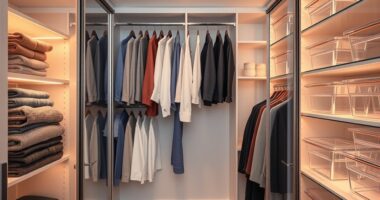
Modular furniture adapts to your needs by offering flexible configurations that maximize your space and suit your lifestyle. You can easily reconfigure pieces to fit different layouts or purposes, like transforming a sofa into a bed or adding shelves where needed. These designs are durable, stylish, and easy to maintain, making your space more functional and personalized. Stay with us to learn how modular systems can truly revolutionize your living or working environment.
Key Takeaways
- Modular furniture offers flexible configurations for effortless space customization and adaptation to changing needs.
- It maximizes space efficiency by easily reconfiguring to fit different layouts or functions.
- Modular systems support personalization, allowing tailored designs that match aesthetic and functional preferences.
- Components can be replaced or adjusted individually, extending furniture lifespan and reducing waste.
- Easy installation and maintenance make modular furniture a practical, adaptable solution for various environments.
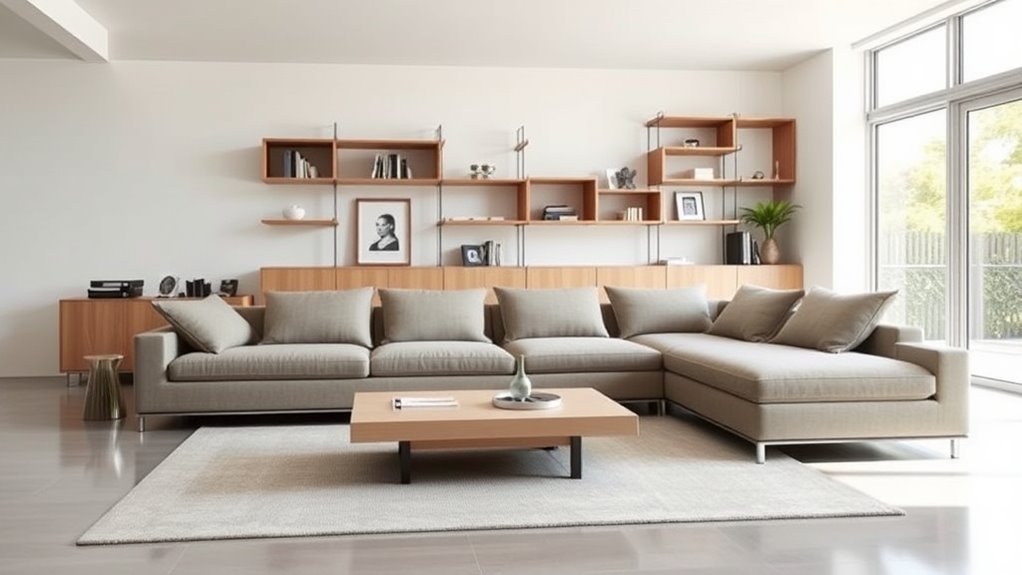
Have you ever wondered how complex products can be built so efficiently and flexibly? The secret lies in modular design, especially when it comes to furniture that adapts to your needs. Modular furniture offers flexible configurations, allowing you to customize your space effortlessly. Whether you’re reorganizing a living room or optimizing a small apartment, modular pieces can be reconfigured to fit new layouts or purposes. This adaptability ensures your furniture remains functional and stylish, no matter how your needs change over time.
One of the biggest advantages of modular design is its ability to provide space-saving solutions. Traditional furniture often takes up more room than necessary, especially when it’s designed for a single purpose. Modular pieces, on the other hand, can be compacted or expanded, giving you more control over your space. For instance, modular sofas can transform from a cozy corner to a full-length bed or a spacious sectional, depending on your requirements. Shelving units can be added or removed, creating additional storage or open space when needed. This flexibility means you won’t have to sacrifice style for practicality; you get both in a single, adaptable system.
Modular furniture maximizes space with adaptable, multi-functional designs for stylish, practical living.
The beauty of modular furniture is that it encourages creative problem-solving. When you’re faced with limited space, modular solutions allow you to think outside the box. You can combine different modules to create multi-functional furniture that serves various purposes, like a desk that doubles as a dining table or a bed with built-in storage. These configurations are easy to modify, so your furniture evolves along with your lifestyle. You don’t need to buy entirely new pieces every time your circumstances change; you simply tweak what you already have. This approach not only saves money but also reduces waste, making it an environmentally friendly choice.
Furthermore, modular design simplifies installation and maintenance. Since components are designed to fit together seamlessly, setting up or rearranging your furniture becomes straightforward. When a part wears out or breaks, you can replace just that module instead of discarding the entire piece. This makes your furniture more durable and adaptable over the long term. Plus, many modular systems are designed with aesthetics in mind, blending seamlessly with various interior styles. You get versatile, space-efficient furniture that can be easily tailored to suit your personal taste and spatial constraints.
Additionally, the concept of customization options in modular furniture allows users to personalize their spaces more effectively, aligning with diverse aesthetic preferences and functional needs.
Frequently Asked Questions
How Durable Are Modular Furniture Pieces Over Time?
Modular furniture can be quite durable over time if you choose high-quality materials. You’ll find that material longevity varies based on the type of material used, like hardwood or high-grade composites. When properly maintained, these pieces maintain their structural integrity, resisting wear and tear. Regular care, like avoiding excessive weight and keeping them clean, helps guarantee your modular furniture stays strong and functional for years, making it a smart, lasting investment.
Can Modular Furniture Be Easily Customized After Purchase?
Imagine your furniture as a blank canvas—yes, you can easily customize it after purchase. Modular furniture offers flexible customization options and personalization methods, allowing you to adapt pieces to your evolving needs. You can swap components, add new modules, or change configurations without hassle. So, whether your space changes or your style shifts, modular furniture is designed to evolve with you effortlessly.
What Maintenance Is Required for Modular Furniture?
You should regularly clean your modular furniture using gentle cleaning tips like a soft cloth and mild soap. Check for loose connections or damaged parts, and follow repair guidelines to fix any issues promptly. Keep all components dry and avoid harsh chemicals. By maintaining your furniture regularly, you guarantee it stays functional and looks great, allowing you to enjoy its adaptability and style for years to come.
Are There Eco-Friendly Modular Furniture Options Available?
Yes, you can choose eco-friendly modular furniture options that prioritize sustainability. Seek out pieces made from sustainable materials like bamboo, reclaimed wood, or recycled plastics. Look for furniture crafted through eco-conscious manufacturing processes, reducing environmental impact. By selecting these environmentally friendly options, you support sustainability while enjoying adaptable, stylish furniture. Make mindful choices to minimize your carbon footprint and promote a greener, more sustainable future for your space.
How Does Modular Design Impact Overall Space Utilization?
Modular design substantially boosts space utilization by allowing you to create flexible arrangements tailored to your needs. You can easily reconfigure furniture to optimize space, making small rooms feel larger and multifunctional. This adaptability supports efficient space optimization, whether you’re adjusting for work, relaxation, or storage. With modular pieces, you’re empowered to make the most of your space, ensuring it remains functional, organized, and personalized over time.
Conclusion
With modular furniture, you can easily adapt your space as your needs evolve, offering flexibility and style in one package. Some might worry it’s less sturdy or less stylish than traditional pieces, but modern designs are built to last and look sleek. So, don’t let that hesitation hold you back—embrace modular design and transform your home into a versatile, personalized space that truly fits your life. It’s an investment in both function and form.