
TL;DR

Get furniture and decor delivered free with Prime
- Fast, free delivery on millions of items
- Prime Video, Amazon Music and more included
- Member-only deals all year
A Livingetc report highlights how leftover marble and other stone from local yards can be used for smaller renovation features, including shelves, windowsills and floor repairs. Designers cited in the report say restrained use can add color and texture while making use of pieces that might otherwise be discarded.
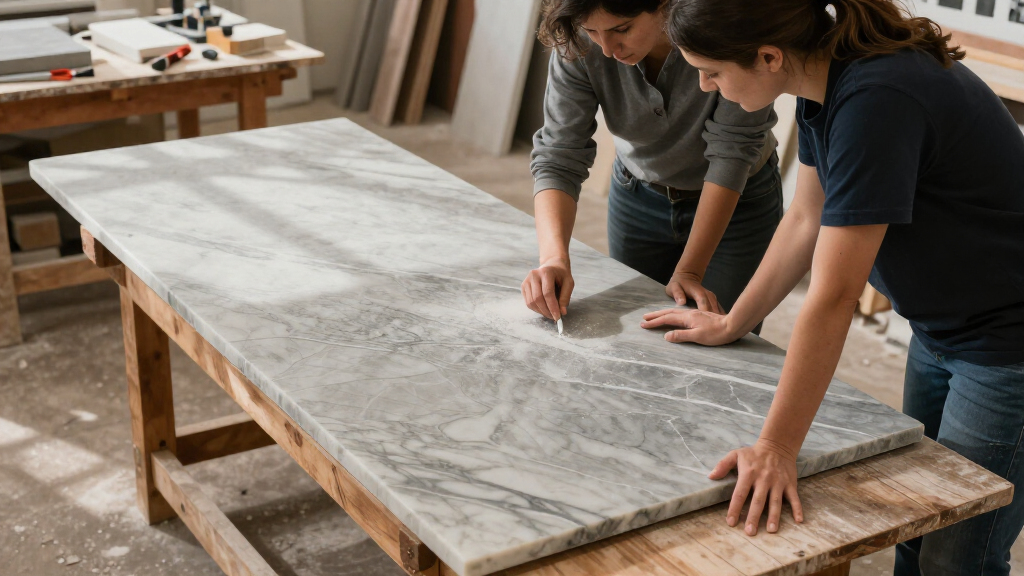
Livingetc has highlighted how homeowners can use marble and other natural-stone offcuts from local stone yards for smaller renovation details, rather than buying a full slab. The report describes applications including shelves, windowsills, fireplace surrounds and floor repairs, presenting offcuts as a way to add distinctive material to a home while reusing pieces left over from other projects.
The report’s central advice is to contact or visit a local stone yard and ask about its offcuts: leftover pieces that may be small or irregularly shaped. The writer says yards are often oriented toward trade customers, but may welcome homeowners too; readers are advised to call ahead if they are unsure. Availability, price and cutting services will vary by yard and material.
The examples span several kinds of stone and uses. The report’s writer says they have used offcuts of granite, marble, travertine and quartz for projects ranging from shelves and windowsills to kitchen-island counters and coffee tables. Featured design projects include a patchwork of salvaged marble used to repair sections of an apartment floor, and marble offcuts turned into floating bathroom shelves and mirror trims.
Designers interviewed for the report frame small-scale use as a way to introduce color, pattern and texture without covering large surfaces. Sally Knibbs, design director of Sally Caroline, says natural stone can have impact when used with restraint. Other Architects director Grace Mortlock describes using salvaged marble to mark floor repairs rather than resurfacing an entire apartment.
Small Stone Pieces, Practical Projects
For homeowners considering natural stone, the examples offer an alternative to committing to a large, expensive installation. A limited quantity can be used for a specific feature or repair, allowing a renovation to incorporate a visually striking material on a smaller scale. The report also points to reuse: offcuts from earlier jobs can find another purpose instead of being discarded.
That does not mean every remnant will suit every project. A piece must be large and sound enough for its intended use, and the stone’s finish and characteristics should suit the location. As a result, offcuts may be most useful when a project can adapt to the pieces available, rather than requiring a particular size, color or pattern.
Products Worth Considering

Bose TV Speaker Compact Soundbar with Bluetooth and HDMI-ARC, Black

Samsung 42-Inch Class OLED S90F 4K Smart TV (2025)

iRobot Roomba Max 715 Pet Robot Vacuum with AutoEmpty Dock
As an affiliate, we earn on qualifying purchases.
From Leftovers to Design Details
The report responds to the gap between dramatic stone interiors often seen in design inspiration and the cost and practical demands of using extensive natural-stone surfaces at home. It argues that stone can be introduced selectively, at a threshold, around a fireplace, in a bathroom or as a small decorative element.
Its examples come from projects by Sally Caroline, Other Architects, Alexander & CO and SMAC Studio. They show different approaches: combining stone with timber and plaster, using contrasting marble patches to address floor repairs, adding a bold stone feature in an entryway, and coordinating bathroom shelves and mirror trims with existing tile. These are examples of design choices, not evidence that all stone types are suitable for every room.
“We believe natural stone can be equally impactful when used with restraint.”
— Sally Knibbs, design director of Sally Caroline
Availability and Suitability Vary
The report does not provide prices, typical offcut sizes, or a directory of yards, so the cost and availability of suitable pieces cannot be established from the article. It also does not say whether individual yards will cut, finish or deliver pieces for homeowners. Those details need to be confirmed directly with a supplier.
Stone performance depends on the material, finish, installation and setting. The report offers design examples but does not provide technical guidance on maintenance or suitability for particular surfaces. A homeowner should confirm those requirements with the yard or an experienced fabricator before buying, especially when the piece will be used for a worktop or another frequently used surface.
Ask Yards About Their Remnants
For readers interested in the approach, the next step is to contact nearby stone yards and ask whether they sell offcuts to the public. Bringing measurements and an idea of the intended use can help determine whether a remnant is suitable; calling first can also clarify access, stock and any cutting services.
There is no announced follow-up or wider policy change in the source material. The practical outcome will depend on what each yard has available and whether a homeowner can find a piece that fits the project and its technical needs.
Key Questions
What is a stone offcut?
A stone offcut is a leftover piece from another project. It may be small or irregularly shaped, but can still work for a smaller feature if its dimensions and condition suit the intended use.
Can homeowners buy directly from local stone yards?
The report says many yards focus on trade customers but may also serve homeowners. Practices differ, so it recommends calling ahead to check whether the yard sells to the public.
What projects can use marble offcuts?
Examples in the report include shelves, windowsills, mirror trims, fireplace details and floor repairs. The writer also describes using stone remnants for larger items such as coffee tables and kitchen-island counters when the piece is suitable.
Are offcuts always cheaper or suitable for kitchens and bathrooms?
The source does not give prices or establish that offcuts are always cheaper. Suitability depends on the stone, its finish, the piece’s condition and how it will be used; homeowners should confirm requirements with a supplier or fabricator.
Source: rss