
Closet zoning helps you organize your space by dividing it into specific areas for different items, making everything easier to find and access. By grouping clothes by type and season, you can maximize storage, reduce clutter, and even double or triple your space overnight. Clear labels and strategic placement keep your closet tidy and efficient. Keep adjusting your zones as your wardrobe changes to maintain this extra space—continue for expert tips and tricks.
Key Takeaways
- Implementing designated zones maximizes space by organizing items logically, reducing clutter and freeing up storage capacity.
- Grouping clothing by type and color enhances visibility, making it easier to access and store items efficiently.
- Seasonal zoning allows for strategic off-season storage, freeing up space for current wardrobe needs.
- Clear labels and consistent organization practices streamline retrieval, minimizing wasted time and space.
- Regularly reviewing and adjusting zones ensures optimal use of space as wardrobe and habits evolve.
Understanding the Concept of Closet Zoning

To make your closet more organized and efficient, you need to understand the concept of closet zoning. Closet zoning involves dividing your space into specific areas dedicated to different categories of items, making storage solutions more accessible and logical. This approach taps into organizational psychology, helping you mentally associate zones with particular items, which simplifies retrieval and puts everything in its place. By creating zones for clothing types, accessories, and footwear, you reduce clutter and maximize your storage capacity. Implementing these zones guarantees that each item has a designated spot, making it easier to maintain order. Understanding this concept is the first step toward transforming your closet into a streamlined, functional space that saves you time and frustration. Additionally, applying visual cues can further enhance your ability to quickly locate items within each zone.
Benefits of Implementing a Zoning System
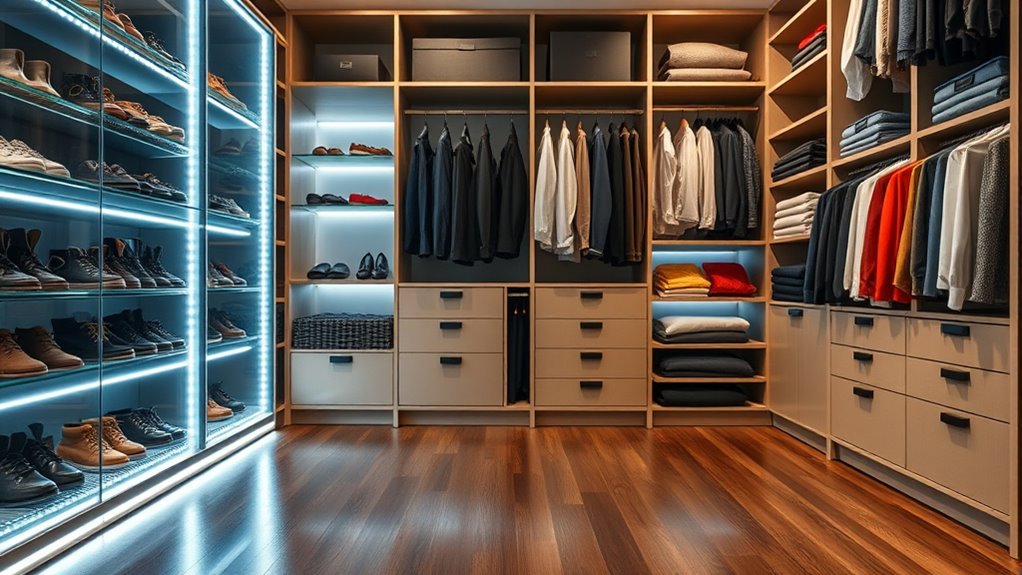
Implementing a zoning system in your closet offers numerous practical benefits that can transform your daily routine. By organizing clothes into dedicated zones, you’ll easily find what you need, saving time each morning. This system also promotes clothing color coordination, making your wardrobe visually appealing and easier to select outfits. Additionally, zoning simplifies seasonal wardrobe planning because you can assign specific areas to different seasons, helping you store off-season clothes out of sight while keeping current items accessible. This approach reduces clutter and maximizes space, allowing you to fit more clothing without overcrowding. Moreover, understanding self watering plant pots can inspire similar efficient storage solutions elsewhere in your home. Overall, a well-structured zoning system streamlines your closet management, making it more functional, efficient, and enjoyable to use every day.
Steps to Design Your Personalized Closet Zones

Designing your personalized closet zones starts with evaluating your wardrobe and identifying how you typically use your space. Consider your wardrobe color to create visually appealing zones, grouping similar shades for easier access. Think about seasonal rotation—storing off-season clothes separately to free up space and reduce clutter. To get started, follow these steps:
- Sort your wardrobe by clothing type and frequency of use.
- Assign zones based on daily routines, such as workwear, casual, or special occasion items.
- Incorporate wardrobe color to establish visually cohesive sections.
- Designate a specific area for seasonal rotation, storing off-season clothes out of sight but easily accessible.
- Pay attention to contrast ratio to ensure your closet layout enhances visibility and organization, making it easier to find items quickly.
This approach helps optimize your space and makes your closet more functional, adaptable, and visually organized.
Tips for Maintaining and Adjusting Your Zones

Once you’ve established your closet zones, regular maintenance and flexibility are key to keeping your space organized. To do this, revisit your clothing categorization periodically, ensuring each item still fits its designated zone. If you notice clutter building up or items no longer fitting, don’t hesitate to adjust your zone labeling or reassign sections. Keep labels clear and visible, so you can quickly identify where everything belongs. It’s helpful to review your zones seasonally, switching out clothes as needed and reorganizing for efficiency. Maintaining this consistency prevents clutter from creeping back in and guarantees your system remains effective. Remember, the goal is to keep your space functional and adaptable, so be willing to tweak your zones as your wardrobe or habits evolve. Regularly assessing your organization system ensures it continues to meet your needs and stays easy to maintain.
Common Mistakes to Avoid When Zoning Your Closet
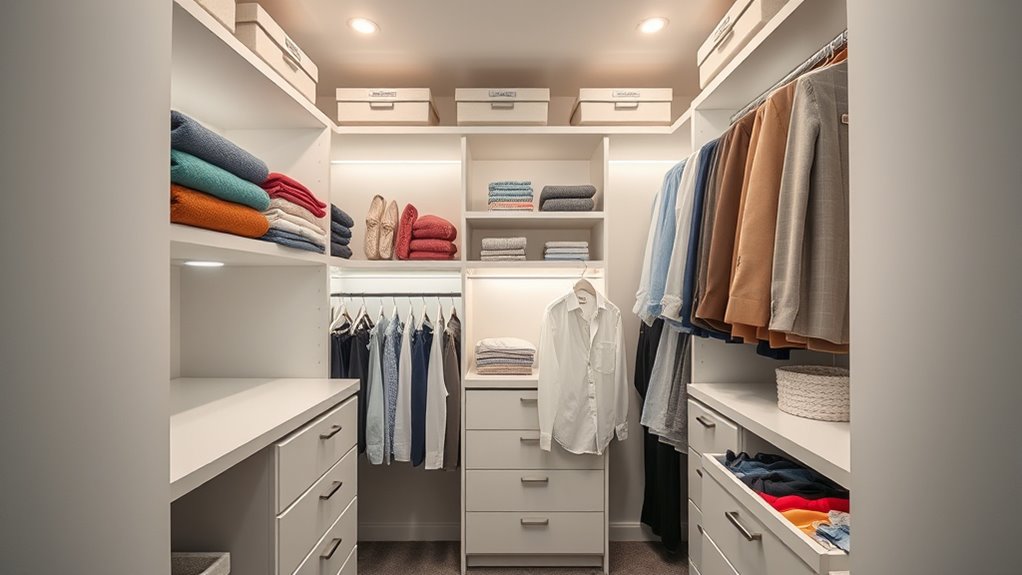
Avoiding common mistakes when zoning your closet can save you time and frustration. One mistake is neglecting clothing color coordination, which makes finding outfits harder. Plan your zones to group similar colors together for easier selection. Another error is ignoring seasonal wardrobe planning; keep seasonal items separate to prevent clutter. Overloading a zone with too many items reduces accessibility and defeats the purpose of zoning. Finally, avoid inconsistent organization—stick to a system for maintaining clarity and efficiency. Proper zoning helps you see your clothing clearly and select outfits quickly, especially when you’re mindful of seasonal needs and color coordination. By steering clear of these mistakes, you’ll maximize space and streamline your wardrobe management effortlessly.
Frequently Asked Questions
How Long Does It Take to See Results From Closet Zoning?
You’ll see results from closet zoning pretty quickly, usually within a few hours. As you focus on storage optimization and DIY organization, you’ll notice an immediate difference in how much space you gain. The process involves sorting, categorizing, and designing zones, which streamlines your closet. With a little effort, you’ll enjoy a more organized, functional space that feels much larger and easier to maintain in just a day or two.
Can Closet Zoning Work in Small or Awkwardly Shaped Spaces?
Yes, closet zoning works well in small spaces and awkward layouts. You can maximize every inch by customizing zones for clothes, shoes, and accessories, making use of vertical space and creative storage solutions. You’ll find that with smart zoning, even tricky areas become functional and organized. This approach helps you reclaim cluttered areas, creating a more efficient and spacious closet, no matter the size or shape.
What Are Some Budget-Friendly Zoning Solutions?
Did you know that using DIY hacks can save you up to 50% on closet organization costs? For budget-friendly zoning solutions, start with affordable storage bins to maximize space and categorize items. Reorganize your closet into zones for shoes, clothes, and accessories, making everything easier to find. These simple steps don’t require expensive upgrades—just clever use of everyday items, turning your cluttered closet into a neat, functional space.
How Often Should I Reevaluate or Update My Closet Zones?
You should reevaluate your closet zones seasonally, especially when you make seasonal adjustments to your wardrobe. Regularly assess if your current storage accessories still meet your needs or if changes could improve organization. If you notice clutter or underused space, it’s time to update your zones. Doing this quarterly or with each seasonal switch keeps your closet functional, maximizes space, and guarantees your storage solutions stay aligned with your wardrobe.
Is Professional Help Necessary for Effective Closet Zoning?
Ever wondered if you truly need expert consultation for effective closet zoning? While DIY tips can get you started, professional help can uncover hidden space and optimize your layout faster. Sometimes, the difference between a good closet and a brilliantly organized one lies in expert insight. If you’re feeling overwhelmed or want the best results, investing in a pro might just be the game-changer you need.
Conclusion
By applying closet zoning, you turn chaos into order, much like a well-organized library where every book has its place. Think of it as a visual map that maximizes space and simplifies your daily routine. When you design and maintain your zones, you create a functional, clutter-free haven. Just like a puzzle, each piece fits perfectly—providing clarity and efficiency. Embrace closet zoning, and watch your storage space multiply effortlessly.