

Choosing decorative throw pillow covers often comes down to a practical style decision: do you want a cover that is simple to live with, or one that makes the sofa or bed feel more dressed up? Cotton and velvet can both suit a range of rooms, but they feel and behave differently. Cotton covers are generally breathable, casual, and straightforward to maintain; velvet covers bring a soft pile and richer appearance that can make a room feel more finished.

Get furniture and decor delivered free with Prime
- Fast, free delivery on millions of items
- Prime Video, Amazon Music and more included
- Member-only deals all year
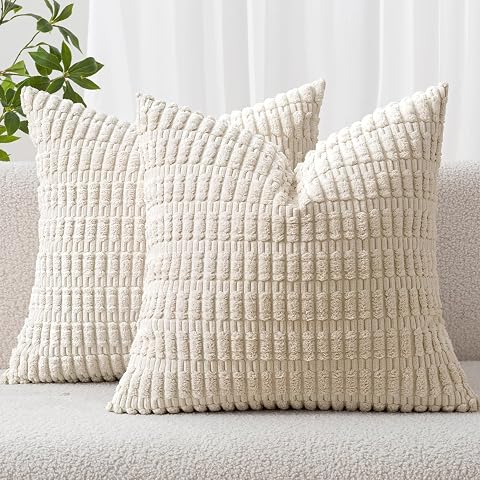
MIULEE Corduroy Throw Pillow Covers, 18 x 18 Inch, Cream White, Set of 2
- ✔ Material: 100% polyester corduroy
- ✔ Color: Cream white
- ✔ Pattern: Striped

MIULEE Soft Corduroy Decorative Throw Pillow Covers, Forest Green, 18 x 18 in, Set of 4
- ✔ Material: 100% polyester
- ✔ Color: Forest green
- ✔ Pattern: Striped corduroy texture

Topfinel Set of 4 Soft Corduroy Throw Pillow Covers, 18 x 18 Inch, Orange and Teal
- ✔ Material: Corduroy
- ✔ Color: Orange and teal gradient
- ✔ Size: 45 x 45 cm (approximately 18 x 18 inches)
The better choice depends on where the pillows will sit and how often they will be handled. Cotton makes more sense for busy living rooms, warm climates, and households that prefer easy care. Velvet is a stronger fit for accent pillows in a formal sitting area or bedroom, especially when tactile softness and visual depth matter more than simple laundering. Across the comparison, the main tradeoff is everyday convenience versus a more pronounced decorative effect.
At a Glance
| Criteria | Cotton throw pillow covers | Velvet throw pillow covers | Winner |
|---|---|---|---|
| Look and texture | Natural, matte surface; styles range from crisp to relaxed | Soft pile with a richer, more polished appearance | B |
| Comfort | Breathable and comfortable for regular use | Plush to touch, though the pile can show marks or change direction | Depends |
| Care and cleaning | Often easier to wash, depending on the care label | May need gentler care; follow the label to prevent damage | A |
| Everyday durability | Good for frequent handling; quality depends on weave and construction | Can wear well with suitable care, but pile may flatten or show pressure | A |
| Seasonal comfort | Usually comfortable in warm weather | Often feels cozier in cool weather and warmer rooms | Depends |
| Value | Often a practical choice at a range of price points | Worth a higher price when its texture and appearance matter to you | A |
MIULEE Corduroy Throw Pillow Covers, 18 x 18 Inch, Cream White, Set of 2
The cream-white color and striped corduroy make this pair the most adaptable starting point in the lineup. It can soften a darker sofa, sit alongside patterned cushions, or keep a bed arrangement from looking too busy. Compared with MIULEE’s forest-green four-pack, this set makes a quieter commitment to color and is easier to carry into a room with changing accents. Its limitation is coverage: two covers cannot outfit as many pillows as either four-piece set.The hidden zipper keeps the closure visually unobtrusive and makes inserting a pillow less fiddly than an open-ended cover. Polyester corduroy adds a tactile stripe, so the neutral shade still has texture rather than reading as a plain, flat panel. The product details allow gentle machine washing or hand washing, with low tumble drying. We would choose it for a small refresh or a layered mix, but shoppers should account for the inserts being sold separately and for cream appearing different under varying light or screen settings.
Pros:
- Set of two gives a simple, matched update for a small arrangement.
- Cream-white is the most neutral palette among these three picks.
- Striped corduroy adds visible texture without a multicolor print.
- Hidden zipper and gentle-cycle care instructions support practical everyday use.
Cons:
- Only two covers are included, compared with four in the other sets.
- Pillow inserts are not included.
- The light color may look different depending on lighting or screen settings.
Best for: People refreshing a sofa or bed with a light neutral pair that can coordinate with existing patterns and colors.
Not ideal for: Anyone covering four pillows at once, seeking a saturated accent, or expecting the covers to arrive with inserts.
Bottom line: We recommend this pair for the most flexible decorative refresh, provided two covers are enough for your arrangement.
“We recommend this pair for the most flexible decorative refresh, provided two covers are enough for your arrangement.”
MIULEE Soft Corduroy Decorative Throw Pillow Covers, Forest Green, 18 x 18 in, Set of 4
When the goal is to make several cushions feel like one deliberate group, four matching forest-green covers solve that styling problem more directly than the cream pair. The saturated green reads as a stronger accent, so it can anchor a neutral sofa or reinforce an existing green palette. Compared with Topfinel’s orange-and-teal gradient, this MIULEE set keeps every pillow in the same color family; that gives us a calmer, more uniform arrangement, but less built-in variation.The covers are listed as soft polyester corduroy with a striped texture and hidden zippers. The specification also notes shrink resistance, though the care guidance still calls for a gentle cycle or hand washing, low tumble drying, and no bleach or ironing. That makes the set a practical option for a coordinated room refresh, but shoppers who like to rotate accent colors may find four identical green covers restrictive. As with the other picks, inserts are separate, and the color can shift in appearance with lighting or screen settings.
Pros:
- Four covers can coordinate a fuller sofa or bed display in one purchase.
- Forest green creates a more defined accent than the cream-white pair.
- Striped corduroy gives the solid-color set some visual texture.
- Hidden zippers and gentle-care instructions keep the finish and upkeep straightforward.
Cons:
- A single saturated color offers less palette flexibility than cream or a multicolor set.
- Pillow inserts are not included.
- The appearance of forest green may vary with lighting and display settings.
Best for: People who want to cover four same-size cushions in one rich, coordinated shade, especially in a neutral room.
Not ideal for: Shoppers who prefer a light neutral, varied colors across cushions, or only need one or two covers.
Bottom line: Choose this set when matched coverage and a confident green accent matter more than mix-and-match flexibility.
“Choose this set when matched coverage and a confident green accent matter more than mix-and-match flexibility.”
Topfinel Set of 4 Soft Corduroy Throw Pillow Covers, 18 x 18 Inch, Orange and Teal
Orange and teal in a coordinated gradient give this set a different job from the two MIULEE options: it brings color variation into the cushion arrangement without asking us to assemble separate covers ourselves. The four-piece quantity is comparable to the forest-green set, but the effect is more expressive and less uniform. That distinction makes Topfinel the strongest fit for a room that needs an accent, while MIULEE’s cream pair is easier to blend into a quieter or frequently changing scheme.The covers are described as corduroy with invisible zippers, and the care information lists machine washing and low tumble drying, with no bleach. The supplied details do not identify a specific wash cycle, unlike the gentle-cycle guidance for both MIULEE sets, so careful laundering is the prudent interpretation. Also, a gradient makes color coordination more particular: these covers may be harder to reuse if furnishings or nearby accents change. The product gives us four covers and a built-in palette, but no inserts, and no individual cover dimensions beyond the set’s approximate 18-inch square size.
Pros:
- Four covers create a coordinated arrangement with color variation built in.
- Orange and teal gradient is more distinctive than either solid neutral or solid green.
- Invisible zipper keeps the closure visually discreet.
- Machine washing and low tumble drying are listed for care.
Cons:
- The colorful gradient is less versatile if the room palette changes.
- Pillow inserts are not included.
- Care instructions do not specify a wash cycle in the supplied details.
Best for: People decorating a neutral room that would benefit from a coordinated orange-and-teal statement across several cushions.
Not ideal for: Anyone seeking a subtle solid color, a highly reusable neutral, or explicit gentle-cycle washing guidance.
Bottom line: This is the most expressive four-cover set here, best when its orange-and-teal palette fits the room you have in mind.
“This is the most expressive four-cover set here, best when its orange-and-teal palette fits the room you have in mind.”
As an Amazon Associate we earn from qualifying purchases.
Key Differences
The clearest difference is how each cover balances decoration with daily use. Cotton tends to blend into a room without demanding attention. Its surface may be smooth, textured, or woven, but it usually reads as casual and approachable. Velvet has a more noticeable surface: the pile catches light, adds depth, and can make a solid color feel more substantial. That visual impact is an advantage for an accent pillow, but it can also make velvet feel too formal or attention-grabbing in a relaxed space.
Maintenance changes the calculation. Many cotton covers can be washed at home, though the fabric blend, dye, trim, and closures determine the actual care method. Velvet calls for closer attention to its label because washing and rubbing can affect the pile. On a pillow that gets leaned on or handled constantly, cotton is the lower-effort default. On a decorative pillow that is used occasionally, velvet’s extra care may be a fair exchange for the softer, more polished finish.
Neither fabric wins every comfort question. Cotton breathes better and tends to suit year-round use, while velvet feels plush and can make a room feel cozier. For value, cotton usually serves more people well because it combines adaptable styling with simpler upkeep. Paying more for velvet makes sense when its texture is central to the room’s look, rather than when you simply need a cover for everyday protection.
Detailed Comparison
Look and texture (Velvet throw pillow covers wins — moderate)
Velvet wins for a rich, tactile accent: its pile reflects light differently as it shifts, so even a plain color can look layered and deliberate. Cotton is more understated and offers its own variety through weaves, embroidery, and prints, but it rarely has the same plush finish. The gap is moderate if you want one or two pillows to stand out, and minor if the covers are meant to blend into a busy pattern or casual room. Choose velvet for visual depth; choose cotton for a quieter, more flexible look.
Comfort (moderate difference)
This is a matter of preference and use. Cotton is breathable and feels familiar against the skin, making it a dependable cover for pillows people touch or lean on throughout the day. Velvet feels softer and more cushioned to the hand, but the pile can feel warm and may show the direction in which someone brushed it. The difference is moderate for frequently used cushions, but less important for pillows that mainly decorate a bed or chair. Cotton suits people who prioritize airflow; velvet suits people who want a plush hand feel.
Care and cleaning (Cotton throw pillow covers wins — moderate)
Cotton wins on convenience in many households. Some cotton covers are machine washable, though care labels should guide washing, drying, and ironing because blends, finishes, and decorative details vary. Velvet may require gentler cleaning or more careful handling to preserve its surface. This is a moderate difference for occasional-use accents, but a major one if the pillow is exposed to food, pets, children, or frequent use. Check the specific care label before buying either fabric; cotton is the safer starting point when routine cleaning matters.
Everyday durability (Cotton throw pillow covers wins — moderate)
Cotton has the practical edge for pillows that are handled, moved, and leaned on often. Its performance depends on the weave and construction, and it can still fade, shrink, or wear if cleaned incorrectly. Velvet can also last, but repeated pressure may flatten or mark the pile, making wear more visible. The gap is moderate rather than absolute: a well-made velvet cover in a lightly used room may hold up well, while a flimsy cotton cover may not. For a family sofa or high-traffic seat, cotton is typically the more forgiving choice.
Seasonal comfort (moderate difference)
Cotton is generally more breathable, which makes it a comfortable option through warmer months and in rooms that tend to run hot. Velvet often feels cozier in cooler weather, so it can support a layered, winter-ready look. This is a moderate difference for pillows used against the body and a minor one for accents that rarely leave the bed or sofa. Pick cotton for warm climates or year-round use; pick velvet if you welcome a softer, warmer feel in a cool room.
Value (Cotton throw pillow covers wins — moderate)
Cotton is the stronger value for most shoppers who want covers to work hard across seasons and settings. It can be found at many price levels, and its accessible feel makes it easier to use throughout the home. Velvet may cost more, but that premium can be justified when a small number of pillows need to add texture, color depth, or a more formal finish. The difference is moderate: pay extra for velvet when its appearance will change the room in a way you can see and enjoy, not simply because it sounds more luxurious.
Cotton throw pillow covers: Pros and Cons
Pros:
- Often breathable and comfortable in warm weather
- Many versions are simple to care for
- Works in casual, traditional, and contemporary rooms
- Usually a practical value for frequently used pillows
Cons:
- Can look plain beside richer, more tactile fabrics
- May shrink or fade if washed against its care instructions
- Quality and durability vary by weave and construction
Velvet throw pillow covers: Pros and Cons
Pros:
- Adds a soft, plush texture and visual depth
- Can make accent pillows feel more polished
- Suits cozy, layered rooms and cooler seasons
Cons:
- May need gentler care than cotton
- Pile can show pressure marks or flatten with frequent use
- Can feel warm or look too formal in some settings
Who Should Choose What
Choose Cotton throw pillow covers if:
- You need covers for pillows that get regular use on a family sofa.
- You want breathable fabric for a warm room or year-round comfort.
- Easy laundering and straightforward upkeep are priorities.
- You prefer a relaxed look or want the pillow to complement patterned furnishings.
Choose Velvet throw pillow covers if:
- You want a few accent pillows to add plush texture to a bedroom or sitting room.
- The richer surface is a key part of the look you are creating.
- The pillows will see lighter use and you are comfortable following more careful care instructions.
- You like a cozier feel, especially in a cooler room or season.
Skip both if: If your main need is a highly stain-resistant cover for a messy or outdoor setting, look for a fabric specifically designed for that use and check its cleaning guidance.
Value for Money
Cotton is the better value for most everyday pillows because it pairs broad styling options with breathable comfort and, in many cases, simpler cleaning. Its value still depends on construction: a well-made cover with a suitable closure and clear care instructions is a better buy than a low-quality cover chosen by fabric name alone.
Velvet is worth paying more for when its pile and light-catching finish are doing a particular job in the room. A couple of velvet accents can add more visual depth than several understated covers, so the extra cost may be reasonable for a lightly used sofa or bed. For a pillow that gets constant contact or frequent washing, the decorative gain may not justify the added care. Compare the cover’s care label and construction as well as its price; value comes from how well the fabric suits the pillow’s real use.
Final Verdict
For most homes, cotton is the safer all-purpose pick. It is more breathable, generally easier to live with, and well suited to pillows that are handled every day. Choose cotton when practical comfort, routine cleaning, or value matters most. Velvet is the better choice when you want a polished accent and can keep the cover in lighter use. Its higher cost is justified by the richer texture, not by greater everyday convenience.
The deciding factor is the pillow’s job. For a family-room cushion that is leaned on and cleaned regularly, buy cotton. For a bedroom or formal-room accent that adds softness and visual depth, choose velvet. If you are furnishing both kinds of spaces, a mix makes sense: use cotton for the working pillows and reserve velvet for the accents.
Frequently Asked Questions
Are cotton or velvet pillow covers better for everyday use?
Cotton is usually the more practical choice for everyday use because it is breathable and often easier to clean. The exact care method depends on the cover’s label, fabric blend, and finish. Velvet can work for daily use if you like its feel and can care for it appropriately, but the pile may show pressure or wear more visibly.
Are velvet throw pillow covers harder to clean?
They can be. Velvet’s pile may need gentler handling to preserve its appearance, while many cotton covers are easier to wash at home. Neither fabric has one universal cleaning rule: follow the specific cover’s care label, especially when it has a blend, trim, or special finish.
Which fabric works better in a warm climate?
Cotton is generally the more comfortable option in warm conditions because it breathes well. Velvet tends to feel cozier and may suit cooler rooms or seasons better. Room temperature and personal preference still matter, particularly if the pillows are used for lounging.
Is velvet worth paying more for?
Yes, when its plush texture and richer appearance are a noticeable part of the room’s style, especially on a lightly used accent pillow. For covers that need frequent washing or regular handling, cotton usually offers better practical value. Pay for velvet’s look when you will enjoy it; do not assume the higher price means it is the better all-purpose cover.
Fall Picks
fall essentials
As an affiliate, we earn on qualifying purchases.